Friday, July 25, 2014

That very rare commodity-a manager who was a real leader: Ken Crawford


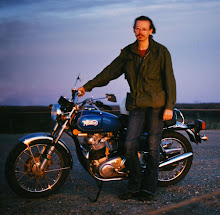
 I don't know the date of this photo, but Ken was a lifelong fan of the UT Longhorns.   Despite that character flaw, Ken Crawford was a great person!

I first met Ken Crawford when he was a forecaster in the Fort Worth, TX, Weather Forecast Office (WFO), thanks to my late friend and colleague, Al Moller.  Ken then moved to Slidell, LA, as a deputy station chief (Deputy Meteorologist-In-Charge); then he became MIC at the Oklahoma City (OKC) Office, and was still there as the MIC when the office moved to Norman (OUN).  Subsequently, he left the NWS and became a Professor of Meteorology at OU.  At the end of his career, he left the university to be involved with the Korea's national weather service.  I've made some short FB posts about this, but this blog gives me a chance to be somewhat more complete.  On 23 July 2014, yet another friend and colleague of mine - Dr. Ken Crawford - died.  It seems 2014's toll on my friends and family continues.

Although I met him many years earlier, it was when the OKC office moved to OUN (and I followed not long after, when Dr. Bob Maddox became NSSL's Director), that my interactions with Ken really developed significantly for me.  Bob and I talked many times about our professional relationship with the Norman WFO across the street from our building on OU's North Campus.  We agreed on what to do and so convinced Ken that it would be a good thing if a research meteorologist from NSSL had an office in the OUN WFO.  Ken embraced the idea from the start, of course.  I was duly ensconced in the OUN WFO and, although as a non-NWS employee I wasn't authorized to issue forecasts, I had daily interactions with the staff.  Not only could I get to know and observe the people who actually made the local forecasts, but I could observe the office dynamics.  Those were some wonderful years for me and perhaps I might tell that story someday, but not now.

What I saw in Ken as the station chief was something I'd never encountered from a manager before.  Let me illustrate that with an anecdote:  When I would talk with "outside" people about the great things happening at the OUN WFO, they'd typically say something like, "Well, Ken Crawford has assembled a team of superstars there.  What else did you expect?"  The thing was, the group of people at the OUN WFO was, at that time, the same team (except for two people who were induced to leave the office) he'd inherited from the previous MIC.  Under the previous MIC, the office had been pretty low on the respect bar and Ken had effectively transformed the staff, but used the same people!!

How did he accomplish this?  Ken always operated under the principle that he would not be successful as a manager if his staff was not successful in their endeavors.  He understood that the people working for him aren't identical robots - they're individuals with particular strengths and weaknesses, so the idea is to use their strengths to contribute to the success of the office and to encourage them to improve in areas where they're weak.  Everyone was made to feel like an important member of the team.  And so the office prospered, even as his staff prospered (including winning various awards and kudos for their performance).  Ken always was supportive of his staff and was willing to "buck the system" should the need arise to help his office be successful.  I'm pretty confident that most, if not all of them, would have followed Ken wherever he led them, because it was clear that he reciprocated that respect.  How rare that perspective seems to be!  What a shame it's so rare - but Ken showed me by his actions how a good manager of people needs to operate.

When I was working in that WFO office of mine, one day it dawned on me that the 35 or so NSSL mesonetwork sites were just rusting away in a warehouse, and that they might be installed as a permanent mesonet for the benefit of the WFO operations.  When I brought up my idea to Ken, he then told me of his dream for a statewide mesonet that would have at least one station is every Oklahoma county!!  I was floored, but quickly discarded my own paltry idea to get behind Ken's Mesonet project.  He honored me by inviting my participation in the Mesonet Advisory Committee, a story all on its own and a time when I was very excited about what we were creating:  the Oklahoma Mesonet.  Circumstances forced me to give up my participation, but I'm very proud of what we set into motion on its way to becoming a reality.

When Ken became a faculty member, I had the opportunity to be a member of some of his grad student advisory committees.  I wasn't surprised to see the same overriding concern Ken showed to help those under his supervision to become successful.   Ken was an excellent meteorologist, above all, and that showed in his teaching.  Complex topics made sense when Ken explained them!  And he sought to challenge students to improve in their weak areas, even as they used their strengths - a familiar theme, implemented in a new context.  The panoply of his successful graduates is powerful testimony to the acuity of his vision for what he should do to be successful himself.

His death leaves a hole in our weather community that can't ever be filled, to say nothing of the loss felt by his close friends and family.  Yet, those of us who mourn his passing are supported by the gratitude we feel for having been his friend and colleague, or family member.  Ken was a very, very special person, who leaves us the gift of his presence and the inheritance of his achievements.  It's selfish to dwell on our grief over his absence - he'd want us to move on, capitalizing on what we do well and seeking to improve on what we do poorly, as he showed so many of us how to do in so many ways.

Thursday, July 3, 2014

Thoughts on the eve of the Fourth of July

As many of my readers may already know, I was drafted in August of 1969, after completing my first 9 semester hours of coursework toward my doctorate.  The occasion prompting the elimination of the student deferment for graduate students was the Vietnam war, and so while I was working as a student trainee for the summer in Kansas City, I received that fateful letter informing me I had to report for duty on such-and-so a date at the Chicago Induction Center.

As early as high school, it became clear to me that the Vietnam mess threatened to suck me in, and that threat had grown with time.  I would turn 24 years old that fall and had been reading about Vietnam and its history.  Even to a naive college student, it was obvious that our nation was headed toward the disaster that involvement in Vietnam would create for us.  The Vietnamese had a rich history of fighting against and repelling foreign invaders, and that was precisely what we were:  invaders.  I knew that the Vietnam war was a terribly bad choice for our nation, and our American freedoms were at no way at stake in Vietnam.

So, I struggled with the decision of what to do.  I had 3 options, basically:  (1) go to Vietnam, (2) go to Canada, or (3) go to jail.  The latter options both would have destroyed any chance I had for a career as I'd envisioned it.  So ... to serve my own ends, I reported for duty and the rest of that adventure followed its course.  For many years, I was ashamed of my inability to accept the consequences for resisting what I knew was wrong.  I still feel some of that shame, although time has shown me that my time in service had many positive aspects I didn't recognize during my enlistment.  For whatever reason, I still fulfilled my obligation to serve my country when called upon.  That's not something I'm ashamed of, at least by now.  As my father served before me, and my son has served (and still serves), so did I.  I feel no honor in my service, but I did serve.

I've never felt a lot of animosity for those who skated out of being in the military during the Vietnam era.  No, my animosity is toward those who supported that terrible war, even as they avoided any commitment of their own lives in that very conflict.  The chickenhawks.   Those unwilling to do what they said others should do.

To me it comes down to is this:  my country has not always been right to become involved in foreign wars.  In some cases - like WWII and the first Gulf War - that involvement was necessary.  This is not the case when it comes to our participation in the so-called "Iraqi Freedom" war and our continuation of the so-called "Enduring Freedom" war in Afghanistan.  The latter might have been justified early in its evolution, but nation-building in a foreign land with no democratic traditions is a terrible mistake.  Both of these bad decisions pushed through by chickenhawk politicians have proven to be nightmares in the same fashion as our war in Vietnam.  Hopeless messes with no logical "end game" - trying to build our brand of freedom in nations where foreign ideas are nearly universally loathed and foreign invaders resisted implacably and without limit on the means.  I honor those who stand by their principles and refuse to serve in such a war!  We support the principles of American freedom most meaningfully when we protest the wrongs our nation's government perpetrates.  When we decline to support those wrongs.  When we make sacrifices of conscience to draw attention to those wrongs.

I love the USA and the principles under which it was founded by those who declared our independence from English rule on 04 July 1776.  But my love of my nation is not of the "My country - right or wrong" variety.  I believe it's our obligation to challenge our government when it commits wrongful acts in our names.  Now, with my career in its final years, it's relatively easy for me to protest our involvement in pointless, unnecessary foreign incursions, with a huge cost to our nation - not just in the trillions spent on these debacles, but the cost to our young men and women, and the cost to the Iraqis and Afghanis we have killed.  Just like in Vietnam ...

It's the chickenhawks whom I most detest in all of this:  the rich and privileged who can use their circumstances, their wealth, and their influence to avoid serving in the wars they support and create.  They like to perpetuate the myth that our warfighters are there to preserve American freedom.  Bullshit!  Our young men and women are fighting for oil and corporate profits and political hegemony and ludicrous ideological notions, not American freedoms!  These are unworthy ends, incapable of justifying the tremendous costs inflicted by these ugly conflicts on foreign soil.  American blood (to say nothing of others) is being spilled without American freedoms being challenged by those "enemies" living in those lands.

Our founding fathers supported asymmetric warfare against the British to earn our independence.  We should be able to relate to those who seek self-determination through asymmetric warfare, even as we may disagree with their principles.  Surely we can understand people who resent having a foreign system imposed on them by powerful foreign invaders.  It's easy to feel empathy toward those who simply want to be left alone to follow whatever course they choose.  It's only when they choose to impose their course on others that we have any viable argument to oppose them - and military intervention is not our only alternative in opposition.   We in the USA can't claim the moral high ground when our history is laced with examples of unjustified interventions in the affairs of other nations.

I think the Fourth of July represents a good time to reflect on what we are doing and why we're doing it.  Let us mull over what is truly at stake, here and now.

Monday, June 30, 2014

A logical dilemma for a scientist

It's widely accepted that the Internet is awash with nonsense, as well as vast amounts of good information.  All sorts of wild notions are given "equal time" with other notions supported by genuinely knowledgeable people.  A thinking person understands that and behaves accordingly, not accepting any single source and seeking out information to get a balanced perspective.  Since the very beginning of my meteorological career, I've been dealing with "crackpots" on a regular basis.  First by mail, then by email, and now via social media.  There's a fuzzy boundary between truly innovative thinking and outright nonsense, and I've been dealing with "outsiders" (i.e., those who are not severe storm meteorologists) for decades.  I have files of interactions with crackpots.  An extremely high percentage of the "ideas" from outsiders are pure nonsense, despite the very rare instances when an outsider actually brings something worthwhile to the forefront (e.g., Alfred Wegner - the meteorologist who first proposed "continental drift" - known now as plate tectonics).  For every such example, there are hundreds of claims that are pure bullshit.

A recent example is the physicist who wants to erect walls to prevent the "clash of air masses" that purportedly "causes" tornadoes.  Recently, he even had to gall to respond to his meteorologist critics by asserting that their physics education was too weak to grasp his brilliant ideas!  This, from a physicist without any meteorological background!

Another recent example is found here, where the person clearly doesn't understand the physics of atmospheric gases.  He questions fundamental physical laws but provides no meaningful basis for his lack of belief in them.  There's no basis for his wild claims about the relative densities of moist versus dry air, inter alia.  Thinking "outside the box" is one thing - making counterscientific claims with no substantial evidence is quite another.

The issue that confronts us is this:  by responding to these nonsensical ideas, are we not affording them more respect than they deserve?  Are we not prolonging the "debate" with the authors of these unscientific notions when we attempt to refute them?  Would it not be better simply to ignore this blizzard of balderdash?

Well, for one thing, the public media, including, but not limited to,  social media on the Internet - in their technical ignorance - often don't allow these sleeping dogs to lie.  Crazy ideas like the "tornado wall" are news!!  The media bring them up over and over, incessantly bombarding their readers with questions for which they (i.e., the media) are too ignorant to answer.  By leaving the questions hanging, the media lend credence to unscientific notions.  Even when they provide quotes from actual practical scientists disputing crackpot hypotheses (not theories! - in science, the word theory has a much different meaning than in colloquial speaking), I suspect many readers are left thinking the crackpots have some legitimacy.  Scientific ideas are not settled by debate ... they're either validated by the logic and evidence, or they're not.

Thus, the public is bombarded with crackpot notions like chemtrails and the HAARP conspiracy.  The decline of respect for science in this nation, combined with abysmally bad science education (where creationism is taught as legitimate science by some public schools dominated by ignorant christians), is fueled by the barrage of outright bullshit from the media.  If we don't respond in some way to this flood from the cesspool of scientific ignorance, we run the risk of seeming to advocate it with our silence.

In my experience, there seems to be no way to get across any sort of nuanced notion by appearing on the regular (non-Internet) media, such as TV or radio.  Hence, I have a general policy of not doing interviews for the media - with rare exceptions.  My few pitiful sound bites and abbreviated presentations of nuanced notions inevitably are overwhelmed in the crushing cascade of crapola.   I always come away from such experiences feeling frustrated with how little I'm allowed to say.  There's a constant push to get away from typical scientific thinking, where "shades of gray" are the norm and ideas are presented with many caveats to prevent misunderstanding - toward the black and white world of dumbed-down short sound bites.

Science, as it really is practiced, requires deep, nuanced understanding.  Some scientists may be notably effective at presenting scientific ideas to the public (e.g., Carl Sagan or Neil deGrasse Tyson), and so are given more time to present those ideas.  Most of us are hampered by the fact that in order to understand the subtleties, one must have some background in science.   If we keep it short to fit the apparent assumed short attention spans of media "consumers", we run the risk of leaving something important out - either for brevity per se, or because we were rushed and forgot to add it to our presentations.

So should we respond ... or not ... to the crackpots?  Is it worthwhile to seek opportunities to make presentations to the media?  Insofar as the media control the content, I say "No!"  But here on the Internet, the medium remains open to all.  The crackpots and the scientists are given equal opportunity.  I say we scientists should take every opportunity to discredit the crackpots here on the Internet.  We can take as much time as we want, and seek to provide evidence and logic to support our attempts to discredit the wild claims of the crackpots.

Friday, June 20, 2014

A look at the 'photojournalism' argument

So I've been seeing lots of arguments to justify photographing of a little girl who subsequently died from injuries in a tornado, and marketing of that photo.  Virtually all of them have called attention to other famous shocking images shot by photojournalists and published widely - an RVN army officer executing a Vietcong prisoner, or the firefighter holding a child he'd recovered from the rubble of the OKC bombing [who later died], and so on.

In general, photojournalists believe they have an obligation to record the truth of what they see, without regard to how others might feel about their photographs.  To me at least, this is especially so when the truth about a situation is not well-known (starving children in some far-off national civil war, for instance), or even being suppressed (as in many goings-on in Vietnam and other wars).  Heartbreaking images of victims of some sort of illegal or horrific activity convey the real-world consequences of those poorly-known or nefarious situations.  They can galvanize efforts to pull back either the shroud of cover-up or the shroud of ignorance.  I get that, and support it wholeheartedly.  I think if put in the sort of situation where unreported or unethical activity was going in front of me, I'd attempt to record for all to see what is not known.  I wouldn't deliberately seek out such a situation - I leave that for those who have the stomach for it.

But where is the widespread ignorance of the fatal consequences often associated with violent tornadoes?  What government agency is flooding the media with claims that tornadoes do no harm to anyone?  Yes, a photojournalist might be compelled to take such an image and it might be within the boundaries of photojournalism's ethics, but is that image needed to right some wrong, or to reveal something heretofore unknown?  What useful purpose was served by publishing that image?  A photojournalist made some money.  A public medium presented it as "news".   Anything else?

From a purely technical viewpoint, shooting and marketing the image is likely not illegal in any way.  Nevertheless, how does seeing the image make you feel?  Did you previously think tornadoes killed people in nice, neat ways?  Were you unaware of the threat from tornadoes?  Were you misled about tornado hazards by someone or some agency?  I'm pretty confident most people don't want to think about what tornadoes do to humans, so perhaps there's at least some reason to reveal the true horror of it.  Facing its reality might induce some positive action.  But as a viewer of the image, does it make you feel it was the right thing to photograph and publish?  I'll leave that to my readers.

After the 03 May 1999 tornado in the OKC area, my wife, who worked in the Norman hospital ER that night, told me about the horrible things she had seen coming in to the ER.  I had absolutely no wish for her to have recorded images of that agony for me to look at.  I'm pretty confident no one in an ER would allow such a thing!  After the Jarrell, TX tornado, I was told that the death toll had been difficult to determine after the event, in part because many of the victims had been cut to pieces by the tornado, making it very challenging to know to whom the scattered bodyparts belonged.  Again, I have no wish for anyone to share images of those grisly reminders of the violence of tornadoes. 

It's repugnant for me even to think about seeking out and finding horrific injuries inflicted on tornado victims, to say nothing of photographing them and selling the photographs.  I leave the seeking part to the trained and experienced first responders, who surely must go through some awful experiences in dealing with tornado victims on the scene.  I salute them for their courage and devotion to help people in awful circumstances.  I don't want to be within the damage path after a tornado.  If I'm nearby, my policy is to leave search and rescue to the professionals, and stay out of their way.

One thing that happens virtually all the time is when bodies are recovered in a fatality situation, they're covered up as soon as possible, until they can be taken to a morgue.  Why?  Surely it's out of respect for the dead and their families.  Would it be respectful to uncover them just so a photojournalist could record that carnage and perhaps win a Pulitzer prize?  I definitely think not, and I'm confident most (if not all) first responders would feel the same way.  If any photographs were taken before the bodies were covered, it would be for identification purposes, not for a photojournalist to record. 

In fact, in the case of the little girl in Nebraska, it's my understanding that first responders on the scene did ask the "photojournalist" to stop photographing the victims, but he refused to stop.  He's been backpedaling like mad to make himself out to be some sort of saint.  This is a troubled young man and his credentials as a photojournalist are pretty thin, it seems to me, although I don't know enough to be sure.  I actually find his story to be a pretty sad one, based on what I have heard second-hand, so I don't want to demonize him, despite my concerns over what he did before and after the event.  What I find especially disturbing now are the rationalizations I hear about the duties of photojournalists.  I ask again:  what would you do, given the situation of being there right after the tornado?  Would you take the shot?  Would you feel right about being paid for its use?

In my case, no ... and no.  Opinions vary, as usual.

Thursday, June 19, 2014

The passing of Alan R. Moller


One of my favorite photos of Al, with me in the Fort Worth office of the NWS, showing the Pampa, TX tornado of 08 June 1995, one of our best chases together -- photo by Sam Barricklow
 
Today, I woke up to the awful news of the death of my long-time chase partner, friend, and colleague, Alan R. Moller.  He finally succumbed to early-onset Alzheimer's, taken from us years before his body finally died by that cruel affliction.  Seeing his razor-sharp mind and amazing memory stolen from him slowly was difficult to endure:  among his last words to me were:  "Do I know you?"  When I told him we'd been friends for more than 40 years, he said "That's amazing."  I realized then that the man I knew was gone, and the end of his body was inevitable.  I just couldn't endure seeing him that way again.  It was too much for me to take.  My deepest gratitude to his DFW-area friends:  Sam Barricklow, Carson Eads, Tim Marshall, Ed Cohen, and others.  They visited him and helped to brighten his days as the end drew near.

Fortunately, I have the memories of that long-enduring friendship, beginning in 1972, to cherish.  The Al Moller I knew was a wonderfully complex person, with an inquisitive, deeply-probing mind, a high-powered thinker on many topics, a person who willingly gave of his time and resources to anyone and everyone who needed them, something of a volatile temper, a wry sense of humor, often impatient but very devoted to his passions: forecasting, storm chasing, drag racing, western art, blues music, photography, and so on.   Fortunately, I got the benefit from the extended time spent with him during our chase expeditions.  I treasure that time, now. It's how I want to remember him.

When it came to his passions, Al could be very outspoken.  This was something of a problem for his efforts to climb the career ladder, but he never, ever sacrificed his principles in order to avoid ruffling bureaucratic feathers.  He didn't suffer incompetence or stupidity very willingly.  He stayed an idealist all his life.

Anyone lucky enough to have attended one of his public presentations was in for a real treat.  At the end of the formal scientific presentation, he would often put on a "bonus" slide show of his favorite images.  Not just storms, but photographs of wildflowers, mountain scenery, fall foliage, ... any outdoor landscape he might encounter on his journeys.  With each new image on the screen, there would be a moment of stunned silence, followed by a collective sharp intake of breath - the actual definition of what it means to be "breathtaking".  His slide shows were famous, and more than worthy of that involuntary reaction.  And it wasn't a case of Al bragging about his great photographs, either - he simply wanted to share the beauty he saw with others.  No, those slide shows weren't showing off, but passing on the marvelous moments he'd been able to capture.  Chasing with Al made me a much better photographer, as a by-product, but he was always the master.

When we chased together, it wasn't uncommon for us to get into loud, vigorous arguments - shouting matches, more or less.  These never even came close to becoming a cause for us to give up our friendship.  We both were stubborn, opinionated people, but with a deep mutual respect for each other.  I appreciated that Al wouldn't hesitate to catch me up if he thought I'd said something stupid or incorrect.  These arguments never detracted from the fun we had chasing together - chasing with Al was something I looked forward to during the time of our chasing partnership.  Eventually, the time came to end that part of our relationship, but it's something I enjoyed tremendously while it endured!

Al also had a passion for public service, as well as for forecasting and severe storms.  This he discussed with me during our chases together.  He was profoundly committed to that, doing spotter training talks all over north TX and elsewhere - the best spotter training anyone could have asked for, dispensed with his unique style and panache.  It was from him that I learned that a good forecast/warning wasn't the end of the story.  There was much that had to happen after a weather forecast product left the forecast office, and Al was unshakably determined to do whatever he could to make those things happen.  Al cared about people ... all people ... and did whatever it took to help them, if they needed something.

I'm proud to have known Al - he helped me, too, in many ways. His passing leaves a hole that can never be filled, but he gave us all so much - a legacy any man would be proud of, at the end.  His contributions go far beyond those he touched personally - people who never knew Al, but have benefited from his huge legacy without knowing from whom the benefit originated.

Tuesday, June 17, 2014

Me! Me!! ME!!!

According to Wikipedia, the "Me Generation" is the so-called Baby Boomers - my generation.  Of late, it seems to me that our current 20-somethings are strong competitors for that label.  As a weather geek, I'm probably not the most knowledgeable about such things, but it sure seems to me that storm chasing is being flooded with a large infusion of folks out there chasing who are, as my friend Gene Moore says, mostly about themselves and not so much about the storms.  "Look at me!" they shout.  "I'm special because I chase storms [stupidly!]."  They seem to care little or nothing about the feelings of storm victims as they cheer a tornado touchdown in their videos.  They thumb their noses at the very notion of chasers being responsible to others.  They wallow in their uncaring "outlaw" status, joyful as a pig in a mud puddle when they get publicity for their "exploits". "We can do whatever we want to and you can't do anything about it!"  And that part's true - I can't.

The dominant theme seems to be to get your video on TV (and/or to post it on Facebook) to show the "adventure" of being caught in a tornado, even when the video is pretty clear evidence in some cases that they're not in the tornado.  They often like to claim they're out chasing in order to save lives - which is pretty evidently ludicrous.  No, for these egomaniacs, it's all about shouting themselves into fame and fortune, pushing their foolishness onto our TVs and computer screens so that they become renowned - if not famous, then infamous for their foolishness.

In the wake of the tornadoes in Nebraska on yesterday, we have an image spread far and wide by a self-proclaimed photojournalist that purports to show the body of a little girl on a gurney shortly before she died from her injuries.  The photojournalist seems quite defensive about some of the reactions to his marketing of this image and, in my view, he has cause to be defensive.  I acknowledge that photos may show an unpleasant or even offensive image of a situation, and a photojournalist surely has the job to record those images and to show the rest of us the truth of the situation.  I get that.  But profiting from this image just seems wrong to me.  The event his image records is not about the photojournalist and his reaction to the situation, upon which he seems primarily focused.  It's about the little girl, her family, and the town's struggle to cope with a disaster.  In my opinion, his proceeds from selling that image should be donated to disaster relief, or to the family of the little girl.  He advises others to send relief to the town - should he not do likewise (preferably without fanfare or the cameras rolling as he does it) when he is profiting from their misfortune?  Does his success as a photojournalist make him immune to the immorality of personal gain at another's expense?

Also, an arrogant private sector weather forecaster has taken the same opportunity to promote himself and his services, heaping scorn on the forecasts and warnings by the National Weather Service (NWS).  Private sector forecasters have a proclivity for this, especially when they actually appear on the air, promoting themselves rather than focusing on their statutory obligation to disseminate weather information.  Disrespecting forecast competition isn't limited to other private sector forecasters - they often spread their net of scorn to include the NWS, whose ability to respond is basically zero, regardless of the truth or falsehood of such criticism.  No, the private sector is blatantly self-promotional, and is evidently willing to use every situation to promote themselves and disparage their "competition".  They are the quintessential proponents of themselves.  Rarely do they subject their own products to rigorous verification, and even more infrequently do they publish their verification statistics for all to see.  "I'm great! Take my word for it!" they proclaim.  A few are exceptions to this typical behavior - more power to them.  But self-serving promotion of themselves is rampant and unethical, in my view.  The American Meteorological Society should be much more aggressive in pursuing ethical violations by its members, it seems to me.

Self-promotion seems pervasive in today's world.  It's surely not limited to my generation.  And it seems to be increasing, at least as it relates to severe weather.  It surely can be argued that this blog could be interpreted as a form of self-promotion, but I think rather than seeking fame and fortune, I'm putting my thoughts out as catalyst for discussion - not lining my pockets with cash or attempting to gain fame as a consequence.

Wednesday, May 14, 2014

More on "extreme" storm chasing

Recent tornado situations once again have produced incidents where chasers have found themselves in danger from tornadoes, and narrowly escaped serious injuries or death.  Then, to compound the irresponsibility of such actions, they post their "I'm in the tornado!" videos as a digital badge of their "courage".  And they license such videos, hoping to get them aired - for a price, of course.

I've talked about this at some length before, and expressed my concerns.  But a recent Facebook post accused those critical of "extreme" chasers as being "haters", encouraging the posters of extreme videos to keep up their actions in the face of any criticism.  Chasers unwilling to risk themselves by getting close to tornadoes are called "sissies" or worse.  The particular subset of chasers represented by such extreme attitudes has been with us for quite a while.  They rightly say we have no power to stop them from what they choose to do.  I expect to change no one's mind with this blog.

The loss of the Twistex chase team on 31 May last year in the El Reno tornado has sent a message to all chasers:  even seasoned veterans trying to be as safe and responsible as possible (while trying to carry out an inherently dangerous mission) can make a mistake in certain situations.  The El Reno HP supercell storm produced a large, "wedge" tornado, moving somewhat erratically, wrapped in rain.  By getting in close to the mesocyclone where situation awareness became difficult, many chasers were putting themselves in danger and several had some narrow escapes, in addition to those who did not manage to escape.  Many of us came away from that experience with the new (and old) lessons for safety becoming increasingly relevant to us in our chasing decisions.  Many of us learned several lessons from the tragic outcome of 31 May 2013 - but of course, the "extreme" crowd has already demonstrated this year they have learned little or nothing from the loss of their friends and chasing colleagues.  Some of those lessons were already known from the now decades-long history of storm chasing, some came from that terrible day.  That some chasers would ignore these lessons was, unfortunately, a predictable response from that group of extreme chasers who consistently thumb their noses in defiance at anyone critical of their behavior, sneering contemptuously at those whom they label as "haters", and referring to them as "sissies" for not indulging in dangerous behavior of the sort they crave.

I have no problem with someone selling their stills and video from storm chasing.  I've been doing it for a long time, and it's helped pay for the costs of storm chasing - but the tally sheet at the end of most years tells me I just about break even with my sales.  That's fine by me - I continue to think of storm chasing as a hobby, not a profession, so I do it for the fun and excitement of being able to witness the awesome spectacle of severe storms.  I shoot stills and video to capture the moments during a chase and - to sell if I can.  I don't chase "competitively" with anyone and I'm never jealous of someone else's success.  All I care about when it comes to the extreme chasers is that when they broadcast their near-death experiences and contempt for responsible behavior, they do two things that concern me:
  1. They glorify doing dangerous things that could result in their fatalities and those who chase with whom they chase.  This confirms the bias the media have in regarding storm chasers as crazy.  It reinforces an image of chasing that's not appropriate for most of us.  In effect, it's promoting an inappropriate stereotype applied to all of us.
  2. They encourage others to emulate their behavior, perhaps in hopes of achieving fame and fortune as a chaser, or perhaps just for the adrenaline.  Real fame and fortune, of course, is just an illusion for all but a very tiny fraction of chasers who have marketed themselves as "extreme", only a few of whom actually know what they're doing well enough to become rich and famous for their exploits.
If someone has video of a near-fatal encounter, the most valuable thing they could do with that is to use that footage to present and discuss what mistakes they made in getting into that situation, in order to help other chasers not to make the same mistakes.  Several experienced chasers have done just that - admitting they made a mistake, accepting the responsibility for it, and then sharing that information in a way that helps other chasers.  This is something extreme chasers never do, whereas many experienced, responsible chasers have already done so.  Sadly, extreme chasers don't seem to want to use their errors to help others - it's all about them, not even remotely about the storms.  Their actions speak so loudly, I can't hear the words they're saying.

Saturday, May 3, 2014

Thoughts on an event 15 years ago

Today marks the 15th anniversary of the tornado outbreak that began on the afternoon of 03 May 1999.  That day, I was "head down" into my research at my NSSL office, not planning on chasing, because I always had much to do professionally before I went on my annual chase vacation.  As the afternoon wore on, word filtered up from the SPC below (in the old NSSL building on North Campus) that the outlook had been upgraded to "high risk".  Then, toward the end of my workday, about to leave for home, I drifted down to the research/operational workstation room that was next door to the SPC operations area.  In checking out the developing storms, it seemed that the storms beginning to our southwest were left-movers and didn't pose much of a threat - but I thought "Well, it's going to be in my backyard, so I might as well go out and take a look-see."  I hadn't brought my cameras, so I had to go home to fetch them.  By the time I got home, a quick look at the TV showed a tornado in progress on live feed!  I barreled out the door and got into the chase recounted here.

But I don't want to reminisce about that chase, per se, in today's blog post.  Rather I want to consider the account (in that link above) of my damage surveys and how I feel about things today, with the passage of 15 years.  I remember a talk I gave somewhere about storms and storm chasing - during the Q&A following the talk, someone asked me if I'd ever seen an F-5 tornado, and I'd responded, "No, the strongest tornadoes I've ever seen were only F-4s."  I recall being mildly amused by the question, but also a bit offended by the implications.  That question also reminds me of the scene in that awful movie Twister where the hero Bill Harding (played by Bill Paxton) is held in awe because he's the only one in their merry band who's actually seen an F-5.  Somehow, it seemed my status as a chaser, as seen by others, was diminished because I'd not seen an F-5 tornado.  Like an F-5 tornado was the chasing equivalent of a 12-point buck mounted on my wall.

After the incredible day's chase on 03 May 1999, I was pretty sure I'd seen my first F-5 tornado and that carried with it some sense of fulfillment - until the BPAT survey began, and I had another chance to see for myself, with my own senses, what tornadoes can do.  I'd participated in other surveys before, included that done for the storied 24 May 1973 tornado that hit Union City, OK.  That tornado had initiated some concern within me (see item #32, here) for the morality of storm chasing (see my previous blog) and I eventually resolved that concern when I remembered that my desire to see a tornado had absolutely no effect on the atmosphere.  I was not responsible for the devastation of tornadoes, so my conscience was clear.

I hope my overall feeling of horror comes through in my personal account of the BPAT survey.  In the days following the event, I felt a growing anger over the superficial and sensationalized media treatment of the 03 May 1999 outbreak.  In retrospect, my real take-away from the survey was the realization that no one who had not experienced a devastating tornado could even begin to understand the feelings of the survivors.  That feeling has been reinforced by a project reviewing the 1925 Tri-State tornado - it was clear by interviewing the survivors that the impact of their experiences still was felt strongly nearly more than 70 years later!  As obvious as that seems to me now, it was something of a revelation then.  With the passage of 15 years, that theme has come more and more to the forefront of my feelings about storms. 

I haven't lost my fascination with tornadoes and the storms that produce them.  I haven't lost the desire to go out and see them for myself.  But as time passes and more events accumulate in the record books of tornadoes, it's become much more difficult than it used to be to detach myself from the tragedies they produce and stay focused on the science and the storm chasing experience.  I understand why some people can view storm chasing as immoral or hostile activity, although I maintain that it's neither of those.  When I think about the storms of 03 May 1999, it's no longer only in terms of the excitement of that chase.  I now feel more strongly than ever that we professionals need to put more effort behind programs that can mitigate the awful consequences of a tornado in a populated area:  improve our forecasts, support the imposition of more substantial building construction and the spread of suitable tornado shelters, and so on. 

Rather than feeling a sort of wistful echo of my experiences as a chaser on 03 May 1999, I'm now reminded of the terrible feelings I had during the BPAT survey, talking with survivors and seeing first hand what this phenomenon can do to humans.  How can I feel excited recalling a successful chase on that day when I think about what that storm did to the people in its path?  It's taken me several decades of storm chasing to reach this point, so I certainly can understand some of the enthusiasm for the experience that relatively new chasers feel.  I just hope they can begin to develop more empathy for the survivors and not let their excitement dominate that empathy. 

Monday, April 28, 2014

Is storm chasing inherently an immoral behavior?

Since the deaths of storm chasers during the El Reno tornado of 31 May 2013, there's been a growing concern expressed on social media about the ethical basis for storm chasing.  I can understand those concerns and have expressed my own concerns on this blog several times, and in my web essays.

The question is, then, is chasing inherently immoral?  I wrote a lengthy essay a while back on chasing safety (see the "web essays" link above).  It's been updated several times as new issues have come to light.  There's another excellent blog by Barb Mayes Boustead on the post-El Reno tragedy that reflects what I think responsible chasers feel about this topic.  But some have the belief that even the concept of chaser responsibility is meaningless, because it's chasers who decide for themselves what responsibility means to them!  Thus, in this view, chaser responsibility has no meaning because it's a relative morality.  This has some similarity to the religious arguments about relative versus absolute morality.

Who besides chasers should decide what chase behavior is responsible?  There are no wholly objective chaser morality boards, and even if such did exist, any regulations they might impose are essentially unenforceable.  In the absence of a set of god-given chasing responsibility commands, I think most chasers have a pretty clear idea of what is responsible and what isn't - I tried to articulate this in my essay on the topic.  Part of the problem is that some chasers choose to flaunt their irresponsibility for all to see - a red badge of testimony to their extreme disdain for responsibility. They think of me (and other critics) as a self-righteous prude and thumb their noses at my concerns - these are storm chasing's "yahoos".  And of course some chasers have different opinions about this or that component of my safety essay.  The fact that such disagreement exists doesn't mean that it's not possible to define chaser responsibility in a meaningful way.  I suspect if a survey of chasers were to be done, the resulting consensus wouldn't be too different from what I've listed in my essay.   There might be circumstances where something mitigates the apparent irresponsibility of some act I've deemed to be of concern in that essay.  Not all nighttime chasing is irresponsible, for instance.

Some believe that by being on the roads, chasers are threatening the safety and efficacy of first responders and ordinary citizens - blocking the roads at a time when those roads are needed the most.  This is most serious whenever major chaser convergences arise, of course.  It's not so relevant for solo chasers.  Often, of late, locals on "joyride" chases in their vicinity or fleeing their homes can combine with numerous chasers to create long lines of vehicles, effectively blocking the roads, so this is not an unfounded concern.  I readily admit that massive chaser convergences can be a big problem, and I avoid them whenever possible.

I also believe that when chasers become casualties, they're adding to the burden imposed on first responders.  Resources needed to rescue an irresponsible chaser who got in close and paid the price are not available to the real victims of a devastating storm.  Responsible chasers avoid such situations. 

Another thing that I believe concerns critics of chasing in the post-El Reno era is the sensationalization of chasing and the celebrations of chasers over their successes, even as people's lives are devastated.  In fact, I've written about that here.  I share the concerns of critics about chasers showing their joy in videos.  At the very least, I recommend the audio portion of their glee be suppressed when their videos become public.  I understand the excitement of a successful chase, but chasers should be mindful that tornadoes can result in tragedy, and be respectful of those who have been unfortunate in having their lives destroyed by tornadoes.  Showing your excitement on videos shared in public media is simply not being responsible!

In the same way that the atmosphere doesn't obey my wishes, so that I bear no real responsibility for what tornadoes do, it seems that chasers are under no obligation to obey my "rules" about being responsible.  Widespread glamorization of chasers via the media has produced massive chaser convergences and brought in many new irresponsible chasers over the years.  I know of no way to stop the process and I have no authority to do so.

But is chasing inherently hostile/immoral?  Not when done by responsible chasers, some of whom have made contributions to the science of storms that have led to important new understanding that can be applied to the warning and forecasting of tornadoes.  Some have played roles in storm spotter training that undoubtedly have saved lives.  Chasing cannot inherently be hostile.  It becomes immoral only when the actions of irresponsible chasers lead, directly or indirectly, to harm to our society.

Let me illustrate this with an example:  many have seen the infamous "Turnpike" video from the 26 April 1991 event in Kansas.  That video showed people sheltering under an overpass as a tornado supposedly went right over them - their survival was implicitly advocating the use of overpasses as shelters.  The TV news team members were storm chasing, not accidentally caught and seeking to escape the danger, and their award-winning (!) video led to 3 fatalities under overpasses in the 03 May 1999 event in Oklahoma, as some of us had predicted eventually would happen.  No doubt the news team was unaware of the consequences of their video.  But it had unfortunate consequences, nonetheless, that were predictable.

How many people already have died in tornadoes with video cameras or cell phone cameras in their hands?  No one knows.  There may be many more of these about which we have little or no information - it may have happened in Tuscaloosa on 27 April 2011, two years before the El Reno chaser deaths.  Is this another unintended consequence of chasing?  Probably so - especially the sensationalization of tornado chasing that has become so pervasive in the media.   The competition to get the wildest, near-death experience recorded and broadcast has begun and clearly will result in more chaser fatalities.  And, likely, more irresponsible chasers.

I agree with the storm chasing's critics about how chasing is getting out of hand.  And there are aspects of chasing that I disavow.  But in the end, I chase storms because I'm fascinated by them.  I never did so to gain fame or fortune, but rather for the love of the natural world in all its awesome power and majesty.  I've tried to use my chasing experience to give something back to society in exchange for the opportunities I've been given to pursue a lifelong fascination.  I don't think that's being irresponsible or immoral.  I can't speak for others ...

Sunday, April 20, 2014

Thoughts on Easter

Today, Easter Sunday, the social media are full of posts proclaiming the resurrection of christ jesus.  This outpouring of rapturous excitement over a mythical event nearly 2000 years ago provides justification for this blog post of mine.  They're entitled to believe whatever they wish, and are free to proclaim those beliefs however they choose, at least here in the USA.  So am I.  Hence, this is an occasion for me to discuss a particular aspect of this belief system.

I've already posted a web essay that provides an extended position statement, so I won't repeat all that here.  Keep in mind, the goal of my essays and blogs isn't to "de-convert" anyone from their beliefs (everyone has been "converted" to their religion - most often by their parents - no one ever was born with a particular religious belief), but rather to suggest that faith-based religions are irrational.  Every rational person knows there's no way to provide absolute proof of the existence of the abrahamic deity often referred to as "god".  Why is that?  If the putative deity exists, I'm told by believers, it chooses to avoid giving any tangible evidence of its existence (although it was quite willing to do so 2000 years ago, for some reason!), so that nowadays believers must accept it purely on faith (i.e., belief without evidence).  Evidence would apparently make it too easy!  Why is that?  Why should this deity work so hard to make it difficult to believe in it?

Every rational person also knows there's no way to provide absolute proof of the non-existence of said deity.  This is often a response from believers when their belief in a deity is challenged, who usually go on to commit the logical fallacy of claiming that the inability to disprove something constitutes proof of that something.  What we're really talking about is evidence, or more properly, its non-existence.  The evidence I see is basically consistent with the non-existence of a deity.  The burden of proof falls on the person making the claim, not someone who disbelieves the claim, especially in the absence of compelling evidence for the claim.  If someone were to provide convincing evidence, I'd be willing to change my mind.  Would believers do the same?  In many cases, it seems, they assert vigorously they would not!  I have another web essay on this topic, so I'm going to leave it at that, here.

What I really want to comment on this Easter Sunday is my continuing struggle with how otherwise intelligent and rational people are willing to embrace irrationality.  I'm not talking about fundamentalists who interpret scriptures literally and accept those scriptures as literal truth.  Fundamentalists must somehow rationalize that the literal words of scripture are contradictory, full of logical and historical errors, and sanction all sorts of behavior we would consider immoral.  I'm not going to dwell on this here.

Most christians in the US have interpreted many parts of the bible as metaphor, parables, songs, etc., and rationalized biblical words in various ways (e.g, 'Just how long was a "day" in the Genesis story of creation?'), no doubt at least in part because it's pretty clear that science contradicts those literal words, with a lot of evidence to back up the scientific understanding.  Believers have labored hard to find a way to accept 'magical thinking' even though they know magic is not real.  Unlike religion, science makes no claims to complete understanding, but what understanding it has developed since the Renaissance is solidly rooted in evidence - evidence that scientific understanding works in the real world, not just within the confines of a collection of writings from barely-civilized late Bronze Age tribal members of 2000+ years ago.  Is there a conflict between science and religion?  You bet there is!

The challenge that a rational believer must resolve is that clash between rational and irrational - you either develop your opinions and beliefs based on logic and evidence to the maximum extent possible, or you accept belief in the absence of evidence (faith).  Religious belief creates a cognitive dissonance with reason and evidence - a clash that must be resolved.  Many rational christian believers apparently solve this challenge by compartmentalization:  science and rationality hold sway in many (if not most) elements of their life, whereas in the religious compartment, faith and irrationality dominate.

Why would people do this?  I'm not qualified to provide an evidence-based answer, but I can at least speculate, so long as I admit I have no evidence.  Thus, I suspect otherwise rational people cling to their religious beliefs so desperately for many reasons:
  • Fear of death and the promise of eternal life.  
  • Threat of eternal punishment for unbelievers.  
  • Hope for a reunion with those who have died before them.  
  • Solace and comfort provided by a myth being used to control them.  
  • Social support from their religious 'tribe'.
  • Inertia of beliefs developed in childhood.
  • A way to explain tragic events in their lives. 
It's a willing suspension of disbelief in one compartment of their lives.  When I hear from an intelligent believer that nothing could ever cause them to waver in their belief, that's prima facie evidence of a closed mind on that subject.  I'm reminded of when some people are being told something they don't want to hear, they stick their fingers in their ears and go "La-La-La-La ... " to avoid hearing those words.  They're afraid to have their beliefs challenged.  They're afraid to admit their security blanket might have no rational basis, and so might be unable to provide security, save that of the placebo.

Friday, April 4, 2014

Can We Prevent the Coming Tornado Disaster?

Recently, a photo taken from a AA baseball game shows a storm that is pretty close to the field and the players are still out on the grass in the open:


Some might think that's a tornado, but it's not ... it's an example of a so-called "shelf cloud" associated with storm outflow winds.  The primary danger to the players and fans in this photo isn't from a tornado but from strong winds and lightning.  A proper venue plan to mitigate those dangers would involve input from a meteorologist to provide a warning with enough lead time to protect the players and fans.  Such a warning could not offer absolute certainty, of course, and the venue operator may not wish to shut down the game, thereby losing profits, unless it's virtually certain that such action is needed.  Hence, the reason players are still on the field may be this profit-driven reluctance.

Note:  in baseball, I think it's the formal responsibility of the umpires to delay or call the game for safety reasons.  The referee has that authority in football.  Nevertheless, the venue operator no doubt bears some responsibility here.  There has been some improvement in sports venues to reduce the lightning threat, but this photo seems to suggest there's still a ways to go. 

Many of us meteorologists are concerned about the potential disastrous impact of storms on large venue activities:  ball games, amusement parks, concerts, and so on.  It's inevitable that a really bad storm will hit one of these events and cause mass casualties.  There are numerous examples of near-misses by significant tornadoes, for instance.  There's no reason to believe that good fortune will continue forever.  Rather, it's inevitable that a large venue event will be hit by a strong tornado.  It's frightening even to contemplate such a disaster.  Despite the efforts by some of us to heighten the awareness of this danger, the response has been less than overwhelming, as this image suggests.  What are the reasons for this reluctance to act on the potential for a disaster?

I've already mentioned the profit motive.  Cancelling an event hurts profits, and after all, the primary reason for an event is to make money.  It's my understanding that if such a catastrophe could reasonably be anticipated, it's the legal responsibility of the venue operator to have a mitigation plan and implement it.  Can this reasonably be anticipated?  I think I just did and I like to believe I'm being reasonable!

Venue operators must weigh the loss of profits against the potential losses through legal action after a disaster occurred for which the venue was unprepared.  I detect a bias in their responses toward ignoring the threat of those lawsuits in preference to those short-term profits.  And providing some sort of storm shelter for patrons could be expensive and remain unused for a long time.  For some events, it's hard to imagine any practical way to provide shelter for everyone.

In my experience, most people (not just venue operators) have no wish to learn about the real risks that confront them.  There's a lot of good information produced by the National Weather Service (and other sources, like FEMA) that's specifically intended to inform non-meteorologists about the threat from thunderstorms and severe weather.  Thus, the information is available.  Why might people not wish to learn about risks to their lives and well-being, thereby being prepared to take appropriate action?  I'm not a social scientist, and we have much to learn about human behavior, but I can speculate.  For one thing, many people have experienced storms and survived without harm.  A common phrase heard after the impact of a really bad storm is "I've never seen anything like that!"  People tend to assume their experience is much more representative of reality than it actually is.  If, in their lifetime, they've never been hit by a tornado, then without thinking about it, they can fall into the "normality" bias ... it's normal not to be hit by a tornado, so it's easy to assume that will continue forever!  People choose to accept myths as truth because they want those myths to be truth.

Rare events are inherently dangerous, because that rarity fosters complacency.  Why take the time and resources ($$) to prepare when you most likely will never have need for such preparations?  Never mind that someone experiences such an event virtually every year.  "It's not possible for that to happen to me!  It only happens to others!"  And commonly, after someone is hit, they say "My sense of security has been destroyed"  That sense of security was an illusion, not reality.

Someday, and I can't tell where or when, a 'perfect storm' of factors will result in a bad storm hitting a large event venue and mass casualties will result.  Then, the lawsuits will fly, and fingers of blame will be pointed.  We could reduce the chances that it will be a disaster by proper mitigation plans and measures.  Can a coming disaster be averted with mitigation plans and preparation?  Yes, of course!  The question is, however, will that disaster be so averted?  The jury is still out ... sad to say, it may take a disaster to cause much movement toward mitigating the potential for more disasters.  We humans tend to learn lessons the hard way.

Thursday, March 27, 2014

"Hyping" the forecast?

I've been hearing the word "hype" bandied about in the context of weather forecasts recently - This begs the question of the meaning of the word "hype" ... from Dictionary.com:

hype: verb (used with object), hyped, hyp·ing.
1. to stimulate, excite, or agitate (usually followed by up ): She was hyped up at the thought of owning her own car.
2. to create interest in by flamboyant or dramatic methods; promote or publicize showily: a promoter who knows how to hype a prizefight.
3. to intensify (advertising, promotion, or publicity) by ingenious or questionable claims, methods, etc. (usually followed by up ).
4. to trick; gull.

Presumably, the implication when people refer to forecasts being "hyped" is that some forecaster is inappropriately exaggerating the threat posed by some event.  This seems to suggest definition #4: a "trick" to fool someone, presumably the users of the forecast.  The questions are if and why a forecaster deliberately would imply a greater threat than s/he actually believes will happen. A deliberate intent to deceive seems improbable to me in most cases.

If you disagree with the forecast, however, that's an entirely different issue.  Prior to an event, it's far from impossible that opinions regarding a weather forecast could vary.  We only know afterward with certainty who was right about the forecast.  If someone typically overforecasts the intensity of weather events, that should be evident in the verification.  [If no verification is done, that's a clear signal of a lack of commitment to forecast quality.  Never trust a forecaster who doesn't make known his/her verification statistics!] I've known forecasters prone to see disasters looming on the forecast horizon to a far greater extent than was justified by subsequent events.  Others are disposed to excessively conservative forecasts - downplaying rather than hyping. 

If the intent is not to deceive but rather to stimulate a response to the threat posed by the forecast event, is that necessarily wrong?  When a forecaster sincerely believes a forecast event poses a major threat, why not dramatize the putative impending event?  Severe weather in its many forms poses a real danger and people have a right to be informed of what could happen - they also need to know something about the uncertainty of the forecast, in order to make proper decisions for themselves about how to react.  The forecast may not be accurate, but I see no reason to infer some sort of bad intent from that.  This falls under definitions #1 and/or  #2, as I see it.  Does disagreement justify the pejorative description of "hype"? 

Given the widespread apathy generally evinced by weather forecasts, perhaps some exaggeration is called for?  To me, this represents a line that should never be crossed by an ethical forecaster.  Exaggeration of the threat beyond the forecaster's perceptions of what the actual forecast calls for is not ethical.  There might indeed be some temptations to exaggerate:  to stimulate a response from an apathetic audience, to magnify the event for the sake of making the forecaster seem important, to increase viewer ratings, and so on.  None of them justify this sort of action, which I would put in definition #3 - unethical forecast actions.  If a forecaster wants to be trusted, they should never exaggerate the threat posed by the weather.

Forecasting is inherently vulnerable to second-guessing, especially when the uncertainties have not been included as an essential part of every forecast.  Inevitably, it's not possible to get all the details right in a forecast - every forecast is wrong to a greater or lesser degree, and some users may be inappropriately upset about the finite capabilities of forecasters.  They should know better, but that doesn't stop them.  When forecasters take heat from other meteorologists for drawing attention to the dangers associated with the event they're forecasting, simply because there's a difference of opinion about the forecast, that's overdoing the criticism, in my book.  Let those who have never busted a forecast cast the first stones!  Don't assume an ethical violation without due cause.

Tuesday, March 18, 2014

Tribute to Liz Quoetone


Today, on the 89th anniversary of the deadliest tornado in US history, a friend and colleague - Liz Quoetone - succumbed to cancer.  Her passing seems sudden and shocking to those of us who knew and admired her.  Liz was the embodiment of service to our profession of meteorology, and affected the lives of many, many people in a positive way.  She was a person passionately devoted to training operational meteorologists how to deal effectively with severe weather and has, no doubt, indirectly saved many lives as a result of her training.  Moreover, Liz was a deep thinker, who could cut to the heart of the issues of effective operations, and proposed innovative new approaches to operations that made use of the latest research.  Whenever she spoke on the subject, it was wise to shut up and listen!  

All of her huge professional contributions aside for the moment, Liz was a delightful person to be around.  She seemed always to be upbeat and looking forward to her next opportunity to enhance someone else's life.  Which she did frequently.  With the news of her passing, my biggest regret is missed opportunities to tell her how much I appreciated what she was doing and how impressed I was with her accomplishments.  And simply to say that it was a pleasure to be in her presence.  If we all could try to say occasionally what positive things we think about our friends and colleagues, the world would be a better place.

Liz Quoetone leaves this world a much better place for her having been with us.  May her close friends and family be able to take some solace from that.  They have my sincere condolences.

Friday, February 21, 2014

Building codes - brutally violated!

Today, I learned that an investigation of building construction practices in schools hit by the 20 May 2013 tornado in Moore, OK showed the schools were egregiously in violation of building codes.  Seven children died in the Plaza Towers school.  So how can this be happening?

The sad fact is that to anyone with any knowledge of construction practices, doing damage surveys virtually anywhere across the USA will understand how pervasive building code violations are in this nation.  When I participated in the FEMA Building Performance and Assessment Team (BPAT) survey of damage in Moore after the 3 May 1999 tornado in the company of a team of civil engineers, I was appalled by how widespread building code violations were in the rubble of the damage tracks I walked.  I have seen similar things outside of Oklahoma.  It's truly disgraceful how bad construction practices are in the USA.  And they have not changed appreciably since 1999, sadly.

Rural construction often is done in the absence of any local building codes.  But in most communities, local governments have adopted the standards of the American Society of Civil Engineers, more or less verbatim.  Through most of the US, the standard is that structures built to code should suffer no structural damage in winds of up to 90 miles per hour.  It can be argued (and I've done so) that in the tornado-prone parts of the USA, this requirement should be upgraded to match those in hurricane-prone parts of the US eastern and Gulf of Mexico coasts (120 mph).

But, as has been suggested by Tim Marshall, and by my own experience in damage surveys, many if not most structures in the USA aren't even built to that minimal code!  I repeat - how can this be happening?  It seems to me that there are at least three reasons for this blatant disregard of public safety.

Reason #1:  The builders have no financial incentive to build homes properly.  Homeowners typically have no clue about how to evaluate the structural integrity of their homes, and likely never paid any mind to what was actually going on at their homesite when the home was being constructed.  Building to code takes extra time and incurs additional cost for materials.  The builders often seek and are granted "exemptions" from various aspects of the building code by the community politicians.  Homebuilder profits increase when corners are cut and the code violations accumulate.  And some of them simply take outright illegal shortcuts to pad their profits. 

Reason #2:  There's no builder accountability for building code violations.  If the builder is sued for negligence, the company declares bankruptcy and there's nowhere to go for financial redress via the law.  The owner walks away scot-free, perhaps to form a new company and resume the same practices, without penalty.  Corporations and LLCs are created specifically for their executives to avoid personal liability for the practices of their companies.  The company assets can be seized, but the owners are free of accountability.  This is wrong in the case of builders, and needs to be addressed.  Repeat violations should result in the owners being charged and prosecuted as criminals!

Reason #3:  Code enforcement is not even marginally adequate.  Community politicians either don't care about building code violations or they may have been "convinced" by the homebuilders to oppose any attempt to strengthen building codes and/or code enforcement.  Code enforcement is limited by the need for multiple inspections as the structures are built, and inadequate staffing to do a rigorous job.  Code enforcers often join the construction industry in saying "Trust us, everything going on that you don't see is being done properly."  Unfortunately, the sad reality is that this is simply a monstrous lie. 

If you want your structure built to meet code, you essentially need to teach yourself what are proper construction practices and then be on-site every day as the builders work, to ensure they aren't taking code-violating shortcuts.  There are a few scrupulous homebuilders, but endorsements and certifications aren't reliable indicators of their commitment to proper construction practices.   You need to more concerned about structural integrity (and drainage, proper plumbing, and electrical) than about the granite kitchen countertop and the fancy fixtures in the bathroom.  Building in a saferoom as a storm shelter is much easier and less expensive when the home is being built than fitting one in retroactively.

If you don't have any idea of how your home was built, it's probably safe to assume it does not meet even minimal code requirements.  Likewise, the schools your children attend are probably in violation of code requrements - likewise for churches, workplaces, shopping centers, stores, community buildings, entertainment venues, and so on.  It's likely that finding and repairing all the code violations in your home (or other structures) would be so expensive, you'd never be able to afford it.  It's fortunate that the chances of your home being hit by the violent winds of a violent tornado are pretty small on an annual basis.  Most of the time, routine safety precautions will be enough to save your lives.  But every year, someone is hit by a violent tornado, and in some events, routine safety precautions aren't sufficient to save your lives.  Do you have an adequate tornado shelter?  Some unscrupulous shelter companies sell products that aren't sufficiently well-built to provide "near absolute" safety, so shelter buyers should do some homework and not accept claims at face value.

As it stands, there's little hope for a short-term solution to code violations.  The only way this can change even in the long-term is for concerned citizens to rally around the cause of putting some teeth into codes and code enforcement.  If we stay at "business as usual" the problem will never go away.

Wednesday, February 19, 2014

Some more thoughts about gun violence in the USA

This summary is not available. Please click here to view the post.

Friday, January 31, 2014

What information does a weather forecast contain?

A colleague of mine said something years ago that struck me as insightful:  every model forecast ever issued was wrong!  Wrong in some way or another, to a greater or lesser extent.  Obviously, some forecasts are better than others, but none of them have ever been absolutely perfect.  His point was to suggest that human forecasters need to avoid basing their forecasts purely on Numerical Weather Prediction (NWP) model output - a notion with which I agree fully.  However, the same can be said of every forecast ever issued by human forecasters, as well!  The reality is that we can never predict the weather with absolute certainty.  I've not the space nor the inclination to go into the details of why this isn't just my opinion (maybe later) - it is, rather, based solidly in our scientific understanding of the atmosphere.  So, put in terms of the information content of a weather forecast of any sort, a weather forecast is not a statement of what definitely and certainly is about to happen in the future, in detail.

Because weather has substantial impact on human society, it's obvious that people want to know what's going to happen weatherwise ahead of time.  I'm fond of saying "Yes, of course, and people in Hell want a glass of ice water!" - which I heard many years ago from a co-worker.  What people want isn't necessarily what they're going to get.  The fact is that we have never been able to provide that sort of information and there is every reason to believe we'll never have that capability.  That notwithstanding, our relationship to our users predominantly has been such as to perpetuate the myth that we can provide that with 100% confidence.  Users want something and we pretend we can give it to them.  Surely our users know by now that such a capability doesn't exist!  Their own empirical evidence is that we can't do it and that evidence is at least a contributor to the widespread notion that weather forecasts are inevitably and totally wrong.

If plausible bounds are put on what constitutes a good forecast (as opposed to a perfect forecast), it should be noted that these days, today's weather forecasts are correct (within those bounds) a high percentage of the time (e.g., for 24-h daily maximum and minimum temperatures within 5 degrees of the observed value, it's about 85% or better).  So our weather forecasts currently contain useful information (despite not being perfect), within some limits, out to about 7-10 days.  What you experience is usually fairly close to what we forecast most of the time.  Beyond that "predictability limit" of 7-10 days, our weather forecasts become no more accurate than what we would see if we simply forecast what climatology (i.e., the long term averages for a particular location, date, and time) says we should expect.  At that limit point, we say our forecasts no longer have any skill, relative to climatology.  The greater the lead time, the less accurate the forecasts (and the lower their skill), on the average, out to the predictability limit.

What I would like to have us do is re-negotiate the contract we have with the users of weather information.  We need to be able to provide them with whatever forecast information we have, including some sort of statement of the uncertainty associated with the information we have.  Let's put aside the existing relationship, in favor of putting information out that we actually have to capability to provide!  Now the language of uncertainty is probability, and I'm constantly being told that people don't want probability (the glass of water in Hell problem) or they don't understand probability.  You don't need to be an expert in probability theory to put it to good use, and many people are very familiar with the notion of odds (probability in another form).  What we are doing now, with the lone exception of precipitation probabilities, is pretending to provide absolute certainty.  The historical background of how Probability of Precipitation (PoP) was introduced is interesting but far more than I want to expound upon in this blog.  Whatever the problems are with PoPs, they are a far more meaningful way to express our forecast information than all the non-probabilistic elements in a weather forecast.  If we don't express our uncertainties, we are actually withholding information from forecast users!  That can't be a good thing, and it comes back to bite us, time and time again.

An analogy with sports is a fair comparison, at least to some extent.  Our predictions for who will win the Super Bowl in the pre-season have much greater uncertainty than the night before the game is actually played.  Even then, there remains some uncertainty, and reasonable people can disagree about the outcome right up to the time the whistle blows and the winner is known with absolute certainty.

Therefore, to answer the question posed by the title of this blog, a weather forecast contains the forecaster's best estimate of what that forecaster (who might possibly be an NWP model) anticipates is going to happen with the weather.  It's not a guess, but rather our assessment of the situation and what we believe is the most probable weather that will occur, at the time we issued the forecast, given the finite accuracy limits on the method used to create that forecast.  As new information comes in, that forecast can change, sometimes dramatically.  Our diagnosis of what is about to happen virtually never coincides precisely with reality, but at times we can get it fairly close, especially at the shorter lead times.

A weather forecast always should include information about forecast uncertainty and that is necessarily going to be more complicated to explain than just reading a list of numbers.  More information inevitably requires more effort.  If the user is going to make the best use of the information we reasonably can provide, the user must accept some of the responsibility to pay attention to the forecast, to learn what the forecast actually is saying.  If all you want is the numbers, then you've forfeited a good deal of the value the forecast is trying to provide.  The choice can be left up to the user.

Wednesday, January 29, 2014

Forecast frustrations

Yesterday's events in the southeastern US have revealed, yet another time, how frustrating it can be to be a forecaster.  Forecasting the weather well is not easy, and there is always the inevitable uncertainty in our forecasts.  Most of the angst forecasters feel when doing their job is derived directly from that uncertainty, and yet that very aspect of forecasting is inescapable.  Although not all forecasters are thoroughly committed to their work, most of those I know are indeed very much absorbed in trying to do their absolute best, all the time.  Forecasting is the most challenging task a meteorologist can tackle and anyone who thinks otherwise is welcome to have a go and see how it works out!

Therefore, it's extremely frustrating when forecasters provide good forecasts and people are still caught in bad weather situations, occasionally becoming casualties of that weather.  In 1987, the Midland, TX forecast office did a superb job with a tornado warning, but the small town of Saragosa was blasted by a violent tornado.  About 10 percent of the town population was killed, including several children!  The forecaster who issued the warning knew some of those killed, and he was devastated by what happened.  It was no consolation to him that he had done his part and done it well.  I was deeply moved by seeing his emotional state - years later, he was still racking his brain trying to think of what else he could have done to prevent the tragedy.  Most forecasters care very much about their job performance, because they know they can make a difference.

What does it take for a forecast to be effective?  Assume that the forecast is perfect (which is impossible).  Then, for that forecast to be effective, the users of that forecast must
  1. receive the forecast information
  2. understand the forecast information
  3. know what to do with the information
  4. believe the information
  5. be able to take effective action based on that information
  6. make the decision to take action when necessary
Every link in this chain is important for the final result.

The winter storm that hit the southeast yesterday affected people who aren't accustomed to such events.  Some were hit very hard with the weather, despite good forecasts well in advance.  Since I've been a professional meteorologist, it's always been frustrating to me that people who experience hazardous weather events that are relatively rare in their region often do little or nothing to prepare for them.  This is no laughing matter - the consequences can be dire.  If such weather events only occur once every 20 years or so, it seems easier and cheaper to do nothing to address their preparedness.  And many people ignore the forecasts, seeking to go about their ordinary business despite the extraordinary weather conditions.  It's as if they want things to be normal and somehow believe they can force the situation to be normal by behaving normally - in abnormal circumstances.  Users surely must believe the forecasts if they are to help themselves make the right decisions.  Was a lack of belief in the forecasts why so many were caught in life-threatening situations by yesterday's winter storm?  It might be helpful to do a serious survey to investigate the reasons.

If a particular form of hazardous weather is rare in your location, that doesn't mean it can never happen - only that it will be infrequent.  And yes, it can happen to you, in particular!  It's not just about hype and scare tactics - hazardous weather is serious business - definitely not a joke.  Sure, sometimes it turns out to be a false alarm, and forecasters try very hard not to have that happen - but uncertainty means it happens occasionally.  That doesn't mean you can dismiss the forecasts as hyperbole all the time!

It's always better to have something you might need in a hazardous weather event and it turn out that you didn't actually need it, than for you to need it desperately and not have it.  If you expect the best in a situation (e.g., "A tornado won't actually hit my house!"), nevertheless, it's prudent to prepare for the worst, right?  After all, your life and well-being, and those of your loved ones are potentially at stake.  That seems so obvious to me, it's just difficult to imagine why many people behave in ways potentially detrimental to their own self-interest.

I can't pretend to understand why some people refuse to recognize the value and importance of weather forecast.  Yes, the forecasts aren't perfect, but many times, those forecasts offer critically important information for the decision-making process.  A friend of mine told me years ago that "Where you stand on some issue depends on where you sit!"  From where I sit, it's silly and dangerous to ignore the information in a forecast of hazardous weather.  But evidently, from where some people sit, it's quite all right.

It's the job of the forecaster to make as accurate a forecast as possible, but forecasters have little or no control over what must happen to make that forecast effective!  Their primary responsibility is the production of an accurate forecast.  That's what they're educated and trained to do.  Forecasters are basically helpless when any link in the chain breaks - preventing those links from being broken isn't what they're educated and trained for.  It's likely that efforts to educate users about how to understand and use the information would be helpful.  Even if a serious public education campaign were to be done, it likely wouldn't be a perfect solution.
There are many agencies that offer information that can be life-saving regarding hazardous weather, including the National Weather Service, but users must accept the responsibility for their own safety - to learn and put into action the available recommendations.  We can lead the horses to water, but it's up to them to drink.