Saturday, May 30, 2020

Leslie R. Lemon - friend and colleague - has died


Les giving a presentation in 2009.

I first met Les Lemon (as I recall) when I began working part-time at the National Severe Storms Laboratory (NSSL) as a grad student in 1974  following my "sabbatical" in the US Army.  Les and I shared a passion for severe storms and it was inevitable we would become friends as well as colleagues.  Les told me that he was an eyewitness to the destructive Ruskin Heights tornado of 20 May 1957, and that event was the trigger for his choice of a career.  When we met, he was working with Don Burgess and Rodger Brown in learning how to use a radar with Doppler capability (which eventually would become the WSR-88D network radar).  Les was also working to analyze observations from the NSSL mesonetwork in order to learn about what was going on at the surface during the data collection exercises held yearly by NSSL.  Back in those days, the mesonetwork data required a great deal of effort to analyze.  Les was willing to do whatever it took to learn from the observations, regardless of the observing systems in use.


                                                    The original TDU staff.

Over time, I came to learn that Les only had a bachelor's degree and he told me he just wasn't up to the math he was required to know in grad school.  Obviously, Les didn't have his "ticket" punched by acquiring a doctorate. Sadly, the highest levels of NSSL management had no respect for his dedication and hard work - they were plagued with what I consider academic snobbery.  And it got no better when he moved to join the Techniques Development Unit (TDU) of SELS in Kansas City.  New boss but the same old prejudice against a researcher without a doctorate. 

An important early fruit of his labors was the development of the "Lemon Technique" of diagnosing storms using their 4-dimensional structure and evolution by operational forecasters.  This work had roots in the work of Dr. Keith Browning, whom was deeply admired by Les.  Les received a NOAA award in 1976 for his collaborative research with Don Burgess and Rodger Brown on the recognition of the so-called "Tornado Vortex Signature" revealed by analysis of Doppler radar

It was when we were working together in the TDU that Les and I published our paper in 1979 about mesocyclone and supercell evolution.  That was a collaboration I have been grateful for ever since.  We did a lot of other work together because we had complementary interests and skills.

Les finally tired of being disrespected in the TDU and left NOAA in 1981 for the private sector companies who were building the WSR-88D.  After that, we only saw one another occasionally as our careers followed distinctly different paths.  In 2000, Les was invited to give lectures on the use of radar for severe storm detection in China by the China Meteorological Administration Training Centre and I also was invited some years later.  We both wanted to combine our skills again by being joint lecturers ... but alas, it never came to pass.

Les and I had talked of putting together some instructional texts about severe storms when we were in the TDU.  I was to write about the operational mesoscale aspects of severe storms and he was to do a volume on the storm scale aspects.  His departure left me to write his volume in his stead.  They became the 2-volume set "The Operational Meteorology of Convective Weather"  I've often wondered what his version of the 2nd volume would have been like as I felt not quite up to the task at the time.

Les was a role model of a scientist for me, right from the start.  I wish Les and I could have had much more time working together.  He will be missed by many and can never be replaced.  His contributions are enormous and it was a privilege to have worked with him.  A common thread in those tributes is the kindness Les showed most everyone - it was an important part of who he was.

My deepest condolences to his family and other close friends.

Monday, November 11, 2019

"Thank you for your service" - 3rd installment

A gloomy, cold, rainy dawn on Veteran's Day in Jokelahoma. I've already written two blogs on "thank you for your service" and have no wish to post another. I think about my service often, and on this day, which began as a reminder of the date of the cessation of hostilities at the 11th hour of the 11th day of November in 1918 (WW1), I'm especially inclined to look retrospectively on that service. Meanwhile, a day of remembrance of the slaughter during WW1 has evolved into something else.
As noted in my blogs, I have very mixed feelings about my personal service. No gratitude for my Vietnam service was offered to me when I arrived back in the USA in late December of 1970. No one greeted me upon my arrival, but no one hassled me even though I was traveling in my class A dress green uniform. Since then, there has been growing recognition that we can hate the war but that doesn't mean we have to hate the warriors. What I consider to be the elephant in the room is our national neglect of our veterans, especially those who served and suffered from being in combat. Our PotUS clearly doesn't give a damn about the problems of military service veterans.

I can forgo your thanks for my personal service without rancor. Those wishing to thank me for my service should be opposed to unjustified, unnecessary invasions in foreign nations by our military, and be generous contributors to organizations providing support to our veterans. Let us work together to help those veterans in desperate need of our support. To have a national celebration of Veteran's day while many veterans suffer is disgraceful, in my eyes.

I saw something on TV last night ... some sidebar offered this sentiment: "Have a happy Veteran's Day". I consider that to be an obscene lack of respect for veterans and their sacrifices. For many of them, Veteran's Day is not some happy occasion, but rather is a painful reminder of how those who have never served (right now only 1% of Americans have military service) simply can't muster much empathy for people living in cardboard boxes, haunted by PTSD, with broken homes, drug and alcohol addiction, and struggles to overcome what combat has done to them.


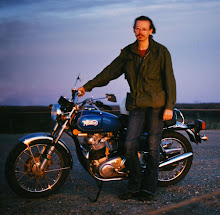
 Damn! This turned into a "blog" anyway. Sorry, but these are my thoughts on this day. The photo was shot in Dec 1970 outside my home after I arrived back from Vietnam.

Wednesday, September 18, 2019

"Thank you for your service" - revisited

After some discussions with two of my close friends, I feel the need to expound a bit more on the touchy topic of people thanking me for my service.  As I have said elsewhere, I have very mixed feelings about my service.  I wasn't ever involved in combat in Vietnam, but my service was in a logistical supply unit that kept our troops supplied in I Corps (the northernmost region of South Vietnam).  We didn't shoot people - we provided the means by which combat troops could shoot people.  Our "service" was a critical component of sustaining that war.

As most Vietnam veterans know, we were victorious in most of the battles in that war, including the Tet Offensive in 1968.  That victory, in particular, was the root cause of my tour in Vietnam being so free of combat.  The Viet Cong were crushed in that offensive and the NVA was seriously set back.  The combat troops who fought in that battle made my "easy" tour possible.

Some veterans feel that if you didn't serve in combat, you weren't really in the war.  And there are those who say if you weren't actually on the ground in Vietnam, you shouldn't be allowed to call yourself a "Vietnam Era Veteran".  I call bullshit on both these notions. 

Our combat troops served our nation's military objectives - in a war we should never have begun and had no clear path to some sort of conclusion.  That war ended, not with a massive strategic victory comparable to Dien Bien Phu, but with us essentially abandoning South Vietnam to its fate.  The ability of our troops to fight those battles required massive logistical support and my outfit was neck deep in that support.

The web of support for those combat troops spread much wider than the nation of South Vietnam.  Those who served during that time, but who never made it to South Vietnam, were embedded in a complex system that indirectly enabled that war to go on.  The USA has a military presence in many places around the world.  We can argue about the need for all those expensive installations, but by serving in the military without ever setting foot in Vietnam, our military had to draw from existing units, including the National Guard and the Reserves.  The draft was the only way the military could have enough warm bodies to support our Vietnam campaign.  I was swept up by the draft, of course.  In today's world, it is political suicide to even think about re-instituting a draft, and so our military has been stretched thin, and multiple deployments by infantry divisions are the rule, not an exception.

TV documentaries often refer to the comradeship within military units being the primary motivating factor for troops fighting in actual battles.  I can say nothing about that since I wasn't ever in combat, but what I can say is this:  for us REMFs in Vietnam, we lived in a world many of us deemed to be infected with a form of insanity.  Even non-combat troops clung to each other for support, for fear of becoming as insane as Vietnam seemed to us.  The movie "Apocalypse Now" is not a very realistic depiction of the Vietnam war, but it does capture a semblance of the feeling that I had landed in a place where many people were simply crazy.**

What this all means (to me) is that my service made possible some awful things in a war that I didn't believe was one in which we as a nation should have been involved.  After we bailed out, Vietnam fell to Communism, but it didn't become the start of a massive shift to communism around the world, as the "Domino Theory" held.  What it left our nation with was a smoldering cultural division that has lingered to this very day, long after the end of the Vietnam War.  Hence, I'm not very proud of having made my contributions in support of that war.

Nevertheless, with the passage of time since I was in the military, I'm increasingly proud of having answered my country's call.  Now, when people thank me for my service, I've been holding back my negative reactions for the simple reason that such wishes are made with the best of intentions:  to honor soldiers who were not honored after their return in any way, myself included.  What I really want to say is: "I appreciate the spirit of your gratitude for my service, but that was an evil war that left many veterans of that war with lasting pain and even death.  In addition to thanking me - a person who escaped the worst that Vietnam War offered - the best way to honor my service is to support in a concrete way those veterans who suffer from PTSD, cancer likely induced by Agent Orange, and homelessness.  Thousands of our veterans were killed in Vietnam, but have died here in the USA from disease, drug addiction, alcoholism, and suicide.  Help them in some material way - skip the "thoughts and prayers" garbage - that helps precisely no one.  Do that and your thanks will be truly honoring my service."

And we as a nation should not send our youth to foreign lands to fight in seemingly endless wars that, like Vietnam, offer no plausible end game, short of killing everyone who serves to oppose our incursions.  We do ourselves a great disservice by such wars, consuming our resources with no meaningful return on such investments for anyone other than the military-industrial complex President Eisenhower warned about.  I especially despise "chicken hawk" politicians who lead us into war with no intention of serving in combat - either for them or anyone they choose to shelter from the obligation to fight in our nation's wars.
________________
[** Footnote - no movie can ever depict any war with absolute accuracy, but some get it more right than others.  I favor "Full Metal Jacket" and "Platoon", to name a couple that include some realism in depicting situations that I witnessed or knew about during in my service.]

Thursday, August 15, 2019

A tribute to Fred Goodwin, Jr.

Yesterday morning (14 Aug 2019), I lost another friend:  Fred Goodwin, Jr.  My sincere condolences to his family and his friends (of which there are many, for good reasons).  What I'm saying here isn't a summary of Fred's life, but is an account of how and why Fred and I became friends.

This is one of my favorite photos of Fred, giving a summary of my son Chad's accomplishments on the way to Eagle Scout, at the Ketner farm (see below), during his Eagle Scout Court of Honor.

Thanks to the enthusiasm of my son Chad, he joined a Boy Scout troop (Troop 777, now dissolved) and though I didn't know it nor did I even suspect it, I was about to embark on a great adventure with my whole family - Scouting!  My knowledge of scouting was minimal, since I had quit Scouts as a boy before I even earned my Tenderfoot status - the leadership of that troop was more like a collection of Army drill sergeants and that was not appealing to me.  What I wanted was hiking and camping!  Little did I know that my wish would be granted decades later!

In the process, I was "drafted" as an Assistant Scoutmaster to be a "patrol dad" in the new Eagle patrol that included Chad.  It was via this process that I met my fellow patrol dad, Fred Goodwin, Jr.  I knew nothing about Scouting and Fred was physically challenged as a result of Cerebral Palsy.  He needed some support to stand and was eventually confined to a wheel chair.  But Fred was an Eagle Scout, as was his father, so he used his knowledge and experience to help me learn what I needed to learn.  Together, our combined abilities were one complete patrol dad.  And I found an amazing new friend.  Plus I got to know his boys, John and Fred III, and truly enjoyed the fun experiences we had on hiking and camping trails where my partner couldn't go.  At the end of the trail, Fred would be there with questions about how it went and what experiences we had shared.  He was justifiably proud of his sons, who both eventually became Eagle Scouts - Freddie at the same time as my son.  They were the second and third boys to make Eagle in our Troop.  And the first 777 Eagle scout was in our patrol!

Our patrol had some boys who were challenged by their home situations.  That was common in Troop 777.  Fred told me that for some boys, the experiences they had as a result of scouting could be the only positive experiences they were going to have in a given week.  Moreover, Fred informed me that if Chad needed any correction to his words and/or actions during a scouting event, the other adults in the troop would take care of it.  In other words, I was to back off and shut up!  I learned the wisdom of that and found I have large reserves of patience for teenage young men other than Chad.  I tried to put my ego aside, and to apply that lesson of patience with my own son!  We're in Scouting to help boys mature into good men, to push that process forward however we could.  The troop was zeroed in on the boys, not us!!  It became evident that our leadership included some pretty wise people, including Fred.

Fred and I made extensive use of land owned by the Ketner family in East Norman, who had generously donated use of that land for weekend campouts.  Fred let me know that our job was to help the boys learn how to run the patrol on their own, so we gradually increased the scope of their responsibilities and after a few years, Fred and I could relax and let the boys run things.  They readily accepted their responsibilities and I learned that we had to allow our Scouts to fail as they tried new things.  Failure can be an excellent teacher. 

There are far too many stories of how Fred helped me in Scouting to tell here.  The Ketner farm was where Freddie and Chad wanted their Eagle Scout Court of Honor.  That ceremony became quite a memorable experience, thanks to hordes of evil chiggers!

It became clear that I wanted to be part of the process that Fred and other adults in the troop were carrying out.  There was a perfect balance between fun and doing what was necessary to achieve rank advancement in Scouting.  We were not a Scouting "eagle factory"- but we did produce our fair share.

Fred accepted many more roles in the troop than "just" a patrol dad.  He was always willing to help if need be, and he helped many more Scouts than the members of our Eagle Patrol.  He trusted me with both his boys during their journey in Scouting as Scouts.  His boys have both become fine young men, with families of their own, and I'm proud of what they've achieved so far.  We loved Fred's parents a lot, and still miss them.  I know Fred was proud of his family, naturally.


Fred's grown-up boys John (left) and Fred III ("Freddie"- right) as we were working on a project at Fred's home.

Fred was "handicapped" with his CP, but in my humble opinion, he did more with his capabilities than most others without such handicaps ever manage to achieve.  He worked for the OU Physical Plant and clearly was an important cog in that machine.  That Fred will be missed is pretty much assured and his deeds achieved good ends that will live on, many of which I probably am unaware.

Wednesday, July 31, 2019

A tribute to a very special friend - Joel Price


Anyone observant of my posts on Facebook will recognize the name of someone whose shared thoughts here were so very much in sync with my own: Joel Price. I "met" Joel Price, thanks to my friend RJ Evans. RJ invited Joel to participate on his internet radio show, Shocknet Radio's "American Heathen," and later invited my participation. Joel's persona on the show was as "Yahweh" and he dispensed considerable wisdom and insight in his show segments. And the theme song for his show segment was Chris Rae's "The Road to Hell" - a favorite tune for me.  The lyrics to Part I: 

Stood still on a highway
I saw a woman
By the side of the road
With a face that I knew like my own
Reflected in my window
Well she walked up to my quarterlight
And she bent down real slow
A fearful pressure paralysed me in my shadow
She said 'Son, what are you doing here?
My fear for you has turned me in my grave.'
I said 'Mama, I come to the valley of the rich, 

myself to sell.'
She said 'Son, this is the road to hell!'

I think most all the listeners looked forward to Joel's part in the show.  His radio voice was dignified and powerful, making his words seem all the wiser. After RJ shut down Shocknet Radio, I stayed in contact with Joel and always found his FB posts to be of the same caliber as his radio show segments. I've reposted many of his contributions.  He was a relentless fan of the Constitution and our nation, with its mandated separation of church and government.  And, of course, he was an atheist.  There are, no doubt, more accomplishments and wisdom he dispensed about which I know nothing.

Joel was a practicing attorney in Fort Smith, AR, and I can imagine he was a successful lawyer. His arguments certainly reflected his commitment to truth and justice.  His tag line for his American Heathen show segments was:


"It does me no injury for my neighbor to say there are 20 gods or no God. It neither picks my pocket nor breaks my leg."
 
- a quote from Thomas Jefferson.  Recently, he informed selected friends with whom he was in touch in June that he had been diagnosed with stage 4 cancer that had metastasized to his lungs.  This morning (30 July 2019) I got word that Joel has died.  Cancer can be really cruel. For someone I never met face-to-face, I find myself seriously grieving over the loss of my friend. His insights and his profoundly rational views (especially concerning religion) will be missed by many, and I will miss him terribly. My condolences to his family and his close friends.

Sunday, July 7, 2019

Thoughts on American Patriotism

A friend and colleague has challenged me to write up something about patriotism.  My usual starting point for this sort of musing is the definition of the key word - patriotism - "Patriotism or national pride is the feeling of love, devotion and sense of attachment to a homeland and alliance with other citizens who share the same sentiment."  I make no claims to deep or exceptional insight.  These are just my thoughts at the moment.

Let there be no doubt or confusion - I love my native land.  It's a nation with much natural beauty, dramatic weather, large amounts of natural resources, and (perhaps most important) a set of principles that are inspirational and form the basis for the Constitution.  This lays down the rules for a government that's intended to reward individual initiative so that, by hard work and creative insight, anyone can achieve their dreams here.  Pecuniary rewards and a successful career are not guaranteed to anyone.  Equal opportunity for all, but the outcomes of any efforts are not determined in advance.

The principles of equal treatment under the law, and freedom from discrimination on the basis of race, religion, and gender have not consistently been followed by our elected officials, right from the very beginning, including those considered to be founders of our nation.  That even the founders have not lived up to the noble words in our national documents (the Declaration of Independence and the Constitution) says that we as a nation still suffer from injustice and discrimination that are direct violations of those principles.  We have a long history of genocidal tactics against the indigenous people who, after all, were the very first Americans.  We have created "legal" exemptions from some of the laws that forbid unequal treatment of minorities and the world observes our hypocrisy as we fail to live up to our noble principles, despite the claims of "American Exceptionalism" by some Americans.

When the USA was founded, it was recognized that the founders were conducting an experiment, in which the Constitution lays out government procedures among the three branches of government envisioned by the founders and promises the existence of many important freedoms.  It is often referred to as "a grand experiment" which no major nation before us had ever tried.  Freedom and equality are important first principles.  I have long been pleased, and a bit proud, to have been born within this experiment and its continuance is important to me.  

The fact that we're not perfect at following the very concepts we claim to hold dear means that any objective review of our behavior must include a recognition that our national, state, and local governments have failed to observe the rules as documented in the Constitution.  We need to "own" our misdeeds as a nation and seek to learn from our mistakes and seek to prevent further violations of our national principles.  I subscribe totally to the notion that while I love my native land, I often disagree (sometimes  strongly) with the behavior of our government.  Even Abraham Lincoln used the excuse of the Civil War to suspend use of the writ of Habeas Corpus - a writ requiring a person under arrest to be brought before a judge or into court, especially to secure the person's release unless lawful grounds are shown for their detention.  President Franklin D. Roosevelt sanctioned the internment of Japanese-Americans during WWII.

As we saw in the Nixon era, our government can run off the rails for Constitutional democracy into corruption and evil.  Many in our nation are actually opposed to freedom and liberty for all Americans - they are bigots who consider those who are different from them to be somehow unworthy of the support offered by our governments.  Such attitudes often come wrapped in the Bible and the flag, where the adherents to injustice see themselves as patriots as they seek to abrogate the very principles that have made our nation so successful,

While I was in graduate school, I was drafted to serve in the Army.  I had already been reading of the history of Vietnam and I learned they had a long history of stubborn resistance to those who would occupy their lands.  Evidently, the government of America during the Presidencies of JFK, Lyndon B. Johnson, and Richard M. Nixon felt we could just brush aside any interference from the Communists leading the revolt against the puppet government of South Vietnam.  Apparently, our government felt they could succeed where previous invaders of Vietnam (including the French) failed.  I had a dilemma:  I was being ordered to become part of a war effort that I opposed.  My choices were: 

1. refuse being drafted and go to jail,
2. escape to Canada, or
3. accept the order and go serve. 

As I saw it at the time,  the first two options would mean I would probably never have the career I desperately wanted.  I had to go serve, on that basis, and that's what I did.  I continue to have mixed feelings about my service - during my 11 months in Phu Bai, South Vietnam I never was in any combat, so my good assignment left me free of nightmares, PTSD, and all the ravages of being in combat.  However little I contributed to the war effort, I never made a public stand against the war.  I just wanted to survive it and get back to the USA in one piece.  I'm not necessary proud of my service, but when my nation called, I went and served despite my misgivings and doubts.

The Vietnam war became an albatross around Nixon's neck and was an issue that led to deep divisions in American society.  Nixon was forced to bring the war to an end and perhaps he was the only person who actually believed we left Vietnam in an "honorable" fashion.  The fact is, our asses were kicked by a third-rate power that had the advantage of seeking to remove unwanted invaders and was willing to take many casualties for so long as it took to get the USA to turn tail.  We "won" most of the battles, but we lost the war.

A favorite saying among the conservatives (the so-called "silent majority") who at the time supported the war was "America - love it or leave it."  Well, my view is that that saying is bullshit!  If I disagree with something the government has done, I'm supposed to pack up and leave my native land so that all the rednecks who supported the war wouldn't be challenged to examine the behavior of their government?  No way, dude!  There's no point to all the freedoms guaranteed by the Constitution if someone who disapproves of some government behavior isn't afforded those rights.  If we lived in a perfect world, perhaps there would be no disagreements and no clash of principles.  But that's not our world and it's not the way my nation operates.

I've come to the conclusion that public protests (like that of Colin Kaepernick) are the most important element of our national freedoms.  Great love for the nation is exhibited by those who want to work within the system of laws to try to turn something wrong into a positive.  We can't learn from our mistakes if (a) we believe our government never makes mistakes, and/or (b) we ignore or even cover up those mistakes.  A patriot doesn't see America as perfect but works to overcome our errors and misjudgments via the rules and norms of our democracy, and may advocate changing rules and norms to prevent injustice and discrimination.

Right now, we're experiencing a critical juncture of our national history.  Trump and his GOP enablers are seemingly working toward the abolition of the Constitution and the creation of an authoritarian dictatorship.  They're providing encouragement to bigots in our nation, committing a crime against humanity against the migrants seeking asylum and a new opportunity for their families.  My government is being transformed from a Constitutional democracy into a cruel dictatorship.  How can I support the Trump regime?  As I see it, I would rather die than live under a Trumpian version of totalitarianism.  Despite my deep and abiding love for my nation, if its government is recast in the image of Trump and his enablers, I will exhibit my patriotism by being an advocate for the cessation of the Trumpian dictatorship!

Wednesday, April 11, 2018

A tribute to Matt Biddle, my friend and colleague


Matt with his daughter, Faith, on the occasion of a visit to our home

My friend Matt Biddle died last evening (10 April 2018 - the 39th anniversary of the Red River Valley tornado outbreak), after a long struggle with a host of physical challenges.  I can't detail his entire medical history, but his most recent problem was a heart stoppage, resulting in anoxic brain damage.  When Vickie and I went to see him in the ICU of Mercy Hospital, he was unresponsive and on a ventilator.  His family then decided the best thing would be to take him off of life support.  His passing was peaceful and his family was there at the end.

Matt was saddled with these physical difficulties for the entire time I knew him, but he somehow managed to carry on with his life.  To me, that represents extraordinary courage and determination - those were two of his defining characteristics.  Matt was seriously dedicated to issues that involved people, as a geographer who felt compassion for others and sought to provide mechanisms to reach out and help those with physical handicaps in severe weather situations, even as he had to overcome so many physical problems himself.  His contributions to the University of Oklahoma in terms of storm preparedness were vastly out of proportion with his rewards - both financial and personal.  He was an avid storm chaser and participated in scientific field programs whenever given the opportunity - he supported the science with his full commitment to whatever missions he was given.  He was also a big fan of the Detroit Red Wings.

Matt was an opinionated, argumentative person, so naturally I was drawn to him - so much of what he said and stood for made perfect sense to me.  Of course, I didn't always agree with him about everything, so we argued frequently.  I don't believe he ever took this personally and he gave at least as much as he got.  I always respected what Matt had to say, even if I disagreed at times.  Sadly, Matt wasn't appreciated by academics and management because he spoke his mind clearly and with passion.  Most seemed ready to kick him under the proverbial bus rather than to provide him with opportunities and the means to contribute.  I was able to help Matt obtain his PhD in Geography after Matt had a stroke that left him with aphasia affecting his ability to speak and write his thoughts.  Think about how frustrating it would be to have thoughts but be unable to express them!  Nevertheless, I forced him to do as much as he could without my intervention, so he could feel he "owned" his dissertation.  I was so proud of him and pleased to see him conquer the process and his aphasia on the day he successfully defended his doctoral dissertation.  Unfortunately, even that achievement failed to win him much respect in the professional world.  We tried several times to get funding to do various interdisciplinary projects related to severe storm preparedness, but ... no luck.


Matt's PhD Advisory Committee after his successful dissertation defense

His life during the time I knew him seemed to be a constant roller-coaster ride.  Great joy and satisfaction with his successes, only to be laid low by one physical issue after another.  His greatest and most constant joy was his daughter, Faith, who is pretty and quite bright - she's always done well in school.  I know she looked up to Matt and did things to help him cope with the tough side of his life.  He simply adored her.

I regret not having spent more time with him.  I'm reminded of an occasion when I was chasing with Al Moller in Kansas.  Several of us, including Matt, converged on an Applebee's in Newton, KS for a late supper.  We all jabbered on for a long pleasant interlude before going our separate ways.  A happy memory.  It's also somehow comforting to know that despite all his difficulties, he was able to chase;  it was something he loved doing.

Occasionally, we'd get together for a beer and perhaps a meal, but in retrospect, I wish we had done so much more often.  Matt leaves behind many in the chasing community who held him in high esteem.  If the level of his professional support had been based on the admiration of his friends, he'd have been able to do great things.  His passing is far too soon but the challenges with his body he faced were too much even for his strong will.  Matt may never be cited very often in scholarly circles, but his spirit and his accomplishments live on in the hearts and minds of the many who knew and loved him.  He will be missed by a multitude.

Wednesday, March 28, 2018

My de facto brother, Bob Lundeen has died

Last night, we learned that my cousin, Robert Lundeen, died after a protracted battle with Alzheimer's Disease.  Bob was the big brother I never had.  To understand how this came about, I have to acknowledge that my mother and her younger sister, Frances Lundeen (Bob's mother), had a very special closeness.  Thus, it came to pass that I spent my summers on the farm of my Aunt Fran and Uncle Irving for many years.  I was treated just like their two boys, Harlan and Bob.  In addition to my idyllic summers on the farm, we visited them every Christmas, and they visited us most every Thanksgiving.  Their farm was about a 4-hour drive from our house, near Galesburg, IL.


Cousin Bob, in 1998.  That wry smile was a trademark of his.

Being a few years older than I, it was inevitable that I thought of Bob as a role model.  It was also inevitable that he would tease me without mercy.  That's what older brothers do, naturally.  There were times when his teasing would really make me upset, but I eventually learned that if I didn't show him I was upset, he'd quit - teasing's no fun if it has no impact.   That was when I sometimes referred to him as "Sweet Old Bob - or sometimes just the initials"!  Despite all the teasing, Bob was mostly pretty good to me and we did many fun things together, including him taking me to the drag races:  specifically, the World Series of Drag Racing at the dragstrip in Cordova, Illinois.

We had many hours together on the farm, so we sometimes did things that young boys do.  One time, we filled up a pipe welded closed at one end, used to pound metal fence posts into the ground, with about 50 large grasshoppers.  Bob's parents had left us alone on the farm - with Bob, that was an open invitation for boyish deviltry.  After filling the pipe, we threw in a "Silver Salute" firecracker (an M-80) that Bob had obtained somehow.  When it went off, a jet of flame and grasshopper parts sprayed out and splattered pieces of grasshopper all over the north exterior wall of their house.  The pipe itself contained a "soup" of grasshopper parts and the goo of grasshopper guts.  Blech!  I don't know if his parents ever discovered the evidence, which was gradually washed away by rainfall.  We didn't repeat the incident.

I'd already been leaning toward a career in meteorology, and Bob was destined to become a mechanical engineer.  During slack moments on the farm, we would talk about our dreams and hopes for the future.  Bob had a small mirror telescope and we would go out into a field in the evening and use the telescope to see Jupiter and Saturn and the Moon and nebulae and star clusters and so on.  On a warm Illinois evening in the summer, it was an inspirational trip to the planets and stars we made many times.  I always loved the night sky on the farm - the very little light pollution and virtually no haze made the dark sky pop!!  The typical summer rains in Illinois corn country are associated with nocturnal thunderstorms.  Many a night I was awakened, in the room Bob and I shared when I was there, by the thunder and lightning show.  My enjoyment of storms was a foreshadowing of my storm chasing hobby, as well as my career as a scientist.

Bob wanted to get away from the farm, whereas I felt it was a delightful vacation to be part of an American family farm enterprise.  I guessed eventually that living it constantly could give one a different perspective, as opposed to my occasional dabblings in family farm agriculture.  Bob helped me to see how someone might have a different point of view from my own.  He was teaching me a life lesson.  One of many.

When we had both grown up and established in our careers, Bob used to call me on the phone from Idaho and just wanted to talk, sometimes at great length.  I always was happy when he called and so I could hear about what was going on in his life, and share my experiences with him as an equal.  Bob's mechanical engineering career led him to work for the Navy in Idaho Falls; evidently associated with the nuclear machinery in a submarine.  His work was classified so he couldn't say much about it.    Vickie and I finally made it to Idaho Falls on a 2012 vacation trip out West, and it was great to visit with him in the Idaho home where he raised his two boys, Chris and Gregg.  Chris and his wife Cindy have been caring for Bob during the course of his battle with Alzheimer's.

I can't even begin to recount all the ways that Bob has influenced me in positive ways.  His passing leaves an unfillable hole in my life.  He is already profoundly missed.

Monday, March 5, 2018

Spirituality and loss of self

After some discussions with friends over the weekend, I was reminded of very profound events that have occurred during storm chases, and during the pursuit of my scientific understanding of the world.  The essential element in this is what I refer to as "loss of self" that can occur when your ordinary life with its concerns about yourself and your needs or obligations fades away and is replaced by a peaceful surrender to what is happening around you.  Your ego disappears and you experience a feeling of merger with what you are experiencing.

During storm chases, this can happen when you find yourself confronted with something much larger than yourself that's just so awe-inspiring you may be "thunderstruck" (pun intended) - your jaw drops open and you're mesmerized by what you're seeing.  A chaser might well be so absorbed with what she's witnessing that cameras are just hanging in her hand by her side, unraised and unused.  The majesty of what you see can be so overwhelming in its majesty and power, you can become completely absorbed in the event.  The "self" has disappeared, in a flood of astonishment.  Such moments are unpredictable (as are the events that create them) and are always unexpected.  These examples are relatively easy to explain and are understandable to most people.  This part of storm chasing is often described by storm chasers in their accounts of their adventures.  It leads to such adjectives as "incredible", "awesome", "jaw dropping", and so forth - terms that in my opinion are both overused and somewhat misleading.  They seek to describe the triggers for this loss of self.

When Al Moller and I intercepted the 08 June 1995 tornado in Pampa, TX, about halfway through its life cycle, we stopped and got out of our chase vehicle to continue our photography and videography of the tornado.  When the tornado finally dissipated, I discovered that my mouth was completely dry.  Perhaps this was because of adrenaline, or the fact that my jaw had dropped open and stayed that way, or both.  Regardless, it's somewhat amazing I managed to continue operating my video camera during this time of loss of self.  I was transfixed with the spectacle.  It felt like waking up from a dream when the last remnants of the rope-out faded away.

There's another way I've had this loss of self during chasing.  I've developed a serious love affair with the U.S. central and high plains and the people who live there.  In the process of a chase, there can be a certain amount of down time and I often try to use that down time to capture images that convey the emotional content of my feelings toward the plains.  Yes, I'm a hopeless romantic when it comes to those oceans of seemingly empty real estate.  What I see clearly is influenced by the light we encounter (photography can be thought of as "capturing the light"), by the dramatics unfolding in the sky, by the flora and fauna of the plains, by the wistful character of weather-beaten human structures and the stories they can tell, and so on.  When we get out of our cars and walk into the landscapes of the plains, I can find myself in a very spiritual state where my self vanishes.  For instance, many of the beautiful wildflowers of the plains are at the end of relatively long stalks, so they're prone to flailing about from the action of the virtually inevitable plains wind.  To capture what we envision, we may have to wait for that brief moment when the wind calms down and we can capture that moment.  Ordinarily, I can be impatient and not want to spend time essentially doing nothing.  But I find I can call upon something in those moments that lets me wait, silent and immobile, for just that brief instant, for many minutes, if need be.  When my self disappears, I'm able to wait, like a spider, to capture my "prey".  I experience in a first hand way something akin to what that spider in her web experiences.

In becoming totally absorbed in doing my science, the effort to concentrate on what I'm doing becomes easy when I'm so wound up in my work that time and seemingly boring, repetitive simple tasks become important only as the means of reaching my goal of following some new insight.  What might look to someone else as a task both tedious and trivial is, for me, a transcendental experience.  The passage of time is not noticeable.  I can immerse myself in this for hours without difficulty, as I'm so fixated on finishing the work.  Most of science seems boring to non-scientists but in my world, it can be transformed into a deeply spiritual adventure with the potential for something really exciting at the end.

I often tell people that the plains can elicit spiritual experiences, but in order to experience them, you have to slow down, go to quiet places in your mind, stop talking, and focus deeply on what's going on around you.  The light, the wind, the sky, the life of the plains can transport you to a world you can experience at the the deepest levels of your conscious mind.  Such moments can't be summoned on command.  You don't reach them simply by willing them to happen (although you can put yourself in situations that might lead you to them).  They come on without you being aware of their approach until you realize you're in them - a timeless state of union with the world around you and the universe.  As Robinson Jeffers wrote:
 
Integrity is wholeness,
the greatest beauty is
Organic wholeness, the wholeness of life and things, the divine beauty
of the universe. Love that, not man
Apart from that, or else you will share man's pitiful confusions,
or drown in despair when his days darken. 


Man, a part of that, not man apart from that.  Your self disappears when you have that deep sense of being a small part of the majesty and glory of the natural world.  The feeling that we dwindle to insignificance is by no means negative when we feel we've somehow merged with those majesties.

Monday, February 19, 2018

Boomer Sooner?

I've spent more of my life in Oklahoma than anywhere else.  I like the weather here, given my passion for severe thunderstorms.  I like the physical geography of the state, with its large contrasts from east to west.  I was rather satisfied with the education I received here at the University of Oklahoma (OU) and had some great mentors who were OU faculty and staff.  However, recent postings on social media have raised a point of concern with regard to the University's "mascot" - the Sooners.  The school's fight song is "Boomer Sooner", composed by Fred Waring (!). 

 Many people are unaware of the origin of the term Sooners - it's tied to the Oklahoma Land Rush of 1889.  The "Boomers" were settlers who tried to grab parcels of land blatantly in the so-called "unassigned lands" (that was home to Native Americans) before the official starting date of 22 April 1989.  The US Army removed as many of them as they could.  The "Sooners" were people who sneaked into the unassigned lands early but kept a low profile, hoping to make a legal claim after the official starting date.  Both Boomers and Sooners were, effectively, cheaters seeking to grab the land of the Native Americans before they were allowed to do so.  These are not exactly the sort of folks that one would choose as a role model and certainly should be somewhat embarrassing to the University.  But I have my doubts many associated with OU ever give it any thought.

We already have seen a growing chorus of discontent by indigenous people with using Native American-associated terms for sporting team and Universities.  Recently, the 'mascot' of the University of North Dakota was changed from "The Fighting Sioux" to "The Fighting Hawks" in response to many protests by the Sioux tribe.  The controversy there was long and bitter.  There also has been concern about the Kansas City Chiefs, the Florida State Seminoles, the Washington Redskins (!), the Cleveland Indians, the Chicago Blackhawks, and many others.  Not surprisingly, there's been considerable pushback from those who rationalize such uses of these nicknames and logos.  I'm not about to enter the morass of that debate, but I do generally believe that our use of such cultural icons for our own purposes is disrespectful to Native Americans and their cultures.  Obviously, there are those who disagree.

Here at OU, the mascot is even worse than the preceding examples, because it honors those who participated in the plundering of Native American lands by white settlers.  The Boomers and Sooners grabbed their parcels of land by illegal means.  The Native Americans were the ultimate losers, sadly.  The whole of the lower 48 states represents the home of Native Americans who were here long before any white European settlers arrived to claim all those lands (except for reservations of generally worthless land assigned to those Native Americans who were not killed).  The indigenous people of the Americas were subjected to various forms of genocide and destruction of the original environment on which they depended.

Our treatment of indigenous people is shameful and it continues right up to this very day!  Anyone with a conscience should be deeply ashamed of this aspect of our national history.  As usual, the rationale for this history has been based on viewing them as primitive savages who were not even qualified as human beings with unalienable rights.  I have little expectation that OU will be changing their mascot any time soon.  White privilege is alive and thriving here in Oklahoma, and that isn't likely to change in the foreseeable future.  But I don't have to like that situation, and I don't have to support robbing Native Americans of their cultural heritage.

Saturday, November 11, 2017

"Thank you for your service"

On this Veterans Day, I once again have to confront the gulf between combat zone military veterans and those who have never served in a combat zone. Being in the military means that you've accepted the status of being willing to sacrifice anything and everything, including your physical and mental health, right up to and including losing your life. You've given your nation a signed blank check and they can write in the amount.  For those veterans serving in combat zones, and especially those who actually participated in combat, it's difficult to try to communicate their experiences to those who haven't so served. I've described my experiences here.

On one day per year, we see lots of messages of gratitude to our veterans, and that's nice, but what about the other 364 days? What are we doing to provide help to veterans who have returned from combat and been struggling to cope with their endless nightmares? No one who participated in combat ever returns to become the same person they were before. I was extremely fortunate - it only took me a year or so to return to something close to my former self after leaving the military, but even then, I was forever changed by my military experiences.  Some of those changes in my life were positive, and some were negative.  I was blessed with good fortune, for no obvious reason.  It could have turned out very differently.

I really do value the sentiments expressed by those who offer gratitude for my time in service, but I'm concerned for those veterans who need so much more than words from their nation. Our nation should show their gratitude in their actions as well as mere words, when it comes to our combat veterans. Some of our veterans reach a time when they just can't deal with their devils created by the horrible things they've experienced - too many suicides, broken families, homeless vets, drug addictions, etc. I feel unworthy of gratitude for my time in the military, when I think about those who have suffered so much and been unable to find any peace in their minds.  And this says nothing about those who have had life-changing physical injuries to try to overcome.

We ask young people to serve and protect our freedoms, but we sometimes send them to fight in unwinnable wars on foreign soil for no good reason. Vietnam was such a war, and our so-called "war on terrorism" is another example.  How do you win a war against a tactic?  How do you define what is a "win" in such a war?  We had a similar problem in Vietnam - it was a war against an economic and political ideology in a far away land.  We never found a meaningful exit strategy in Vietnam, so we just left and all that followed showed that our involvement in Vietnam was pointless.  Millions died for nothing.  The young men and women serving in combat have to make hard choices about what to do in hostile circumstance and, if they choose incorrectly, we punish them harshly. We're getting better about trying to help veterans with PTSD and such, but we still have a long way to go.

Don't ever thank veterans for their service but then turn around and ask someone else to risk everything without a damned good reason!  Don't be so eager to support military actions to back up political positions.  Don't send our young men and women into combat and then oppose aid for those who manage to survive.  I saw somewhere that about 9,000 Vietnam veterans have committed suicide since they returned - they actually died in Vietnam.  I think their names should be added to the wall at the National Vietnam Memorial as combat fatalities.  They're not on that wall only because their injuries required more time to take their lives.  That raises the Vietnam toll of American combat deaths from 58,000 to 67,000.

Tuesday, October 17, 2017

Empathy for women, now!

I've long been an advocate for the cessation of discrimination against, and the abuse of, women in our society.  Progress has been made, but there remains a long way to go.  In the past several days, FaceBook has seen numerous posts of "Me, Too" from women, about having been harassed and/or assaulted (including rape).  The sad fact is that most women will be harassed or assaulted at some time in their lives - likely, repeatedly.  The awful part of this is that most of the crimes against women are not reported.  Why not?  Unfortunately, our culture seems all too inclined to blame assault victims for being assaulted!!  And all too inclined to allow the perpetrators to get away with it, either being let off scot-free or given a very mild slap on the wrist.  And all too inclined to provide little or no support for the victims, in terms of helping them seek justice or in terms of providing care for what many women experience as PTSD as a result of these attacks. "Well, the way she was dressed, she was asking for it!"  "Well she should have known better to be in that place at night!"  "It was just boys being boys!"  Bullshit!!  There is no excuse for harassment and rape, and the blame rests solely on the perpetrator, never the victims.  If we want to stop these crimes, we must teach our boys not to commit violence of any sort against women.  "No!" means no, damn it!

It may surprise some that many such incidents also occur to men.  I was molested (raped) by a neighbor when I was a boy.  I was so humiliated and shamed by it, I didn't tell anyone (except for my very best friend at the time), for decades - certainly not my parents!  This pedophile got away with it, as it seems many do.  Rape is not a sexual act - rather, it uses the apparatus of sex as a weapon to degrade and humiliate the victims in what is an act of violence, rather than sex.  Pedophiles - a subset of sexual assaulters - often commit assaults on either boys or girls.  And it often succeeds in silencing its victims, as it did with me. 

My wife tells me that most rapists have committed their crime many, many times, and almost certainly will never stop hunting for new victims unless they're incarcerated ... or die.  The actual frequency of rape is not known, owing to the underreporting issue, but I'm pretty certain it's much higher than the actual numbers will show.  I know of no other rapes by the man who did it to me, but it seems unlikely to have been an isolated event in his life.  His name is Paul Newton, and he lived on our block in my home town in the Chicago suburbs, 3 houses south.  I'm sure it's well beyond the statute of limitations, but I hope some other victim had the strength and courage to report him.  But probably not. 

Another disgusting incident of a different nature occurred when I was working at the National Severe Storms Laboratory.  A very famous and honored meteorologist was invited to be a consulting senior scientist there by the Lab Director, Dr. Jeff Kimpel, and it turns out he was sexually harassing women who worked in the lab.  After I was made aware of his disgusting behavior, I was going to report him, but one of his victims there begged me not to do it.  She felt that reporting him would only make things worse for her!!  Reluctantly, I did as she asked, and never reported the evil bastard.  She was probably right about the outcome, and that makes me very sad when I think about how many women have gone through this, and been powerless to obtain justice.  From everything I've heard during my time there, at that time, the overall treatment of women at NSSL was pretty poor, with an atmosphere of "Boys will be boys" at high levels in the management, despite all the safeguards that had been put into effect.

Fortunately, I've been able to overcome the shame of my molestation and now realize I wasn't to blame in any way.  If there can be said to be a "benefit" to being molested, it's that I've experienced what many women have experienced, so I have a sense of what they must go through.  The "Me, too!" campaign on FaceBook is allowing many people to come forward and say they, too, have been through harassment/assault.  Stories are optional.  Our society has looked the other way for far too long and the time has come to seek justice and provide consistent support for the victims.  It's time to take a stand against the injustices we've inflicted on victims for too long.  If you've never been a victim, just try to imagine how awful it would be.  Then use that understanding to get up and speak out against crimes of sexual violence - against women and men, girls and boys!

Me, too!!

Monday, October 16, 2017

Trump is just a symptom of a greater malaise in America

There's an insidious illness that has infected the USA, causing our culture to evolve in ways that will eventually end badly for us.  It has become widespread and malignant - like a cancer, it comes from within rather than a foreign invasion.  The election of the incompetent, ignorant, narcissistic, racist, misogynist, corrupt clown that only a minority of Americans voted for in last year's November election is but a symptom of the problem.

The founders of this nation, as imperfect as they were, began what is often called "The Great American Experiment in Democracy".  The experimental aspect of how our nation was created by those founders, was expressed eloquently by President Abraham Lincoln in his Gettysburg address:

Four score and seven years ago our fathers brought forth on this continent, a new nation, conceived in Liberty, and dedicated to the proposition that all men are created equal.

The Civil War was a rigorous test of those principles, and the nation managed to stay together, sort of.  Given that the Confederate battle flag known as the "Stars and Bars" has become symbolic of, not just the Confederacy, but more so of the racism that caused the Civil War in the first place.  That racism (not limited to the Southern states), like the HIV virus, clearly lives on to this day within our nation.  It has gained widespread support and its persistence is a poison to the principle of equality for all humans in our nation.

Many of these issues surfaced again during the turbulent era of US involvement in Vietnam.  Similar divisions were present in the 1960s that had been around during the Civil War.  And those same divisions in our society plague us today, without the benefit of the spirit of compromise upon which our nation was founded.  Political parties have become a corrupting influence on us, where party loyalty is more valued than service to the American people.

The founders of our nation fell quite a ways short of living up to their own principles, of course.  That shortfall is still obvious today in many Americans.  Equality for all people actually never has been achieved in America, and we have made at best only slow and erratic progress at making equality a reality for everyone.  Women have been given the vote, but they're still being discriminated against in the workplace (and elsewhere) and subjected to sexual harassment and assault (including rape).  Justice for the perpetrators of harassment and assault against women remains elusive - power and money buy such criminals a free pass, despite our ideals.  Women actually are blamed for these crimes, rather than those committing them.  In the face of such inequality, most of the discrimination and the crimes against women are never reported, and in the rare instances where they are reported, that often backfires on the women, not the perps.

After slavery was abolished, racial inequality remains a fact of life experienced on a daily basis for most non-white Americans.  The police are charged with enforcing the laws of the land, but some of the police are simply brutal thugs, free to attack and even kill without being held accountable.  And the police commit such crimes disproportionately on non-white Americans.  Every black family must have "that conversation" with their children to make them aware that justice isn't equal in America.  The default assumption among many whites is that non-whites match the stereotypes projected on them by white Americans (who live in an invisible "bubble" of white privilege), and so many whites are completely unaware of the reality of discrimination against non-whites.

Non-christians in America are widely despised by the "religious right", especially Muslims and atheists, these days.  Christian notions of morality are being forced on all Americans on a daily basis.  I'm not going to go off on a rant against all religion, but here in America, creeping theocracy is generally associated with conservatives, who yearn to impose a mythical vision of America as they imagine it "used to be" when religious discrimination was not being opposed by those who believe in real freedom, not only of, but also from religion.  The "Establishment Clause" of the 1st Constitutional Amendment is constantly under attack by the religious right.  When people believe their god is on their side, they think that means they can fight for a theocratic USA by any means necessary.

Science and the tools of science - education, logic, evidence - are now widely mistrusted by many Americans.  There is a deep thread of anti-science and anti-intellectual thought that has always existed in America, but it seems to be growing more popular.  Public education is being threatened by siphoning even the diminishing taxpayer support for education into religious schools via the so-called "vouchers".  Too many Americans are monumentally ignorant about science, history, geography, mathematics, civics, and more.  Democracy depends on being supported by educated voters, so the attacks on public education are actually attacks on our democratic principles.  To make voting decisions in the modern world dominated by technology requires people who understand how things in our society work.  Otherwise, they are too easily led astray by would-be dictators.

Many politicians are being corrupted by large corporations pouring vast amounts of money to buy special favors for such companies, at taxpayer expense.  The "Trust Busting" era when Teddy Roosevelt broke the power of the corporations, is little more than a distant memory.  The Republican party has been taken over by the far right wing of their party and now supports tax breaks for big corporations while taking resources away that have been providing support for indigent people who need external help just to survive.  The indigent suffer even as the rich get richer.  Income inequality is a capitalist form of slavery and could eventually result in a violent revolution, with the indigent protests likely to be slaughtered by the very police who have pledged to serve and protect them.  Look at recent events for small-scale examples, such as the protests by the Standing Rock Sioux.

The trainwreck that is the crypto-fascist regime under Trump and his GOP supporters is simply a reflection of the decay from within that is infecting our nation.  Most Americans don't exercise their right to vote, and that tendency is at least part of the reason we have been saddled with this regime.  By not voting, Americans are giving up on the American Experiment and our democracy is being threatened by the drift toward fascism.  The right-wing extremists seem more interested in voting than the moderate center.  What is considered "left-wing extremism" is what used to be considered "liberal" while the true extreme left-wing is left out of the political picture altogether and so is reduced to protests and occasional violence.  No one in America wants it to become Communist, and the Communist threat pretty much disintegrated in 1989.  Disenfranchising Americans (limited predominantly to those who would cast a "liberal" vote) is also a terrible stain on the democratic experiment here, and the GOP has mastered the tactic.

Our current regime has dedicated itself to erasing any remnant of their sworn enemy - Barack Obama - as if all of the vitriol poured on him during his time as our President were actually true.  This is causing the US to lose its role as the world leader.  We are alienating our allies and encouraging our enemies.  And we have a childish psychopath with his finger on the thermonuclear trigger!

We seem to be tending toward going down a road to total collapse of liberal democracy, unlikely to be identical to, but also not unlike, the experiences of the moderate provisional government in Russia before the revolt by the Bolsheviks that put them in power, and that of the moderate Weimar Republic in Germany before the triumphs of the Nazis.  The different ideologies mask the many similarities between the Bolshevk and Nazi dictatorships.  History shows us that extremists can win, even when they only represent a small minority of the people in a nation - and we are not immune from having something like that happen!  The signs of our willingness to slide toward fascism have been apparent from the start of the 2016 election.  Extremists have a clear picture of what they want and are willing to do whatever it takes to "win", no matter how much suffering they create in achieving their cause.  Moderates often are paralyzed with indecision about what to do and how to do it - they talk, while extremists act.  Are we seeing the last days of the Great American Experiment?  American "exceptionalism" is a nationalist myth.  There is nothing inherent in American Democracy that will enable it to survive - the testing of its ability to endure has been ongoing since before the Civil War!!

Now we are engaged in a struggle about whether our nation, so conceived and dedicated to the principle of equality for all its people, can endure as a beacon of democracy and freedom.  It is altogether fitting and proper we should do this.  On this struggle hangs the outcome - whether or not this nation shall have a new birth of freedom so that our government of all its people, by all its people, and for all its people, shall not vanish from this Earth.

Friday, September 8, 2017

We've never experienced anything like it!

I write this as Hurricane Irma bears down on South Florida, with the potential to be up there with the worst ever disasters from a hurricane in Florida.  I also hear some people saying they have ridden out other hurricanes and so are planning on riding out Irma.  This ridiculous notion deserves some consideration ...

In my tornado research, I spent decades becoming familiar with the climatological record of tornado occurrences in the USA.  In the process, one can't help but observe that really big, bad tornadoes are but a small minority of the 1000 or so tornadoes that hit the USA every year.  In 1998, a tornado rated F3 hit Gainesville, GA in the early morning, killing 12 people in an event that was unusual in that it was not warned-for in advance.  In the wake of that event, my colleague Dr. Harold Brooks was talking via the phone to an emergency manager in the Gainesville area and she told him (I'm paraphrasing) that she had no idea things could get that bad in Gainesville!  Clearly, she didn't know anything about the last single tornado in the USA to kill more than 200 people - the tornado that struck Gainesville, GA on 06 April 1936 (part of a two-day outbreak including a single tornado that killed 200+ in Tupelo, MS the day before).  If a "generation" is roughly 30 years, this means that the institutional memory of that awful day in 1936 had been mostly lost in, even in an agency about being prepared, within roughly two generations!  My experience says that's pretty typical.  After a big disaster, awareness is high and people are receptive to the call for preparation.  But as time passes, people move away, people die, new people move in and the local memory of disaster fades all too quickly.  Resources for event preparation are re-allocated to other projects.  Complacency grows.  All too soon, the disaster is mostly forgotten.  But the weather data base doesn't ever forget.

Studying the climatology of hazardous weather gives researchers a mental model of dangerous storms that isn't widely known in the "general public".  While I was visiting Australia in 1989, it turned out there was a flash flood event in Melbourne while I was there.  It wasn't a major event, being confined mostly to urban flooding.  I watched a TV interview the next day with a couple living in the area hit by the flash flood, and they said "We've lived here for 9 years and we've never seen anything like this!"  So they apparently believed that living in Melbourne for 9 years was going to representative of all the possible weather in Melbourne for all the rest of eternity!  And this relatively modest event was a big deal for them!

It's understandable that non-meteorologists would fail to have an accurate understanding of the occurrence of rare events.  I'm not sure how to go about fixing this shortfall in our communication of science, but here, today, with the landfall of Irma in South Florida likely in the next two days, the complacency associated with people's flawed understanding of what is "typical" for their area seems to be influential in the choices some people are making.   Ignorance of such things almost never implies a blissful outcome. 

Immediately after a major storm disaster, people are likely to want to think of what happened to them as a "freak" weather event:  something unprecedented and very unlikely.  Being hit by a major storm is a relatively rare occurrence, but calling it a "freak" event is misleading and counter-productive.  If you're familiar with the climatology of tornadoes, someplace (and possibly someone)  is going to be hit by a violent tornado virtually every year!  Violent tornadoes are rare in any one place, but they aren't "freak" events, somehow outside the range of our human experience.  Of course, they likely are outside of your own personal experience!  You could live in central OK and not be hit by a violent tornado in 1000 years; on the other hand, Moore, OK has been hit by violent tornadoes in 1999, 2003, 2010, and 2013!  The distribution of tornadoes has all the signs of being "random":  being truly random doesn't mean the events are spread irregularly but more or less uniformly.  Instead, random spatial distributions have both clusters and voids.  If we had enough data (at least 1000 years worth), we might have a very clear picture of the climatology of violent tornadoes, at least in central OK.  But we don't have that much reliable data on tornadoes before, say, 1953.  The more rare the event, the more data are required for a meaningful analysis of the danger.

It's also likely that our knowledge of Cat-4/5 tropical cyclones is similarly flawed.  A much longer period of record is needed for an accurate picture to emerge.  The climatology of major events determines such numbers as the "return period" for these events.  The more data one has, the greater the number of major events in the database and the "return period" calculation is less about iffy extrapolation and more about reliable information.  The notion of "return period" is widely misunderstood by the public but that (obviously) is off-topic for this blog.

Folks, it's just not helpful for you to have faith that your personal experience with storms includes all that could possibly happen to you.  When the storms become more intense, the less useful your experience is.  This affects the decisions you make in advance of being hit by a particular storm, and your decisions will determine such issues as whether you live through it or not.  Your choice will affect your family and perhaps even your friends.  Don't trust your knowledge of the past to be helpful - listen to what the forecasters are saying and take it seriously!  Lives hang in the balance!

Monday, August 28, 2017

Tropical cyclones pose multiple hazards

The slow-developing situation involving Hurricane Harvey has caused me to contemplate just what our weather forecast message has to be in order to be effective in mitigating the threats.  As I write this, the death toll is less than 10 people.  Every casualty is a tragedy but things clearly could have been a lot worse.  However, that isn't what I want to consider here.

There's been an effort in the last few years to try to help people understand that there are three different primary hazards posed by landfalling tropical cyclones

1.  the very strong winds near the eye,
2.  the "storm surge" of ocean water pushed onto the land by the storm's winds and low pressure, and
3.  the extreme amounts of rain.

Some hurricanes also produce tornadoes in their outer rainbands.  This event (Harvey) was forecast pretty well.  The rapid intensification was anticipated but it likely exceeded most expectations when Harvey became a Cat-4 hurricane (on the Saffir-Simpson scale of hurricane intensity) just as it was making landfall.  Evidently, the storm surge was not a very big factor in Harvey.  What was really well-anticipated was the extreme rainfall once Harvey came on shore.  This was the highlighted threat in most of the forecasts by both public and private sector forecasters, days in advance.  Arguably, in this event, it was the most important hazard, and it seems it will have become a rainfall event that, if not unprecedented, is on the extreme end of such hazards.

Every hurricane making landfall will offer some combination of these three main hazards.  Each of them carries with it a certain potential for damage and loss of life.  The actual evolution of those hazards in a particular event depends on a several factors that govern the dangers from storm winds, storm surge, and heavy rainfall.  What the storm will actually produce in terms of damage and casualties is not necessarily easy to predict with high confidence, but Harvey's main threat was forecast to be the heavy rainfall;  that was the gist of the forecasts, and that's pretty much how Harvey has evolved.

Our challenge as forecasters is to try to anticipate the hazard level for each of the three elements and seek to pass that information on to the users of our forecasts so they can make informed decisions.  In this event, as is common, some people did well in preparing themselves for the anticipated hazards, but others, not so much.  A big challenge to our forecasting community is to try to convey to the public that the windspeeds, which are the basis for assigning the Saffir-Simpson intensity category for the storm, are not always the main threat from the storm.  A weakening tropical storm may not pose much of a wind or storm surge threat but it still can be quite capable of producing copious rainfall, with its associated potential for both damage and casualties.  Although the wind threat is declining, the storm can remain seriously dangerous!

A big challenge with the threat from heavy rain is the question of what people can do to prevent becoming victims of flooding.  Obviously, flood damage is unavoidable if you live in a location vulnerable to flooding during a heavy rain episode - you can't move your home out of danger.  Many people have little or no knowledge of the actual flood threat in their particular location.  Even more challenging is what people in an area subject to flooding in extreme rainfall can actually do to protect their lives.  Evacuating the area might be effective in saving lives, but when people delay an evacuation decision to the 11th hour, then the roads will be choked and people trapped in their cars can be killed by rising floodwaters.  Some people may not be able to evacuate under any circumstances.  If you're going to evacuate to be safe, do so early or not at all!  If you choose to ride it out at home, you should have a plan regarding what to do if the waters rise high enough that even your roof is no longer safe from the rising water.  Not much you can do in that case if you don't have a boat!

Flooding is one of those hazards that if you find out you're not safe in your location, it may not be safe anywhere within miles of where you are.  By the time you figure out your life is in danger, there likely will be few, if any, good options.  Protecting yourself from flooding is not the same as protecting yourself from wind or storm surge.  What you need to do for your own safety depends on the nature of the threat, and most people have no idea how to deal with rising floodwaters.  This was the case with the awful tragedy of Katrina (which evolved very differently from Harvey) and it resulted in an awful death toll.

Frankly, most people are blissfully ignorant about how to use weather forecast information to help them make good choices.  That ignorance means they don't have the information they need to maintain situation awareness in what might be a fast-changing situation.  To rely exclusively on your own personal judgement in a complex weather scenario is to risk your life and those of others around you.  You may think you have a good bead on how to handle the situation, but you stand a good chance of being tragically wrong.

I don't believe in some magic bullet we might put into our broadcasts of weather information to cause everyone to make the right, life-saving decisions.  Essentially, everyone's situation is different - what works in one household may well fail in a different household.  We meteorologists agonize over the wording in our broadcasts of weather information but I don't think the answer to potential weather disasters lies in some magical turn of phrase.  Dealing with weather hazards involves (a) inevitable uncertainty about how the weather will actually evolve, (b) recognizing the threat early enough to take effective actions, and (c) knowing what actions will be effective in your own personal situation.  If you choose to be safe instead of sorry, you may waste some time and effort needlessly at times, but you'll be alive and well should the situation ever become life-threatening.  The choice is yours, actually.  You need to accept responsibility for your own safety and that of your friends and loved ones - learn and be prepared before the threat appears on the horizon!

Sunday, August 13, 2017

Charlottesville - early blowback

The sickening, shameful parade of white supremacists in Charlottesville, culminating with the murderous assault by vehicle on the counter-protestors is probably too recent to have a clear perspective.  As more becomes known and more reactions accumulate, this very well could be a watershed moment in American history.  The Trump regime has fueled the racist fires in the hearts of many Americans, giving them what amounts to a green light to stop pretending they're decent human beings; they think the lid is off, allowing them to take violent actions against those who are the object of their evil bigotry.

I'm heartened to see how widespread the revulsion has become in the wake of this awful event.  Of course, there are those who aren't so open about their hidden racism, even now.  They secretly support the white supremacists and think the Trump regime is just their cup of tea.  The ugly stain of racism has been present in this nation throughout its relatively short history, its fortunes rising and falling over time.  To say that racism in the USA has ended is to contribute significantly to the problem we have in overcoming this persistent evil.  Trump and his minions have emboldened the racists to re-surface and give substance to their whining about "political correctness" limiting their ability to disrespect and discriminate against whomever they choose.

That our President and some other politicians have stopped short of condemning the Charlottesville violence by white supremacists is unconscionable.  The canard of "they all do it" is simply not true, especially in this case.  To condemn everyone for the violence and not call out the source of that violence in Charlottesville is to support the white supremacists.  Trump and others have shown the depths of their bigotry, as if any thinking person needed more evidence for that, given the last 6 months.

For many whites who repudiate racism but decline to take an open stand against it, I say the time has come for all who deny the validity of the racist hate be willing to reject white supremacy openly and with the courage of their convictions.  When you see racism being exhibited in your day-to-day world, don't just be a spectator:  support the victims of racism and let the neo-Nazis know that their bigotry is not shared by real Americans.  A world war was fought to prevent the Nazi racial ideology from prevailing; we opponents of white supremacy should be willing to do what it takes to prevent such evil from rising any further.

If you have non-whites in your circle of acquaintances, take some time to talk with them about their experiences.  Learn what they have to endure.  Understand the awful lessons about racism they must teach their children for the sake of their survival!  Listen to them so that you can understand what it feels like to be outside the bubble of white privilege.   You may even have a chance to see with your own eyes how the hatred directed at them causes justifiable fear for their safety.  Empathy is a process of trying to put yourself in someone else's shoes so that you can understand how they feel about being victimized by racism, and why they feel that way.

Racism has virtually no support from science.  The physical differences that separate one human racial group from another are of no more consequence than the color of one's eyes.  To focus on such superficial things as what separates the human race into certain "boxes" called races is to reveal profound ignorance about the human species.  If you decide to separate folks in such highly artificial boxes, you will find, perhaps, very small differences between the people in those boxes, but they are really of no consequence.  If women, on the average, are shorter than men, this doesn't mean that it's not possible for some women to be taller than some men.  If black men, on the average, are faster runners than white men, this doesn't mean that it's not possible for some white men to be faster than some black men.  It's time to move beyond ignorant stereotypes and recognize that all of us are essentially the same.  When you know nothing more about a person than their "race" you essentially know nothing meaningful about that person.  Get to know the person and then you can decide what sort of person they are if you wish.

The number of bigots participating in the demonstrations and violence represents only a fraction of the total.  No child is born a racist.  The young white participants in the neo-Nazi/KKK-type demonstration of bigotry in Charlottesville likely learned their hatred from their parents, either directly or through the intermediary of their friends.  The sad fact is that many of the parents of those white supremacists would be proud of the horrible actions of their children!
 
I hope that this awful event becomes a turning point in a denial of the validity of racism by the vast majority of Americans.  I want this to be the moment in history when we turn the corner on stereotyping and vitriol directed at those of us who live within different "boxes".  The stakes are very high; the future of the human species could well be threatened if we can't overcome this legacy of evil.

Saturday, August 12, 2017

Construction practices going in reverse?

Recently, it seems that some politicians in the state of Florida are attempting to weaken the enhancements to building codes put in place following the massive disaster of Hurricane Andrew in 1992.  The hurricane revealed the vulnerability of homes built to low standards and the idea was to prepare for the inevitable return of a strong hurricane to Florida.  This current effort to weaken the codes is being led by the GOP, and it seems likely that the pressure to do so is coming from the homebuilders, who are essentially the only group that stands to gain from weakening the building codes.

Natural hazards like hurricanes and tornadoes have a tendency to fade from people's memories with time.  Immediately after a disaster, there's widespread support to do something to reduce the impact of the inevitable return of that hazard.  Sometimes, this is referred to as "closing the barn door after the horses have escaped."  Unfortunately, with the passage of time, the enthusiasm for preparing for the next hazard begins to fade.  Other ways to spend resources become a higher priority than hazard preparation.  In my experience (with tornadoes) the collective memory of disasters in communities virtually disappears within roughly 2 generations - about 60 years.  People live under the false assumption that what they've seen in their lifetimes in their location up to that point is pretty much how things will go for the rest of their lives.  Natural hazards are rare in any one place, but it's only a matter of time before they strike again.

For people who experience for themselves the horrors of a natural disaster, the memories often are still vivid decades later.  But survivors move elsewhere, older victims die, and people who move in afterwards generally haven't experienced with the survivors and victims experienced.  In our reanalysis of the Tri-State tornado, we found that the stories told by survivors are widely regarded locally as unreliable and exaggerated, whereas in our interviews with survivors, many of those stories could be corroborated by independent evidence!  I suppose it's something of an "inconvenient truth" to learn that the natural hazards can be so devastating in the place where you live.  The unpleasant reality is that if an event has happened at least once in some area, there's no reason to believe it won't happen again.  Low probability does not equal zero probability!

Interestingly, over much of Europe, building construction standards are substantially higher than in most of the USA.  This can be seen directly in the degree of damage when tornadoes in Europe hit human structures; equivalently strong tornadoes in Europe do less damage than in the USA!

Think about the relationship between construction practices and the lethality of, say, a violent tornado or a powerful hurricane.  What's responsible for most of the fatalities in a tornado?  It's flying debris ... broken 2x4s, shingles, tree branches, sometimes even cars!  There's a kind of mythology that says there's no point in strengthening building that might be hit by a tornado, because no affordable construction can withstand a tornado, right?  No, that couldn't be more wrong!

The costs to enhance structural integrity over the existing code standard of 90 mph in most of the USA, when amortized over the life of a 30-year mortgage is pretty small.  What the builders don't like is that it takes more time to build a better home, and that is what reduces their profit.  If they can build 10 shoddy homes in the time it takes to build 6 well-constructed homes, that's where they make their gains.

First of all, even in a violent tornado (i.e., one rated EF-4 or EF-5 on the enhanced Fujita scale), the most violent winds are experienced in only a small fraction of the total damage path of a tornado - typically less than 10%.  Those areas experiencing EF-3 winds or less would experience considerably less damage if their structural integrity would be enhanced over what is typical construction in the US.  Decreasing damage means less flying debris.  Shoddy construction increases the potential death toll, as well as increasing the destruction.  In most of the US, the building code requirements are such that the building should experience no structural damage at windspeeds of 90 mph or less.  The fact is that most wood frame homes built in the US are built below the code requirements, sometimes far below.  Code enforcement is pretty often woefully inadequate.  The cost of a home isn't a very good indicator of construction quality, unfortunately.  Local communities often give in to pressure from developers and homebuilders, passing laws to allow "exemptions" from code-prescribed building practices. 

When subjected to powerful winds, structural failures begin with the weakest component in the structure - often the attachments of the roof to the walls and/or the attachment of the walls to the foundation.  A 90-mph wind speed puts a tornado with that as its peak wind toward the bottom of EF-1.  Thus, even a weak tornado can cause structural damage under this building standard.  Once structural failure begins, further failures are likely - a home can be "unzipped" starting from one initial weak point.  Further, a 90-mph wind can push a home off its foundation when the walls are poorly attached - we call such homes "sliders" because they can be slid off their foundation and then utterly collapse.  Such a home can be totally wrecked by a 90-mph wind!

The building code requirements in Miami under the enhancements after Hurricane Andrew are on the order of 120 mph before structural damage will occur.  That wind speed falls about in the middle of the EF-2 category, such that much of the area experiencing EF-2 winds will have only marginal structural damage.  The area of EF-2 or less wind speed includes the majority of the damage path in even a violent tornado.  Even EF-3 winds will produce less damage with the enhanced code.

For Florida to weaken its building codes is to return to a time of lowered resistance to damage, likely resulting in more casualties.  That some of the politicians in Florida are seeking legislation to lower the standards is an indicator that the homebuilders are using their political influence to lobby the state government for the benefit of their profits.  Who else benefits from lowering the construction standards in Florida?  Weakening construction standards is an idea that should be nipped at the bud!