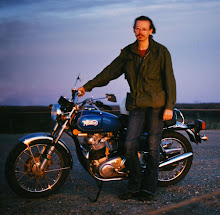
I clearly have been the beneficiary of a lot of good fortune ... it definitely could be called "luck". For many years, I congratulated myself because the educational process I went through culminated in my obtaining what was for me a dream job right out of graduate school. I like to think I used that opportunity productively and became a contributor to science as a result. At the time it happened I realized how fortunate I was - in fact, it was hard to believe things worked out that way. But the notion that "luck is the combination of opportunity and preparedness" is only valid when there's an opportunity! As time has passed, I've reflected on that good fortune and I've become aware of several stories of people who have not been so fortunate as I.
The big American educational lie often is part of what is spouted by the right-wing conservatives and their sycophants who oppose vehemently any social welfare program (unless it's for the benefit of rich people and corporations). They portray the recipients of social welfare as cynical parasites, feeding at the trough of governmental largess at the expense of the rest of "hard-working Americans". They've produced extended arguments that are little more than stereotyping of welfare recipients. I've seen within my circle of friends some of the people who like others are unable to find good jobs and so would be included in the right-wing category of lazy layabouts. Some of them refuse to accept welfare, in fact! They just keep on struggling, too proud to take what they could receive from government programs.
As an example, I know one young man who went to extraordinary lengths to obtain his diploma from a university program of national repute. In order to pay for this, since he had no financial assistance - no one to pay his academic bills (to say nothing of the cost of living) - he has had to work at menial jobs after school to pay for his education and support his family. These jobs are far below his intellectual capability, and his wife had to help support the family by working as well. His earlier diploma from a lesser university wasn't enough to satisfy him - he felt he had to earn a diploma that carried more clout! So he stayed the course and graduated from this more challenging program, in a process that demanded years of sacrifices from him and his wife. So what does he have to show for all that effort and sacrifice? He must be living the American dream by now, right? Actually, he has precisely ... nothing! His diploma guaranteed him absolutely zero, of course, and he's been unable to find work in the discipline for which he worked so hard and sacrificed so much. Seeing his plight makes me very sad, but it also makes me very much aware of the good fortune that worked in my favor during better economic times. And to think the right-wing ideologues would unhesitatingly classify him as a parasite if he accepted welfare makes me furious!
This young man surely deserves something for all his hard work and, according to the mantra of the right-wing advocates I know, it should be his reward for all the effort he put out. He isn't shiftless and lazy in any way - far from it! But the big lie is that hard work and education are the keys to success in America. The reality is that they aren't much of a guarantee of anything. I'm not so arrogant as to infer that my good fortune was due only to my efforts - I worked hard to be prepared but I'm also willing to admit that I was the beneficiary of luck. My young friend has not been lucky - he worked hard to obtain an education and his reward is nothing more than an empty promise.
It's infuriating to hear all this patronizing crap from the right wing about how the jobless need to get a job and earn their place in the American paradise. It's outright rubbish to paint everyone in need of welfare as some sort of social parasite, and to preach the mantra of "Get an education and get a job!" Even if they can somehow manage to pay the educational system what it costs to receive the "benefits" of a diploma, those institutions who were delighted to take that tuition money from their students, will shrug their shoulders when that diploma doesn't land their graduates a good-paying job in the subject area of their academic degree. The universities hire only a small fraction of university graduates - the rest must look elsewhere. In hard times, many graduates have a tough time finding that good job the universities seem to promise, but which is actually beyond their capability to give. They take in that tuition money but it's no guarantee of anything!
Many welfare recipients are ashamed and embarrassed to be forced to depend on social welfare programs to survive. Must we make needy people be ashamed of their condition, even when they did all the right things and by bad fortune, were not rewarded with their share of the American dream?
Sunday, January 29, 2012


Thursday, January 26, 2012
My love affair with the Great Plains
When I began storm chasing, I was obsessed with seeing tornadic storms. As it turned out, I wasn't often successful at seeing a tornado. Therefore, I had two simple choices: give up storm chasing, or persist in the effort. Giving up was not an option. No matter what the outcome, I was going to be on the Great Plains every spring, with the purpose of chasing storms in hopes of seeing tornadoes. It still is not clear to me why I had this passion, but what was very evident was that my success or failure on any given chase day was not important. I felt a compulsion that simply couldn't be denied. Failure couldn't discourage me.
What few successes I had in those early years (beginning in 1972) made it obvious that the reality of storms far exceeded my dreams! The few successes I had in pursuing my goal to see tornadic storms far outweighed my frustrations over not seeing such on most chase days. If this was the price of success, then I was more than willing to pay that price! Failure became both my constant companion and an incentive to succeed. The rest is history, now. But what's more important even than those occasional successes is what happened in the process of not giving up in the face of frequent failure.
Storm chasing in the nominal peak of the storm chase "season" puts me on the Great Plains. And given the likely failure of my hopes to see a tornadic storm on most chase days, this meant that I had a lot of days when I was not going to see a tornado. If storm chasing was only about seeing tornadoes, this was not going to be a process that rewarded me frequently! With the prospect of a lot of days when I was going to "fail" to see a tornado, I was faced with the inevitability of frequent failure. What was I going to do with that time when I did not see a tornadic storm?
Eventually, something else began to intrude in my consciousness: there was more to the experience than tornadic storms! I found that by being immersed in the Great Plains, something wonderful began to happen: I was falling in love with the place! Upon my arrival in Oklahoma for graduate school in the late 1960s, I had the odd experience of feeling "at home" in a place where I'd never lived. Somehow, it felt as if I'd arrived "home" in a place that had never been my home. The sights, the sounds, the smells, the "feel" of the place made it evident to me that I never wanted to be separated from it again. To this day, I can't explain that. I can only bow to the inevitable: I love it here!
The powerful storms of the Great Plains are an important part of the region's attraction to me - but it's become far more than just the storms. It includes the people of the Great Plains, the history of the place, the oceans of emptiness, the infinite skies, the sensory experiences of being there - the total experience has become what keeps me here.
For me, a storm chase involves far more than just the potential for seeing a tornadic storm. The chance to be on the Great Plains is an opportunity to experience something special in its own right. If that experience includes a tornadic storm, so much the better, but it's become important to me just to be there. The chance to see a tornadic storm adds another layer of significance to the experience, but it's no longer necessary to me.
Thus, it concerns me that the plains are under threat from those who would exploit them for monetary gain. The Great Plains are far more than simply a dumping ground, or some sort of cash cow that can be exploited for monetary gain. I wasn't an "environmentalist" before I became a storm chaser, but I now have become one, arguing that the plains have their own beauty and value that needs to be preserved, not destroyed for the sake of profit. They have a beauty that may not meet the eye so aggressively as the beauty of the mountains or the ocean, but they are beautiful, nonetheless. They're no more deserving of destruction in the name of profit than the Rocky Mountains, the national wetlands, or the coastal zones. Unfortunately, champions for the Great Plains are few.
The economic viability of the Plains is declining rapidly. Much of the land is absentee-owned now; the owners want to make their investments pay, without regard for the damage to the ecosystems this might cause. The small towns that have characterized the plains are dying, and so the people who characterize the best of American human values are being squeezed out by the economics. Corporate owners care little or nothing for the Plains, per se. Only profits matter to them. Anything, no matter how unsustainable it might be, that creates short-term profit is acceptable. And the small towns increasingly have only empty storefronts and abandoned farm homes to show for a once-thriving local agricultural economy.
My chase images necessarily merge the storms with the environment in which they occur. The two are inseparable. If you like severe storms, you must also champion the Great Plains! To appreciate the Great Plains, you have to slow down and feel in your soul the pulse of the land. If you can't or won't feel that pulse, then I feel sorry for you. And you don't truly appreciate severe weather.
What few successes I had in those early years (beginning in 1972) made it obvious that the reality of storms far exceeded my dreams! The few successes I had in pursuing my goal to see tornadic storms far outweighed my frustrations over not seeing such on most chase days. If this was the price of success, then I was more than willing to pay that price! Failure became both my constant companion and an incentive to succeed. The rest is history, now. But what's more important even than those occasional successes is what happened in the process of not giving up in the face of frequent failure.
Storm chasing in the nominal peak of the storm chase "season" puts me on the Great Plains. And given the likely failure of my hopes to see a tornadic storm on most chase days, this meant that I had a lot of days when I was not going to see a tornado. If storm chasing was only about seeing tornadoes, this was not going to be a process that rewarded me frequently! With the prospect of a lot of days when I was going to "fail" to see a tornado, I was faced with the inevitability of frequent failure. What was I going to do with that time when I did not see a tornadic storm?
Eventually, something else began to intrude in my consciousness: there was more to the experience than tornadic storms! I found that by being immersed in the Great Plains, something wonderful began to happen: I was falling in love with the place! Upon my arrival in Oklahoma for graduate school in the late 1960s, I had the odd experience of feeling "at home" in a place where I'd never lived. Somehow, it felt as if I'd arrived "home" in a place that had never been my home. The sights, the sounds, the smells, the "feel" of the place made it evident to me that I never wanted to be separated from it again. To this day, I can't explain that. I can only bow to the inevitable: I love it here!
The powerful storms of the Great Plains are an important part of the region's attraction to me - but it's become far more than just the storms. It includes the people of the Great Plains, the history of the place, the oceans of emptiness, the infinite skies, the sensory experiences of being there - the total experience has become what keeps me here.
For me, a storm chase involves far more than just the potential for seeing a tornadic storm. The chance to be on the Great Plains is an opportunity to experience something special in its own right. If that experience includes a tornadic storm, so much the better, but it's become important to me just to be there. The chance to see a tornadic storm adds another layer of significance to the experience, but it's no longer necessary to me.
Thus, it concerns me that the plains are under threat from those who would exploit them for monetary gain. The Great Plains are far more than simply a dumping ground, or some sort of cash cow that can be exploited for monetary gain. I wasn't an "environmentalist" before I became a storm chaser, but I now have become one, arguing that the plains have their own beauty and value that needs to be preserved, not destroyed for the sake of profit. They have a beauty that may not meet the eye so aggressively as the beauty of the mountains or the ocean, but they are beautiful, nonetheless. They're no more deserving of destruction in the name of profit than the Rocky Mountains, the national wetlands, or the coastal zones. Unfortunately, champions for the Great Plains are few.
The economic viability of the Plains is declining rapidly. Much of the land is absentee-owned now; the owners want to make their investments pay, without regard for the damage to the ecosystems this might cause. The small towns that have characterized the plains are dying, and so the people who characterize the best of American human values are being squeezed out by the economics. Corporate owners care little or nothing for the Plains, per se. Only profits matter to them. Anything, no matter how unsustainable it might be, that creates short-term profit is acceptable. And the small towns increasingly have only empty storefronts and abandoned farm homes to show for a once-thriving local agricultural economy.
My chase images necessarily merge the storms with the environment in which they occur. The two are inseparable. If you like severe storms, you must also champion the Great Plains! To appreciate the Great Plains, you have to slow down and feel in your soul the pulse of the land. If you can't or won't feel that pulse, then I feel sorry for you. And you don't truly appreciate severe weather.
What to do with chaser images?
I've had this conversation with several veteran chasers, and it's a vexing dilemma. The passage of time means that some veteran storm chasers soon will be passing on (dying). A few chasers have died already and the issue of what to do with their images remains problematic. The question arises: what can be done to preserve the legacy of their chasing? There's no central place to save the still and video imagery from their many years of chasing. Part of the problem is that each veteran chaser may have a different wish for their imagery: they may see it as a legacy for their families, or as a source of educational material, or as a collection of commercially valuable photos/video. Our personal wishes surely would be relevant, but - just what do we want to see happen with regard to our imagery?
Speaking only for myself, my imagery formally belongs to the corporation I formed and, as such, could be an asset that I pass on to my family to do with as they wish. Unfortunately, I'm pretty sure the most they could do with it would be to try to sell it for whatever they might be able to get for it. How much might a collection of still and video images of storms (and other subjects) be worth? I have no idea, but I'm guessing my family would have no idea of the value of my imagery, or how to obtain a reasonable price for the legacy I would leave. Fact is, I don't know myself! It might be a large value or it might be worth little or nothing. Families are unlikely to know what the worth and significance of chase imagery is. It's just "stuff" we've left behind.
The challenge I see is this: the real value of these images likely would be associated with the context in which the images were obtained. Some are simply cloud photographs, some represent documentation of important severe weather events, some are just interesting imagery I captured during my long career of storm chasing (40 years as of 2012). It would be nice to have them sorted in some systematic way, but the best I can do now is to identify them by date. It would be great to have some sort of narrative to associate with them, but to do so would be an enormous task, and my memory of them is fading with each passing year.
It might be good to have some sort of central collection point where veteran chasers could deposit their imagery in an archive. The cost of such a "Museum of Storm Chasing" could become large. My imagery includes film, video, and digital content. The digital content alone, which represents only a fraction of the total, occupies almost a terabyte of storage. The 35 mm and medium format film transparencies have mostly not been scanned into digital form. Film must be stored in an appropriate environment and even then it deteriorates with time. Images stored on digital media become unreadable as those media become obsolete, and they also deteriorate with time. We have no digital media that can outlast properly stored film images right now. Digital media are changing constantly, so images would need to be transferred to new media as the technology changes.
I'd guess I have at least another terabyte of uscanned images that, and it's likely that I actually have several times that. I have neither the time nor the inclination to convert all my imagery to digital format. Let's just say for the sake of argument that I have 5 terabytes of imagery - I'm just guessing about that of course. With the cost of digital storage devices, that's not a lot of expense these days, but organizing and managing such a database would not be a trivial, inexpensive exercise!
If we consider the pioneers of storm chasing - Al Moller, Dave Hoadley, Gene Moore, Jim Leonard Tim Marshall, and so on - to say nothing of more recent chasers - Roger Hill, Bill Reid, Charles Edwards, and so on - this likely represents many, many terabytes of material. What's going to happen to all of that amazing imagery as these chasers pass on? Will it be lost or preserved as an important legacy? I wish I knew.
This blog isn't going to offer a solution, unfortunately. The best I can do is open up the topic for discussion. We all need to think about this and ask ourselves what we would like to see happen to our personal legacies of storm chasing imagery. Do we want a central archive? Is that even realistic? What about commercial uses for our images? What about scientific and/or educational uses? Do we want them rat-holed away in some dusty archive, or do we want them actively marketed for commercial use, or what? I just don't know. I'm wide open to suggestions.
Speaking only for myself, my imagery formally belongs to the corporation I formed and, as such, could be an asset that I pass on to my family to do with as they wish. Unfortunately, I'm pretty sure the most they could do with it would be to try to sell it for whatever they might be able to get for it. How much might a collection of still and video images of storms (and other subjects) be worth? I have no idea, but I'm guessing my family would have no idea of the value of my imagery, or how to obtain a reasonable price for the legacy I would leave. Fact is, I don't know myself! It might be a large value or it might be worth little or nothing. Families are unlikely to know what the worth and significance of chase imagery is. It's just "stuff" we've left behind.
The challenge I see is this: the real value of these images likely would be associated with the context in which the images were obtained. Some are simply cloud photographs, some represent documentation of important severe weather events, some are just interesting imagery I captured during my long career of storm chasing (40 years as of 2012). It would be nice to have them sorted in some systematic way, but the best I can do now is to identify them by date. It would be great to have some sort of narrative to associate with them, but to do so would be an enormous task, and my memory of them is fading with each passing year.
It might be good to have some sort of central collection point where veteran chasers could deposit their imagery in an archive. The cost of such a "Museum of Storm Chasing" could become large. My imagery includes film, video, and digital content. The digital content alone, which represents only a fraction of the total, occupies almost a terabyte of storage. The 35 mm and medium format film transparencies have mostly not been scanned into digital form. Film must be stored in an appropriate environment and even then it deteriorates with time. Images stored on digital media become unreadable as those media become obsolete, and they also deteriorate with time. We have no digital media that can outlast properly stored film images right now. Digital media are changing constantly, so images would need to be transferred to new media as the technology changes.
I'd guess I have at least another terabyte of uscanned images that, and it's likely that I actually have several times that. I have neither the time nor the inclination to convert all my imagery to digital format. Let's just say for the sake of argument that I have 5 terabytes of imagery - I'm just guessing about that of course. With the cost of digital storage devices, that's not a lot of expense these days, but organizing and managing such a database would not be a trivial, inexpensive exercise!
If we consider the pioneers of storm chasing - Al Moller, Dave Hoadley, Gene Moore, Jim Leonard Tim Marshall, and so on - to say nothing of more recent chasers - Roger Hill, Bill Reid, Charles Edwards, and so on - this likely represents many, many terabytes of material. What's going to happen to all of that amazing imagery as these chasers pass on? Will it be lost or preserved as an important legacy? I wish I knew.
This blog isn't going to offer a solution, unfortunately. The best I can do is open up the topic for discussion. We all need to think about this and ask ourselves what we would like to see happen to our personal legacies of storm chasing imagery. Do we want a central archive? Is that even realistic? What about commercial uses for our images? What about scientific and/or educational uses? Do we want them rat-holed away in some dusty archive, or do we want them actively marketed for commercial use, or what? I just don't know. I'm wide open to suggestions.
Tuesday, January 24, 2012
A passion for facts?
Of late, I've run into a lot of what I consider to be either outright factual errors, or misinterpretations of the facts. Facts are the foundation upon which scientists base their work; they are the observations and other evidence that provide the basis for a scientific interpretation. Hopefully, the facts behind such an interpretation don't include errors of one sort or another. Many different sources for errors are possible and it's widely understood in science that our facts may not be so unshakable as we hope. The possibility of factual errors needs to be recognized in any scientific work, and efforts expended to reduce the chances for such errors to creep into the facts we use as evidence for or against our hypotheses.
We've recently seen an example of journalistic factual errors with regards to the tornadoes in Alabama - it was reported by Diane Sawyer on ABC's World News Tonight that the tornadoes "struck without warning" when the fact is that there were excellent warnings for the tornadoes, at least in terms of the current state of the science. And information included in the story recommended that the viewers consider taking advantage of a FEMA service that, in fact, doesn't exist! Nothing was said about weather radios and other means of obtaining weather information that people should be using to keep themselves up to date with developing hazardous weather - facts that would have been of service to the public. Saying "It struck without warning!" is an outright factual error in this case, and no responsible journalist should ever make such an error. But it seems we've come to accept, for the most part, that journalistic standards in the USA have deteriorated substantially. Fact-checking has become optional, in the haste to get the story out. Journalists should have a deep-seated passion for facts, just as scientists should, but - fact is, most journalists and even some scientists seem unconcerned about factual errors anymore.
Even if you have your facts correct, unfortunately, this doesn't necessarily mean that your interpretation of them is correct. You may have overlooked other, mitigating facts (intentionally or otherwise) that would obviate your hypothesis, or reduce the probability that it's a correct interpretation. In my experience with journalists these days, many of them are not only unconcerned about facts - they've also made up their minds before their research is even fairly begun. The "story" is already written, and they're simply seeking confirmation of their story during their "research" into the story. They have an "angle" on the story that represents a powerful bias when they should be as unbiased as is humanly possible. Journalists should let the facts speak for themselves, rather than imposing their will on the facts. This is just as wrong as it is for scientists who are busy trying to confirm their interpretations, when in fact, they should be trying instead as hard as they can to refute their interpretations! Scientists should pursue vigorously any avenue by which their ideas could be refuted, without having to be told not to overlook such things! Anyone can overlook something, but we should try as hard as we can not to do so. We scientists tend to be fond of our own ideas and not so fond of the ideas of our colleagues. That is, we tend to have a "confirmation bias" - we want to accept facts that confirm our ideas and to explain away facts that refute them. Only by being aware of this tendency and seeking actively to overcome it can good science be done. The same can be said for journalists, who should make a professional re-commitment to fact-checking.
Confirmation bias is rampant in the political polarization that characterizes the USA right now. Many citizens seem unaware of the fact that all humans are biased and so by default fail to work hard to overcome their personal biases. Those who give free rein to their biases allow those biases to reinforce themselves into hardened positions that can't be overcome by any rational argument, no matter how fact-based. Journalists have a serious responsibility to help the public obtain accurate factual information and to offer as unbiased an interpretation of those facts as possible. Unfortunately, in my experience, the facts suggest many journalists fail in this obligation. The facts are not represented by two polar opposites having a confrontational debate, either - the shades of gray in between bipolar positions are simply not being represented. The two sides of a polarized debate may not be equal, as is the case in the global warming "controversy". Presenting them as equals is a factual error!
Ignorance of the facts is just as dangerous as an outright factual error. In some discussions with which I'm familiar, various people engage in a sort of revisionist view of historical facts (such as those who claim US law is directly descended from biblical law). A journalist who's unaware of the history of ideas and their underlying facts is ill-equipped to do interviews with people concerning those ideas. Such journalists are easily bullied by adroit politicians, for example, as seen in most of the recent GOP debates among the candidates for President.
I'm told by some that my concern for the facts in crockumentaries is just my nerdishness showing. Who really cares if the facts are all screwed up? It's my belief that we all need to have a passion for the facts, and to act on recognition of our own biases and ignorance during discourse about how facts are to be interpreted.
We've recently seen an example of journalistic factual errors with regards to the tornadoes in Alabama - it was reported by Diane Sawyer on ABC's World News Tonight that the tornadoes "struck without warning" when the fact is that there were excellent warnings for the tornadoes, at least in terms of the current state of the science. And information included in the story recommended that the viewers consider taking advantage of a FEMA service that, in fact, doesn't exist! Nothing was said about weather radios and other means of obtaining weather information that people should be using to keep themselves up to date with developing hazardous weather - facts that would have been of service to the public. Saying "It struck without warning!" is an outright factual error in this case, and no responsible journalist should ever make such an error. But it seems we've come to accept, for the most part, that journalistic standards in the USA have deteriorated substantially. Fact-checking has become optional, in the haste to get the story out. Journalists should have a deep-seated passion for facts, just as scientists should, but - fact is, most journalists and even some scientists seem unconcerned about factual errors anymore.
Even if you have your facts correct, unfortunately, this doesn't necessarily mean that your interpretation of them is correct. You may have overlooked other, mitigating facts (intentionally or otherwise) that would obviate your hypothesis, or reduce the probability that it's a correct interpretation. In my experience with journalists these days, many of them are not only unconcerned about facts - they've also made up their minds before their research is even fairly begun. The "story" is already written, and they're simply seeking confirmation of their story during their "research" into the story. They have an "angle" on the story that represents a powerful bias when they should be as unbiased as is humanly possible. Journalists should let the facts speak for themselves, rather than imposing their will on the facts. This is just as wrong as it is for scientists who are busy trying to confirm their interpretations, when in fact, they should be trying instead as hard as they can to refute their interpretations! Scientists should pursue vigorously any avenue by which their ideas could be refuted, without having to be told not to overlook such things! Anyone can overlook something, but we should try as hard as we can not to do so. We scientists tend to be fond of our own ideas and not so fond of the ideas of our colleagues. That is, we tend to have a "confirmation bias" - we want to accept facts that confirm our ideas and to explain away facts that refute them. Only by being aware of this tendency and seeking actively to overcome it can good science be done. The same can be said for journalists, who should make a professional re-commitment to fact-checking.
Confirmation bias is rampant in the political polarization that characterizes the USA right now. Many citizens seem unaware of the fact that all humans are biased and so by default fail to work hard to overcome their personal biases. Those who give free rein to their biases allow those biases to reinforce themselves into hardened positions that can't be overcome by any rational argument, no matter how fact-based. Journalists have a serious responsibility to help the public obtain accurate factual information and to offer as unbiased an interpretation of those facts as possible. Unfortunately, in my experience, the facts suggest many journalists fail in this obligation. The facts are not represented by two polar opposites having a confrontational debate, either - the shades of gray in between bipolar positions are simply not being represented. The two sides of a polarized debate may not be equal, as is the case in the global warming "controversy". Presenting them as equals is a factual error!
Ignorance of the facts is just as dangerous as an outright factual error. In some discussions with which I'm familiar, various people engage in a sort of revisionist view of historical facts (such as those who claim US law is directly descended from biblical law). A journalist who's unaware of the history of ideas and their underlying facts is ill-equipped to do interviews with people concerning those ideas. Such journalists are easily bullied by adroit politicians, for example, as seen in most of the recent GOP debates among the candidates for President.
I'm told by some that my concern for the facts in crockumentaries is just my nerdishness showing. Who really cares if the facts are all screwed up? It's my belief that we all need to have a passion for the facts, and to act on recognition of our own biases and ignorance during discourse about how facts are to be interpreted.
Saturday, January 21, 2012
Shifting sands of meteorology research
It's likely that most non-scientists have very little knowledge of how research gets funded and how the process works. For many years, I was a research scientist working in the Federal Civil Service (CS) system for various agencies. Then, when I retired from Civil Service more than 10 years ago, I began the process of research in a state-supported university. Thus, I've seen how research gets done from two very different perspectives.
Of late, however, things have been changing. When I was with NOAA, researchers were paid as CS employees, and were expected to pursue research topics relevant to their respective agencies. If the research required resources beyond the salaries of the researchers, it was up to agency management to allocate whatever research funding to support those activities they might (or might not) have available. The process of getting additional research funding was mostly aimed at your own management. If you didn't get resources to do a particular project, then either those tasks weren't done or you did them as opportunity permitted. As I was leaving NOAA, the process was changing, however. The process was beginning to resemble university-based research: projects running over a more or less fixed time scale of about 3 years, lists of deliverables, formal proposals being written to obtain funding support, with peer review, and so on. I can't speak to what is now going on in NOAA from my own experience, but my friends suggest that the evolution of how research gets funded has continued along the lines I could see beginning as I was retiring.
Frankly, I don't think this is a particularly good development, but the process of transforming the CS research system seems irreversible. I liked the old system, but I must admit that it permitted some folks within it to survive for decades without being very productive. I wonder if productivity has improved under the new processes? Some of the drones I knew personally are still employed!
In the university system, the primary funding agency has been the National Science Foundation. I've had several NSF proposals funded and it's been very satisfying to see those projects reach fruition. NSF has been changing its procedures to reflect pressures being brought on them as a result of the climate change controversies (among other things). There also has been a greater emphasis on applications of NSF-sponsored research, compared to even the recent past, when basic research was the primary activity that NSF sought to support. Things do seem to be changing.
The public surely knows very little about how NSF support for research works, so the myth perpetuated by climate change deniers that researchers are enriching themselves at public expense persists. That such nonsense is given any credibility at all leaves me frustrated with the extent of public ignorance of reality in research. If we expect the public to support our research, we need to be able to inform them about how it actually works.
There's some reasonable chance I'll be able to get a few more years of NSF funding support for my research. But the economic crisis underscores the reality that nothing is guaranteed. When I was in NOAA, my own income was the only thing "guaranteed" - and even that was vulnerable to economic conditions. The times, they are a-changing and it remains to be seen how things will evolve, of course. As my research career winds down, it will be interesting to see just what will survive ...
Of late, however, things have been changing. When I was with NOAA, researchers were paid as CS employees, and were expected to pursue research topics relevant to their respective agencies. If the research required resources beyond the salaries of the researchers, it was up to agency management to allocate whatever research funding to support those activities they might (or might not) have available. The process of getting additional research funding was mostly aimed at your own management. If you didn't get resources to do a particular project, then either those tasks weren't done or you did them as opportunity permitted. As I was leaving NOAA, the process was changing, however. The process was beginning to resemble university-based research: projects running over a more or less fixed time scale of about 3 years, lists of deliverables, formal proposals being written to obtain funding support, with peer review, and so on. I can't speak to what is now going on in NOAA from my own experience, but my friends suggest that the evolution of how research gets funded has continued along the lines I could see beginning as I was retiring.
Frankly, I don't think this is a particularly good development, but the process of transforming the CS research system seems irreversible. I liked the old system, but I must admit that it permitted some folks within it to survive for decades without being very productive. I wonder if productivity has improved under the new processes? Some of the drones I knew personally are still employed!
In the university system, the primary funding agency has been the National Science Foundation. I've had several NSF proposals funded and it's been very satisfying to see those projects reach fruition. NSF has been changing its procedures to reflect pressures being brought on them as a result of the climate change controversies (among other things). There also has been a greater emphasis on applications of NSF-sponsored research, compared to even the recent past, when basic research was the primary activity that NSF sought to support. Things do seem to be changing.
The public surely knows very little about how NSF support for research works, so the myth perpetuated by climate change deniers that researchers are enriching themselves at public expense persists. That such nonsense is given any credibility at all leaves me frustrated with the extent of public ignorance of reality in research. If we expect the public to support our research, we need to be able to inform them about how it actually works.
There's some reasonable chance I'll be able to get a few more years of NSF funding support for my research. But the economic crisis underscores the reality that nothing is guaranteed. When I was in NOAA, my own income was the only thing "guaranteed" - and even that was vulnerable to economic conditions. The times, they are a-changing and it remains to be seen how things will evolve, of course. As my research career winds down, it will be interesting to see just what will survive ...
Wednesday, January 11, 2012
On the Tebow phenomenon
I thought I'd add my two cents to the widespread discussion about Tim Tebow's football success and his personality. Not that I have any particularly deep insight into his character - I can only react to the public persona he puts on display.
It's pretty evident that Tebow is passionate about his football and he understands two important aspects of football: (1) it's a team game, and (2) the quarterback position demands leadership. Tebow's public statements indicate that he wants to deflect the attention from himself to his teammates, which I have to believe plays well in the locker room, as well as on the air. I can't possibly know the extent to which he actually believes that he doesn't rate the attention being showered upon him - but I hope his comments reflect accurately what he thinks. Surely at least a few people in sports (and elsewhere) exist who are not all about calling attention to themselves and ignoring the necessary support from their team. Many players, including what seems to be an inordinate percentage among wide receivers in the NFL, seem to need the attention desperately, rather than being satisfied with being successful in their team roles and helping the team win games. It's very refreshing to hear Tebow giving praise to his teammates and not playing to the hype about him.
It's also very clear that Tebow has assumed the role of team leader, as any good quarterback should. He isn't the best at the position the league has ever seen, at least in terms of raw quarterbacking skills, but he's proven he can carry the team to win. In team sports, that's all that really counts. Quarterbacks win when they can elevate the play of those around themselves - Super Bowl champion quarterbacks include some of the great quarterbacks of all time, but their ranks also include some rather midde-of-the-road quarterback talent. Some great quarterbacks have never won a champtionship. It remains to be seen what Tebow's future will be in that regard, of course.
It's amusing to see how the notion of a quarterback who is a threat to run the ball seems to be a new phenomenon in the NFL. Tebow joins a long tradition of quarterbacks who can make plays by running, as well as dropping back in the pocket to throw. It always has created problems for the defense to have to account for the quarterback as a ball carrier. Why is this aspect of Tebow's game such a big deal in the media? Frankly, I don't understand why it's being hyped as a new sort of quarterback play. His size and power add a particular intensity to his running, but this is hardly the dawning of a new style of play.
If there's anything about Tebow I don't like (other than leading his Florida Gators to a win over my Oklahoma Sooners in the BCS National Championship game a few years back), it's when he pushes his religious beliefs while he's got media attention as a football player. I have no problem with him believing whatever he wants, and pushing his religion on people in his private life, but ... he should keep his faith out of his football. When he says he wants to thank his lord and savior jesus christ for all his success, this seems to be another aspect of his modesty. However, it also suggests that a supernatural deity has picked sides and is helping Tebow beat other teams. Would a supernatural deity do such a thing? Is the almighty creator of the universe a Broncos football fan? Frankly, the idea that Tebow's success follows from the intervention of an all-powerful deity on his behalf strikes me as arrogant, not modest. Why should the creator of the universe want Tebow to succeed, thereby causing the failure of other players and their teams? Doesn't that seem to suggest Tebow believes himself to be one of the omnipotent and omniscient creator's favorites?
When football players thank their deity for their success, and Tebow is only the most visible among many athletes who do this, it overlooks their mistakes and screw-ups. Do they point to the sky on bended knee when they throw interceptions or fumble the ball? "That one's on you, lord - my screw-up was your fault!"??
Why do I have such a problem with Tebow's open declarations of his faith? I have no issue with him doing so in his private life to whatever extent he wishes. But when he's granted an opportunity to gain media access to the public because of his football, then his remarks should be confined to football. I don't turn on football games in order to hear religious proselytizing!
To understand how utterly inappropriate this behavior is, imagine that I'm attending an international scientific conference to present a scientific paper on which I collaborated with several colleagues. After offering acknowledgments to my colleagues, I then declare, "The same sort of rational analysis of objective evidence I've presented here, when applied to religious beliefs, provides a substantial argument against the existence of any mythical supernatural deity, often given by believers the name of god, jesus christ, or allah!" Such a clearly irrelevant and discordant note would be an inappropriate intrusion of my personal spiritual perspective while on the stage in my role as a scientist. I'd be pushing my opinions on people who, after all, didn't gather there to learn about my atheism. By the same token, I find it disturbing that Tebow feels he can preach his religious beliefs from his platform as a football star.
I respect Tim Tebow as a football player, but I have no need to hear constantly about his religion. Nor does anyone else. He should keep that confined to his private life.
It's pretty evident that Tebow is passionate about his football and he understands two important aspects of football: (1) it's a team game, and (2) the quarterback position demands leadership. Tebow's public statements indicate that he wants to deflect the attention from himself to his teammates, which I have to believe plays well in the locker room, as well as on the air. I can't possibly know the extent to which he actually believes that he doesn't rate the attention being showered upon him - but I hope his comments reflect accurately what he thinks. Surely at least a few people in sports (and elsewhere) exist who are not all about calling attention to themselves and ignoring the necessary support from their team. Many players, including what seems to be an inordinate percentage among wide receivers in the NFL, seem to need the attention desperately, rather than being satisfied with being successful in their team roles and helping the team win games. It's very refreshing to hear Tebow giving praise to his teammates and not playing to the hype about him.
It's also very clear that Tebow has assumed the role of team leader, as any good quarterback should. He isn't the best at the position the league has ever seen, at least in terms of raw quarterbacking skills, but he's proven he can carry the team to win. In team sports, that's all that really counts. Quarterbacks win when they can elevate the play of those around themselves - Super Bowl champion quarterbacks include some of the great quarterbacks of all time, but their ranks also include some rather midde-of-the-road quarterback talent. Some great quarterbacks have never won a champtionship. It remains to be seen what Tebow's future will be in that regard, of course.
It's amusing to see how the notion of a quarterback who is a threat to run the ball seems to be a new phenomenon in the NFL. Tebow joins a long tradition of quarterbacks who can make plays by running, as well as dropping back in the pocket to throw. It always has created problems for the defense to have to account for the quarterback as a ball carrier. Why is this aspect of Tebow's game such a big deal in the media? Frankly, I don't understand why it's being hyped as a new sort of quarterback play. His size and power add a particular intensity to his running, but this is hardly the dawning of a new style of play.
If there's anything about Tebow I don't like (other than leading his Florida Gators to a win over my Oklahoma Sooners in the BCS National Championship game a few years back), it's when he pushes his religious beliefs while he's got media attention as a football player. I have no problem with him believing whatever he wants, and pushing his religion on people in his private life, but ... he should keep his faith out of his football. When he says he wants to thank his lord and savior jesus christ for all his success, this seems to be another aspect of his modesty. However, it also suggests that a supernatural deity has picked sides and is helping Tebow beat other teams. Would a supernatural deity do such a thing? Is the almighty creator of the universe a Broncos football fan? Frankly, the idea that Tebow's success follows from the intervention of an all-powerful deity on his behalf strikes me as arrogant, not modest. Why should the creator of the universe want Tebow to succeed, thereby causing the failure of other players and their teams? Doesn't that seem to suggest Tebow believes himself to be one of the omnipotent and omniscient creator's favorites?
When football players thank their deity for their success, and Tebow is only the most visible among many athletes who do this, it overlooks their mistakes and screw-ups. Do they point to the sky on bended knee when they throw interceptions or fumble the ball? "That one's on you, lord - my screw-up was your fault!"??
Why do I have such a problem with Tebow's open declarations of his faith? I have no issue with him doing so in his private life to whatever extent he wishes. But when he's granted an opportunity to gain media access to the public because of his football, then his remarks should be confined to football. I don't turn on football games in order to hear religious proselytizing!
To understand how utterly inappropriate this behavior is, imagine that I'm attending an international scientific conference to present a scientific paper on which I collaborated with several colleagues. After offering acknowledgments to my colleagues, I then declare, "The same sort of rational analysis of objective evidence I've presented here, when applied to religious beliefs, provides a substantial argument against the existence of any mythical supernatural deity, often given by believers the name of god, jesus christ, or allah!" Such a clearly irrelevant and discordant note would be an inappropriate intrusion of my personal spiritual perspective while on the stage in my role as a scientist. I'd be pushing my opinions on people who, after all, didn't gather there to learn about my atheism. By the same token, I find it disturbing that Tebow feels he can preach his religious beliefs from his platform as a football star.
I respect Tim Tebow as a football player, but I have no need to hear constantly about his religion. Nor does anyone else. He should keep that confined to his private life.
Monday, January 2, 2012
Thoughts on NCAA BCS football - part 2
Continuing where I left off ...
So I'm a fan of NCAA BCS football, for whatever reason, with the Oklahoma Sooners at the top of my short list of favorite teams. With all the brouhaha about the post-season and the mythical national champion of BCS football being chosen primarily by polls that rank the teams subjectively and/or objectively via various arbitrary formulae, I've been forced to consider the possibility of an eventual playoff format. I have mixed feelings about that, now.
All the other divisions of NCAA football already run playoffs to determine a national champion on the field of play, rather than being based primarily on polls. There's no plausible logical reason why the former Division 1A couldn't or shouldn't have a playoff, other than the greed of the universities because of the money generated by post-season bowl games. Presumably the bowl games have an inherent need to survive in any future post-season scenario involving playoffs. This is, of course, all about the money.
And the same goes for the frantic re-alignment of the BCS conferences, with some teams now leaving one conference to join another. Yet another case of it all being about the money. The money drives the programs and the programs generate the money, in a nice case of the snake swallowing its own tail ...
At some point in the past, I had the naive notion that athletic competition in colleges was about sports and, for lower-level sports (referred to as "non revenue-generating" sports) like wrestling or gymnastics, or even college baseball, that's mostly what it's still about. The student-athlete is not a myth in collegiate sports, but it is truly a vanishing species in NCAA BCS football. The football players on NCAA BCS teams are recruited first and foremost as football athletes, not as students. We don't care about your SAT scores, so long as they meet the minimum requirement.
In thinking about things going on with BCS football of late, I was forced to recollect my past experiences. Thinking back, what I truly enjoyed were the traditional rivalries between teams that had long histories, going back in some cases a loooooooong ways: OU-Texas, Michigan-Ohio State, Notre Dame-Southern California, Auburn-Alabama, and so on. There were also lesser rivalries among teams that historically have had few aspirations to be national champions: Minnesota-Wisconsin for the Paul Bunyan Trophy, Purdue-Indiana for the Old Oaken Bucket, Oregon-Oregon State in the "Civil War", and so on. With the ongoing demolition of conference team lineups, some old rivalries have been ended with no apparent concern for the loss of tradition. College football with its regional rivalries had an aura of fun and friendly competition, that only marginally were related to pulling in tubs of cash. This is being destroyed in the NCAA BCS.
In college, individual teams of the past didn't copy relentlessly the strategies used by winning teams. College teams had personalities of various sorts and part of the fun was when teams with vastly different strategies clashed on the field. College football had diversity in the style of play. This is changing as the need to train NFL rookies seems to be a primary goal. And it seems everyone must copy the style of football played in the SEC to have a chance to win a national championship.
The bowl games used to be mostly a reward for a successful season and a chance for some teams to play each other that ordinarily would not meet very often during the regular season because they were in different regions. When the bowl games became a process increasingly focused on deciding the mythical national championship and the final rankings for the year, this fun-focused perspective on bowl games changed into something dark and filled with emotional meanings: vindication and joy for the winners, but also humiliation and sorrow for the losers. And the BCS formula has given us a rematch this year of a game between teams that have already met.
If NCAA BCS football eventually goes to playoff with 4 or more teams, which seems inevitable, then a champion of sorts will be determined on the field, but something else will have died. College football will have become nearly indistinguishable from NFL football, except for the salaries paid to the players and the overall average talent level. Most collegiate football players don't go on to play in the NFL - some play for "minor league" professional teams like arena league football, or american-style football in Europe or Canada. But for most collegiate athletes, even at the BCS level, the end of their college playing days is the end of competitive football for them. Interestingly, the NFL continues to draw many players from schools in the "lesser" divisions; NFL-quality athletes are not found exclusively in the BCS.
For those not destined to become professional football players, these athletes remain mostly students and are football players only secondarily. If their football careers are terminated prematurely by an injury, no big payoff is lost - they just get to focus their attention on academic issues, not athletic performance.
In some ways, I'd like to see a playoff for the NCAA Division 1A national championship - to see the issue settled on the playing field rather than some arbitrary process other than athletic competition. But in other ways, I'll probably lose interest in the process. The NCAA football game will be entirely about the money, and the rich will likely get richer at the expense of the poor. Another microcosm of our society, I suppose.
So I'm a fan of NCAA BCS football, for whatever reason, with the Oklahoma Sooners at the top of my short list of favorite teams. With all the brouhaha about the post-season and the mythical national champion of BCS football being chosen primarily by polls that rank the teams subjectively and/or objectively via various arbitrary formulae, I've been forced to consider the possibility of an eventual playoff format. I have mixed feelings about that, now.
All the other divisions of NCAA football already run playoffs to determine a national champion on the field of play, rather than being based primarily on polls. There's no plausible logical reason why the former Division 1A couldn't or shouldn't have a playoff, other than the greed of the universities because of the money generated by post-season bowl games. Presumably the bowl games have an inherent need to survive in any future post-season scenario involving playoffs. This is, of course, all about the money.
And the same goes for the frantic re-alignment of the BCS conferences, with some teams now leaving one conference to join another. Yet another case of it all being about the money. The money drives the programs and the programs generate the money, in a nice case of the snake swallowing its own tail ...
At some point in the past, I had the naive notion that athletic competition in colleges was about sports and, for lower-level sports (referred to as "non revenue-generating" sports) like wrestling or gymnastics, or even college baseball, that's mostly what it's still about. The student-athlete is not a myth in collegiate sports, but it is truly a vanishing species in NCAA BCS football. The football players on NCAA BCS teams are recruited first and foremost as football athletes, not as students. We don't care about your SAT scores, so long as they meet the minimum requirement.
In thinking about things going on with BCS football of late, I was forced to recollect my past experiences. Thinking back, what I truly enjoyed were the traditional rivalries between teams that had long histories, going back in some cases a loooooooong ways: OU-Texas, Michigan-Ohio State, Notre Dame-Southern California, Auburn-Alabama, and so on. There were also lesser rivalries among teams that historically have had few aspirations to be national champions: Minnesota-Wisconsin for the Paul Bunyan Trophy, Purdue-Indiana for the Old Oaken Bucket, Oregon-Oregon State in the "Civil War", and so on. With the ongoing demolition of conference team lineups, some old rivalries have been ended with no apparent concern for the loss of tradition. College football with its regional rivalries had an aura of fun and friendly competition, that only marginally were related to pulling in tubs of cash. This is being destroyed in the NCAA BCS.
In college, individual teams of the past didn't copy relentlessly the strategies used by winning teams. College teams had personalities of various sorts and part of the fun was when teams with vastly different strategies clashed on the field. College football had diversity in the style of play. This is changing as the need to train NFL rookies seems to be a primary goal. And it seems everyone must copy the style of football played in the SEC to have a chance to win a national championship.
The bowl games used to be mostly a reward for a successful season and a chance for some teams to play each other that ordinarily would not meet very often during the regular season because they were in different regions. When the bowl games became a process increasingly focused on deciding the mythical national championship and the final rankings for the year, this fun-focused perspective on bowl games changed into something dark and filled with emotional meanings: vindication and joy for the winners, but also humiliation and sorrow for the losers. And the BCS formula has given us a rematch this year of a game between teams that have already met.
If NCAA BCS football eventually goes to playoff with 4 or more teams, which seems inevitable, then a champion of sorts will be determined on the field, but something else will have died. College football will have become nearly indistinguishable from NFL football, except for the salaries paid to the players and the overall average talent level. Most collegiate football players don't go on to play in the NFL - some play for "minor league" professional teams like arena league football, or american-style football in Europe or Canada. But for most collegiate athletes, even at the BCS level, the end of their college playing days is the end of competitive football for them. Interestingly, the NFL continues to draw many players from schools in the "lesser" divisions; NFL-quality athletes are not found exclusively in the BCS.
For those not destined to become professional football players, these athletes remain mostly students and are football players only secondarily. If their football careers are terminated prematurely by an injury, no big payoff is lost - they just get to focus their attention on academic issues, not athletic performance.
In some ways, I'd like to see a playoff for the NCAA Division 1A national championship - to see the issue settled on the playing field rather than some arbitrary process other than athletic competition. But in other ways, I'll probably lose interest in the process. The NCAA football game will be entirely about the money, and the rich will likely get richer at the expense of the poor. Another microcosm of our society, I suppose.
Thoughts on NCAA BCS football - part 1
I don't resemble an athlete in any way, and never have. My athletic prowess is minimal and I've never had much involvement with sports on a competitive basis at any level. I played at various sports as a boy and realized I had no talent for it. But over the years, I became something of a sports fan - not a true fanatic, but definitely a willing spectator. My two favorite sports are NCAA football and NCAA wrestling. These are two very different athletic competitions: football is one of the ultimate team sports, whereas wrestling is one of the ultimate individual sports.
Anyway, we're now in the process of winding down the NCAA football season for another year. My favorite team, the Oklahoma Sooners, finished the year 10-3, having won the Insight Bowl game. But it was a year that began with high expectations for a BCS national championship. The team played really poorly in the three games they lost, including a thorough beatdown in Stillwater. I'm among the many fans disappointed at how this year's team performed. But a friend recently drew my attention to the long period of consistent football mediocrity at the University of Minnesota, and I regained my perspective on the Sooners. Oklahoma football has had an incredibly long run of football success, with occasional short spans of relatively poor performance on the field. We Sooner fans are terribly spoiled, like those of other "top tier" NCAA football teams: Michigan, Ohio State, Alabama, Notre Dame, Nebraska, Texas, Southern California, and so on. To not be competing for the national championship is to fail.
It's obvious that the main result of being consistently competitive at that level is a huge fan base that essentially pays for the program's success with their ticket purchases, game concessions, purchases of team memorabilia from the university-sanctioned franchises, and huge donations from rich alumni. The fans want their teams to be competitive at the highest possible level and are willing to pay the price to make that happen. In fact, some fans go beyond the legal limits on what they should be doing in order to help their favorite team become successful. This corruption is but one of the downsides to the transformation of NCAA top-tier football into a business, rather than a mere sporting event. [This transformation mirrors the transformation of universities from being educational institutions into businesses!] As with any business, success breed more success - just as failure breeds more failure. Big-time NCAA football schools tend to remain successful for long periods and the next tier can only hope for occasional flashes of moderate success that aren't sustained.
The BCS system emerged from the legacy of the old Division 1A within the NCAA. But the BCS has become a huge cash cow for the universities that manage to make it to the top levels in the sport. The bowls that form the post-season for good teams mostly are big money-makers for the sponsors. The fans spend their money on travel as well as tickets, concessions, parking, and memorabilia. Successful coaches command enormous salaries before they even win a game at the institution that's buying their services. Some of the players themselves are corrupted by the vast amount of money flowing into the university coffers, wanting to get a piece of the action in exchange for their services to the success of the program. After all, they get little or nothing in return for their contribution - except a free education, and room and board [for which non-scholarship students (or their parents) pay many tens of thousands of dollars], which isn't valued very highly by some of these athletes who believe, with some reason, that they aren't ordinary students. Sports agents hover around the top athletes, hoping to convince the players to buy their services and command the largest possible salaries as NFL rookies. To many of the athletes, the university is mostly a path to the big NFL payoff to come, not an education. In turn, the university regards their athletes as expendable assets.
I enjoyed NCAA football most at OU because the four years I spent following football at the University of Wisconsin were characterized by declining football success on their way to an extended period of mediocrity. Of late, things have changed for Wisconsin and, although I still root for them as an alumnus, I don't have the same emotional involvement with them as I now have with OU. Why is that? My very first year at OU, the fall of 1967, the Sooners had a 10-1 season, winning the Orange Bowl. Being at the games in Owen field was tremendously exciting and I was hooked as a Sooner fan. Everyone likes a winner, of course. When the team is winning, it's "we" are winning - when losing, it's "they" who are losing! Clearly, I loved being associated with a winning team, like any fan, after the blah feelings I experienced in Camp Randall.
More to come in Part 2
Anyway, we're now in the process of winding down the NCAA football season for another year. My favorite team, the Oklahoma Sooners, finished the year 10-3, having won the Insight Bowl game. But it was a year that began with high expectations for a BCS national championship. The team played really poorly in the three games they lost, including a thorough beatdown in Stillwater. I'm among the many fans disappointed at how this year's team performed. But a friend recently drew my attention to the long period of consistent football mediocrity at the University of Minnesota, and I regained my perspective on the Sooners. Oklahoma football has had an incredibly long run of football success, with occasional short spans of relatively poor performance on the field. We Sooner fans are terribly spoiled, like those of other "top tier" NCAA football teams: Michigan, Ohio State, Alabama, Notre Dame, Nebraska, Texas, Southern California, and so on. To not be competing for the national championship is to fail.
It's obvious that the main result of being consistently competitive at that level is a huge fan base that essentially pays for the program's success with their ticket purchases, game concessions, purchases of team memorabilia from the university-sanctioned franchises, and huge donations from rich alumni. The fans want their teams to be competitive at the highest possible level and are willing to pay the price to make that happen. In fact, some fans go beyond the legal limits on what they should be doing in order to help their favorite team become successful. This corruption is but one of the downsides to the transformation of NCAA top-tier football into a business, rather than a mere sporting event. [This transformation mirrors the transformation of universities from being educational institutions into businesses!] As with any business, success breed more success - just as failure breeds more failure. Big-time NCAA football schools tend to remain successful for long periods and the next tier can only hope for occasional flashes of moderate success that aren't sustained.
The BCS system emerged from the legacy of the old Division 1A within the NCAA. But the BCS has become a huge cash cow for the universities that manage to make it to the top levels in the sport. The bowls that form the post-season for good teams mostly are big money-makers for the sponsors. The fans spend their money on travel as well as tickets, concessions, parking, and memorabilia. Successful coaches command enormous salaries before they even win a game at the institution that's buying their services. Some of the players themselves are corrupted by the vast amount of money flowing into the university coffers, wanting to get a piece of the action in exchange for their services to the success of the program. After all, they get little or nothing in return for their contribution - except a free education, and room and board [for which non-scholarship students (or their parents) pay many tens of thousands of dollars], which isn't valued very highly by some of these athletes who believe, with some reason, that they aren't ordinary students. Sports agents hover around the top athletes, hoping to convince the players to buy their services and command the largest possible salaries as NFL rookies. To many of the athletes, the university is mostly a path to the big NFL payoff to come, not an education. In turn, the university regards their athletes as expendable assets.
I enjoyed NCAA football most at OU because the four years I spent following football at the University of Wisconsin were characterized by declining football success on their way to an extended period of mediocrity. Of late, things have changed for Wisconsin and, although I still root for them as an alumnus, I don't have the same emotional involvement with them as I now have with OU. Why is that? My very first year at OU, the fall of 1967, the Sooners had a 10-1 season, winning the Orange Bowl. Being at the games in Owen field was tremendously exciting and I was hooked as a Sooner fan. Everyone likes a winner, of course. When the team is winning, it's "we" are winning - when losing, it's "they" who are losing! Clearly, I loved being associated with a winning team, like any fan, after the blah feelings I experienced in Camp Randall.
More to come in Part 2
Monday, December 26, 2011
More crockumentaries ...
I just watched an awful show on Discovery Channel: 2011: The year the Earth went wild. It was a long litany of distortions and outright hogwash, including blaming La Niña for all the weather events. I also got to watch the sound bites contributed by my friends offered in support for all the terribly distorted conclusions mandated by the show's producers. I feel for them. I've been there, done that. I, too have had my name associated with more than one TV "documentary" laced liberally with lies and distortions. My sympathies to them.
The idea that the natural disasters of 2011, of which there certainly have been many, are the result of the Earth "going wild" is perhaps the most ridiculous notion of the entire program. The premise is apparently that when bad things happen, the planet is somehow going insane. I can't even begin to imagine what such a concept might entail. How can a planet go insane? It's pure nonsense.
The very idea of what is "normal" has been distorted by the producers of these crockumentaries - in reality, it's normal for the geophysical hazards of the Earth to occur at irregular intervals. It's normal for earthquakes, tornadoes, hurricanes, blizzards, wildfires, tsunamis, and so on to happen. It's normal that in some years, more of these disasters happen than in other years. In some years, these hazards happen normally, by bad luck, to occur in places where loss of life and vast property damage is possible. Obviously, 2011 has had more than its "normal" share of bad geophysical disasters if you believe that every year is exactly like every other year. But what happened in 2011 is actually part of normal geophysical processes! Every year is not just like every other year. It's normal for the occurrence of disasters to be variable! It's normal for some years to have more disasters than other years!
The fact is that the Earth has been "going wild" from time to time, in one place or another, all along, for its entire history. This is actually what is normal! It's normal planetary geophysical behavior. Yes, the disasters caused by geophysical hazards create immense social impacts, and people seem to feel comforted, somehow (for reasons that escape me entirely) with the reassurance that this is the planet "going wild" rather than accepting the unpleasant reality that geophysically-created disasters are not freak events. They're normal!! The Earth is not always benign and friendly to humans - never has been and never will be - in fact, it can be downright hostile to human life and well-being from time to time.
So the show blames La Niña for all the bad weather - pure fabricated baloney!! La Niña is but one element in a complex tapestry of processes that produce the actual weather. To assign blame for weather disasters solely to La Niña or El Niño, or the Pacific Decadal Oscillation, or whatever, is scientifically unjustifiable. It's offering a pseudo-explanation to the great unwashed viewing public, rather than meaningful scientific content. If we assign blame to some process, does this make the victims feel any better? "Oh well, what could we expect? It was the evil La Niña that devastated us! Just knowing that makes it all better. And we certainly understand it so well, now."
Makes me want to puke!! We continue to fill the American public's mind with massive doses of bullshit!
The idea that the natural disasters of 2011, of which there certainly have been many, are the result of the Earth "going wild" is perhaps the most ridiculous notion of the entire program. The premise is apparently that when bad things happen, the planet is somehow going insane. I can't even begin to imagine what such a concept might entail. How can a planet go insane? It's pure nonsense.
The very idea of what is "normal" has been distorted by the producers of these crockumentaries - in reality, it's normal for the geophysical hazards of the Earth to occur at irregular intervals. It's normal for earthquakes, tornadoes, hurricanes, blizzards, wildfires, tsunamis, and so on to happen. It's normal that in some years, more of these disasters happen than in other years. In some years, these hazards happen normally, by bad luck, to occur in places where loss of life and vast property damage is possible. Obviously, 2011 has had more than its "normal" share of bad geophysical disasters if you believe that every year is exactly like every other year. But what happened in 2011 is actually part of normal geophysical processes! Every year is not just like every other year. It's normal for the occurrence of disasters to be variable! It's normal for some years to have more disasters than other years!
The fact is that the Earth has been "going wild" from time to time, in one place or another, all along, for its entire history. This is actually what is normal! It's normal planetary geophysical behavior. Yes, the disasters caused by geophysical hazards create immense social impacts, and people seem to feel comforted, somehow (for reasons that escape me entirely) with the reassurance that this is the planet "going wild" rather than accepting the unpleasant reality that geophysically-created disasters are not freak events. They're normal!! The Earth is not always benign and friendly to humans - never has been and never will be - in fact, it can be downright hostile to human life and well-being from time to time.
So the show blames La Niña for all the bad weather - pure fabricated baloney!! La Niña is but one element in a complex tapestry of processes that produce the actual weather. To assign blame for weather disasters solely to La Niña or El Niño, or the Pacific Decadal Oscillation, or whatever, is scientifically unjustifiable. It's offering a pseudo-explanation to the great unwashed viewing public, rather than meaningful scientific content. If we assign blame to some process, does this make the victims feel any better? "Oh well, what could we expect? It was the evil La Niña that devastated us! Just knowing that makes it all better. And we certainly understand it so well, now."
Makes me want to puke!! We continue to fill the American public's mind with massive doses of bullshit!
Wednesday, December 21, 2011
Disbelief is not a belief!
I just saw a YouTube posting about Sam Harris taking on a believer. But the post is not so interesting to me as the comments to follow, in which both sides offer some pretty sorry dialog on the topic. It starts off with a comment:
Like, I'm not even a believer. I'm just comfortable saying I don't know. But even this to many atheists is morally Wrong so there have been times where I've mentioned this off hand and been accused by atheists of being soft on religion or something of that sort. They can't keep their beliefs to themselves anymore than religious people can - they have to shove it down the throats of all the rest of us.
and he goes on to say:
A lot of the atheists I've met NEED to believe in atheism in the same way that some Christians NEED to believe in Christ. Its part of their psychological anatomy. Anything that diverts from atheism represents sin (or I guess "backwardness", "obscuratsm" [sic], etc.) to them. When one feels the need to prostelyze [sic] about their beliefs at EVERY available opportunity that person is DEPENDENT on their beliefs.
I see this sort of nonsense all the time in Internet forums. First of all, I have to say that it's not possible for atheism to be a belief system. Atheism is disbelief in a deity! Disbelief - the absence of belief - cannot logically be a belief! If this person is, as he says, not a believer, then he's an atheist whether he realizes it or not! The argument here seems to be a common one against atheists who choose to be open and "aggressive" about their atheism. Just what is "aggressive" atheism?
Consider the accusation in this comment that atheists are shoving their atheism down everyone's throat. I think what's happening is the following. If an atheist calls the logic of religious beliefs into question, this is perceived as shoving their atheism down everyone's throat. If atheists pursue litigation against government sponsorship of religion on the basis of the Constitutionally-mandated separation of church and state, this is seen as shoving atheism down everyone's throat. If atheists respond in any way to the open advocacy of religious beliefs that appears in every possible medium all the time, then they're shoving atheism down everyone's throat. Believers can pour out their beliefs repeatedly in every possible way but atheists can't respond in any way, it seems.
I'm probably wasting my time with this blog, but I hope at least a few readers might grasp the utter absurdity and hypocrisy of such claims about "aggressive" atheism.
Just how is questioning the logic of something forcing anything on anyone? Yes, of course, if someone questions someone else's religious beliefs, it's common for that to be perceived as a personal attack. Religious believers often are so deeply attached to their belief system that any logical criticism is interpreted as a personal attack on them. Almost always, the atheist has no such intent. The atheist isn't even attempting to convert the believer to a belief system (which atheism logically cannot be!), but rather is attempting to get the believer to see and acknowledge the illogic of their beliefs. It's usually the case that the believer brought the subject up in the first place and the atheist is simply responding to this.
In such discourse, believers usually resort to comments like the one in the Sam Harris video - to the effect that they're not making a scientific, logical, or evidence-based statement, but simply accepting their religious beliefs on faith. As an atheist, I have no problem with anyone believing whatever they want on faith or evidence or whatever but, as Sam Harris suggests in the video, some belief systems are considered generally to be completely illogical and worthy only of derisive laughter, such as his example of believing that Elvis is still alive. For the most part, atheists see most religious beliefs as in that category. You may be offended by that contention, but using logic to question religion is not shoving anything down your throat - unless you choose to reject logic as the basis for any argument whatsoever. If you categorically reject logic and evidence, then of course there's no point to further discourse. Your beliefs are logically unassailable because you reject logic! If you accept logic in, for example, scientific arguments, isn't it being consistent to apply logic to religion, as well?
People who support such things as teaching creationism in public education or putting religious icons on government property are the ones doing the shoving! They are the ones forcing their beliefs on everyone else. They cry "persecution" when atheists lead campaigns to oppose state sanctioning of any particular religion. They rewrite history to create the absurd notion that the basis for our US legal system is based on religious tradition, when it is quite clear that the very opposite is true. The religious right-wing projects their own aggressive behavior regarding their theocratic agenda onto atheists whenever those atheists speak up and oppose the destruction of the wall of separation between church and state here in the USA. The intrusion of religion into government is fast becoming one of the serious threats to Constitutionally-guaranteed freedom in the USA. But many believers feel that any protest against this gathering storm is "aggressive" atheism. Apparently, they're offended by any contrary viewpoint.
The commenter I mentioned at the top of this blog is typical of some atheists, who seem to think that atheists should keep their opinions to themselves and never question anyone's beliefs. Of course, they're entitled to their opinion. Perhaps they feel threatened by possible reprisals against anyone who isn't a believer wearing their belief on their sleeve. This isn't just a paranoid fantasy, of course - it's a fear backed up by reality! Atheists are discriminated against around the world and even in the USA - that's an undeniable fact. So for some timid atheists, the correct reaction is to shut up and quit trying to say or do anything about it. Most atheists aren't at all focused on shoving our disbelief down anyone's throat. You can believe anything you want, but don't force us to do so! For the time being, we have the Constitutionally-guaranteed right and we're free to exercise that right!
Like, I'm not even a believer. I'm just comfortable saying I don't know. But even this to many atheists is morally Wrong so there have been times where I've mentioned this off hand and been accused by atheists of being soft on religion or something of that sort. They can't keep their beliefs to themselves anymore than religious people can - they have to shove it down the throats of all the rest of us.
and he goes on to say:
A lot of the atheists I've met NEED to believe in atheism in the same way that some Christians NEED to believe in Christ. Its part of their psychological anatomy. Anything that diverts from atheism represents sin (or I guess "backwardness", "obscuratsm" [sic], etc.) to them. When one feels the need to prostelyze [sic] about their beliefs at EVERY available opportunity that person is DEPENDENT on their beliefs.
I see this sort of nonsense all the time in Internet forums. First of all, I have to say that it's not possible for atheism to be a belief system. Atheism is disbelief in a deity! Disbelief - the absence of belief - cannot logically be a belief! If this person is, as he says, not a believer, then he's an atheist whether he realizes it or not! The argument here seems to be a common one against atheists who choose to be open and "aggressive" about their atheism. Just what is "aggressive" atheism?
Consider the accusation in this comment that atheists are shoving their atheism down everyone's throat. I think what's happening is the following. If an atheist calls the logic of religious beliefs into question, this is perceived as shoving their atheism down everyone's throat. If atheists pursue litigation against government sponsorship of religion on the basis of the Constitutionally-mandated separation of church and state, this is seen as shoving atheism down everyone's throat. If atheists respond in any way to the open advocacy of religious beliefs that appears in every possible medium all the time, then they're shoving atheism down everyone's throat. Believers can pour out their beliefs repeatedly in every possible way but atheists can't respond in any way, it seems.
I'm probably wasting my time with this blog, but I hope at least a few readers might grasp the utter absurdity and hypocrisy of such claims about "aggressive" atheism.
Just how is questioning the logic of something forcing anything on anyone? Yes, of course, if someone questions someone else's religious beliefs, it's common for that to be perceived as a personal attack. Religious believers often are so deeply attached to their belief system that any logical criticism is interpreted as a personal attack on them. Almost always, the atheist has no such intent. The atheist isn't even attempting to convert the believer to a belief system (which atheism logically cannot be!), but rather is attempting to get the believer to see and acknowledge the illogic of their beliefs. It's usually the case that the believer brought the subject up in the first place and the atheist is simply responding to this.
In such discourse, believers usually resort to comments like the one in the Sam Harris video - to the effect that they're not making a scientific, logical, or evidence-based statement, but simply accepting their religious beliefs on faith. As an atheist, I have no problem with anyone believing whatever they want on faith or evidence or whatever but, as Sam Harris suggests in the video, some belief systems are considered generally to be completely illogical and worthy only of derisive laughter, such as his example of believing that Elvis is still alive. For the most part, atheists see most religious beliefs as in that category. You may be offended by that contention, but using logic to question religion is not shoving anything down your throat - unless you choose to reject logic as the basis for any argument whatsoever. If you categorically reject logic and evidence, then of course there's no point to further discourse. Your beliefs are logically unassailable because you reject logic! If you accept logic in, for example, scientific arguments, isn't it being consistent to apply logic to religion, as well?
People who support such things as teaching creationism in public education or putting religious icons on government property are the ones doing the shoving! They are the ones forcing their beliefs on everyone else. They cry "persecution" when atheists lead campaigns to oppose state sanctioning of any particular religion. They rewrite history to create the absurd notion that the basis for our US legal system is based on religious tradition, when it is quite clear that the very opposite is true. The religious right-wing projects their own aggressive behavior regarding their theocratic agenda onto atheists whenever those atheists speak up and oppose the destruction of the wall of separation between church and state here in the USA. The intrusion of religion into government is fast becoming one of the serious threats to Constitutionally-guaranteed freedom in the USA. But many believers feel that any protest against this gathering storm is "aggressive" atheism. Apparently, they're offended by any contrary viewpoint.
The commenter I mentioned at the top of this blog is typical of some atheists, who seem to think that atheists should keep their opinions to themselves and never question anyone's beliefs. Of course, they're entitled to their opinion. Perhaps they feel threatened by possible reprisals against anyone who isn't a believer wearing their belief on their sleeve. This isn't just a paranoid fantasy, of course - it's a fear backed up by reality! Atheists are discriminated against around the world and even in the USA - that's an undeniable fact. So for some timid atheists, the correct reaction is to shut up and quit trying to say or do anything about it. Most atheists aren't at all focused on shoving our disbelief down anyone's throat. You can believe anything you want, but don't force us to do so! For the time being, we have the Constitutionally-guaranteed right and we're free to exercise that right!
Thursday, December 15, 2011
The Iraq war ends with a whimper ...
The ill-advised burden of GWB's pointless war on Iraq has come to end. Its end kinda sneaked up on me. I'd forgotten the timetable for withdrawal, but we now have withdrawn, finally. The end of this agony is long overdue, and of course, it's another war that should never have been fought. No ticker-tape parades, no final victory. Just withdrawal - a whimper.
GWB's father chose not to remove Saddam Hussein at the end of the first Gulf War to liberate Kuwait. I can't pretend to know why he made such a choice, but I have to believe he understood what it would have involved and chose wisely not to follow that path. GWB, on the other hand, justified the war based on little more than lies about weapons of mass destruction and about the actually non-existent ties of Saddam to terrorism. It had no valid justification other than GWB's strange neo-conservative obsession with removing Saddam Hussein and installing democracy at the point of a gun. The Iraq War featured a classic blitzkreig campaign to seize the nation and remove its leader, but the army that accomplished that feat was not equipped or prepared to stay on as an occupying force. It would have taken many, many more soldiers to police Iraq after the "regime change" and to occupy them than it took to conquer it. Our all-volunteer military has been stretched to its limits by our wars, with many of them serving multiple deployments and having their deployments extended involuntarily.
Our troops have paid a heavy price for this war. Not just the thousands of US military deaths, the tens of thousands of injuries, the hardships on families, the lingering poison of post-traumatic stress (with all its impacts on soldiers, their friends, and families), and its hundreds of billions in dollars in costs (with its huge contribution to our national economic malaise). Some of our troops have participated in vile acts (e.g., Abu Ghraib), which is an inevitable price we pay in any war, even while the majority of our soldiers serve honorably, of course. War is always ugly and our politicians have disgraced the nation and let its warfighters down by leading us into this one for no good reason. We surely should be thankful it's finally over.
Perhaps the most difficult pill to swallow is that our troops have endured this agony for no good reason. They have not been defending our freedom in America. With the exception of the blitzkrieg campaign at its beginning, our troops haven't even been fighting another army. It's been yet another war with negligible justification against "insurgents" (a guerrilla war), where we suffer casualties without any strategy for "winning" that conflict. History has shown repeatedly that when one nation invades another, and the invaded nation is forced into guerrilla tactics, the war becomes unwinnable for the invader. Casualties continue to mount up, but the insurgency goes on indefinitely. Nationalism (a form of tribalism) always trumps political ideology.
As a Vietnam veteran, it has been painful for me to watch this war unfold. I even had to endure my son's deployment there, with its awful sense of deja vu. We have GWB and his neo-conservative politics to blame for this disgraceful mess. The christian nationalist party's (i.e., the GOP) politicians have taken the stance that withdrawal from Iraq has been a mistake. Show them how you feel about this "mistake" in the next election!
Although there's more direct justification for battling terrorism in Afghanistan, the history of that nation makes it clear that the war there is another unwinnable one. We need to stop being the world's self-appointed police. Get our troops out of that mess, too!
It was a tragic mistake to remove a sovereign nation's regime unilaterally when that nation actually posed no valid direct threat to us. The threat of terrorism is not anywhere near enough to justify the price we're paying - not just in ruined lives and dollars, but in the increasing willingness of a fearful US population to be more willing than ever to trade our freedom for what amounts to only an illusion of security. The terrorists are winning because they're forcing us to pay the disproportionate cost of responding to their terrorist actions. I say "disproportionate" because the actual impact of terrorism is minor. It's a tactic for the weak, and we should be strong enough to not give in to the fear being shoved in our faces by politicians for the sake of political gain.
GWB's father chose not to remove Saddam Hussein at the end of the first Gulf War to liberate Kuwait. I can't pretend to know why he made such a choice, but I have to believe he understood what it would have involved and chose wisely not to follow that path. GWB, on the other hand, justified the war based on little more than lies about weapons of mass destruction and about the actually non-existent ties of Saddam to terrorism. It had no valid justification other than GWB's strange neo-conservative obsession with removing Saddam Hussein and installing democracy at the point of a gun. The Iraq War featured a classic blitzkreig campaign to seize the nation and remove its leader, but the army that accomplished that feat was not equipped or prepared to stay on as an occupying force. It would have taken many, many more soldiers to police Iraq after the "regime change" and to occupy them than it took to conquer it. Our all-volunteer military has been stretched to its limits by our wars, with many of them serving multiple deployments and having their deployments extended involuntarily.
Our troops have paid a heavy price for this war. Not just the thousands of US military deaths, the tens of thousands of injuries, the hardships on families, the lingering poison of post-traumatic stress (with all its impacts on soldiers, their friends, and families), and its hundreds of billions in dollars in costs (with its huge contribution to our national economic malaise). Some of our troops have participated in vile acts (e.g., Abu Ghraib), which is an inevitable price we pay in any war, even while the majority of our soldiers serve honorably, of course. War is always ugly and our politicians have disgraced the nation and let its warfighters down by leading us into this one for no good reason. We surely should be thankful it's finally over.
Perhaps the most difficult pill to swallow is that our troops have endured this agony for no good reason. They have not been defending our freedom in America. With the exception of the blitzkrieg campaign at its beginning, our troops haven't even been fighting another army. It's been yet another war with negligible justification against "insurgents" (a guerrilla war), where we suffer casualties without any strategy for "winning" that conflict. History has shown repeatedly that when one nation invades another, and the invaded nation is forced into guerrilla tactics, the war becomes unwinnable for the invader. Casualties continue to mount up, but the insurgency goes on indefinitely. Nationalism (a form of tribalism) always trumps political ideology.
As a Vietnam veteran, it has been painful for me to watch this war unfold. I even had to endure my son's deployment there, with its awful sense of deja vu. We have GWB and his neo-conservative politics to blame for this disgraceful mess. The christian nationalist party's (i.e., the GOP) politicians have taken the stance that withdrawal from Iraq has been a mistake. Show them how you feel about this "mistake" in the next election!
Although there's more direct justification for battling terrorism in Afghanistan, the history of that nation makes it clear that the war there is another unwinnable one. We need to stop being the world's self-appointed police. Get our troops out of that mess, too!
It was a tragic mistake to remove a sovereign nation's regime unilaterally when that nation actually posed no valid direct threat to us. The threat of terrorism is not anywhere near enough to justify the price we're paying - not just in ruined lives and dollars, but in the increasing willingness of a fearful US population to be more willing than ever to trade our freedom for what amounts to only an illusion of security. The terrorists are winning because they're forcing us to pay the disproportionate cost of responding to their terrorist actions. I say "disproportionate" because the actual impact of terrorism is minor. It's a tactic for the weak, and we should be strong enough to not give in to the fear being shoved in our faces by politicians for the sake of political gain.
Wednesday, December 14, 2011
More reflections on a career
I was making a presentation recently to some forecasters about science-based weather forecasting methods. After the presentation, which included an extended discussion of my thoughts on what how best to use numerical weather prediction models in forecasting by human beings, I was thinking once again about the future of humans in the weather forecast business. I have a number of essays that touch on this general topic, and I'll not go through all of that here.
My recent thoughts were focused on what I maintain is the likely outcome in the future - that public sector forecasting will come to be dominated by automation. Humans may stick around like useless appendages, much as firemen continued to ride on diesel locomotives long after the need to maintain a hot fire in a locomotive had disappeared. But the role of humans as creators of the forecast will be increasingly limited. The economics of weather forecasting are inexorably aligned against human forecasters. We don't invest in improving in human forecasters to anywhere near the extent to which we invest in automation. The eventual outcome of that imbalance seems pretty obvious. As most human forecasters add less and less positive value to the automated forecast products, they hasten the day of their eventual disappearance. There may continue to be some role for humans in the private sector, of course, although even there the drive to rely on automated products is strong.
My entire career in the science of meteorology has been motivated by a hope to unite the science and its research results with operational forecasting. A large fraction of that time has been spent seeking ways to use science to help human forecasters, many of whom I'm proud to call my friends. Some of them have found my work to be helpful, and that alone justifies any effort I spent on their behalf.
Whatever miniscule measure of "fame" that might be attached to me as a consequence of my work can be attributed to my having chosen to spend my efforts doing something that had only a small number of "competitors" - there just aren't many folks occupying the interface between research and operations. It's relatively easy to be a "star" when there are so few folks doing it!
What I see in the future, then, is the eventual obsolescence of most everything I've striven to accomplish. If human forecasters disappear, at least in the public sector, then my career will have achieved little of any real permanence. But the more I think about it, I do not see this as something to make me feel sad or regretful. I'm not ashamed of what I tried to do, certainly. The impermanence of science is part of its attraction to me. The field moves on - new ideas replace the old, new methods supplant earlier approaches, and so on. If you're hoping to achieve a scientific form of immortality, it likely won't happen. Isaac Newton is still remembered today, and it's likely he will be indefinitely. But I'm most assuredly not in that rarified air at Newton's level!! I'm quite satisfied (and feel fortunate, in fact) to have been a participant in the science that had attracted me so strongly as a boy.
Something of my work may continue to be mentioned in historical reviews, but in 500 years, it's unlikely that a meteorologist of the future will have heard of me or what I've worked so hard to produce. I'm just fine with that. The thought doesn't depress me or indicate that I'm depressed. There's a good chance I won't live long enough to see the eventual destiny for human forecasters that I foresee - I'm becoming a dinosaur - but I had a lot of fun doing the "work" and the science has been very good to me.
My recent thoughts were focused on what I maintain is the likely outcome in the future - that public sector forecasting will come to be dominated by automation. Humans may stick around like useless appendages, much as firemen continued to ride on diesel locomotives long after the need to maintain a hot fire in a locomotive had disappeared. But the role of humans as creators of the forecast will be increasingly limited. The economics of weather forecasting are inexorably aligned against human forecasters. We don't invest in improving in human forecasters to anywhere near the extent to which we invest in automation. The eventual outcome of that imbalance seems pretty obvious. As most human forecasters add less and less positive value to the automated forecast products, they hasten the day of their eventual disappearance. There may continue to be some role for humans in the private sector, of course, although even there the drive to rely on automated products is strong.
My entire career in the science of meteorology has been motivated by a hope to unite the science and its research results with operational forecasting. A large fraction of that time has been spent seeking ways to use science to help human forecasters, many of whom I'm proud to call my friends. Some of them have found my work to be helpful, and that alone justifies any effort I spent on their behalf.
Whatever miniscule measure of "fame" that might be attached to me as a consequence of my work can be attributed to my having chosen to spend my efforts doing something that had only a small number of "competitors" - there just aren't many folks occupying the interface between research and operations. It's relatively easy to be a "star" when there are so few folks doing it!
What I see in the future, then, is the eventual obsolescence of most everything I've striven to accomplish. If human forecasters disappear, at least in the public sector, then my career will have achieved little of any real permanence. But the more I think about it, I do not see this as something to make me feel sad or regretful. I'm not ashamed of what I tried to do, certainly. The impermanence of science is part of its attraction to me. The field moves on - new ideas replace the old, new methods supplant earlier approaches, and so on. If you're hoping to achieve a scientific form of immortality, it likely won't happen. Isaac Newton is still remembered today, and it's likely he will be indefinitely. But I'm most assuredly not in that rarified air at Newton's level!! I'm quite satisfied (and feel fortunate, in fact) to have been a participant in the science that had attracted me so strongly as a boy.
Something of my work may continue to be mentioned in historical reviews, but in 500 years, it's unlikely that a meteorologist of the future will have heard of me or what I've worked so hard to produce. I'm just fine with that. The thought doesn't depress me or indicate that I'm depressed. There's a good chance I won't live long enough to see the eventual destiny for human forecasters that I foresee - I'm becoming a dinosaur - but I had a lot of fun doing the "work" and the science has been very good to me.
Sunday, December 11, 2011
Just what does the Heisman trophy mean?
Robert Griffin III (known as "RG3") is the most recent Heisman trophy winner, and he certainly had quite a year for a 9-3 Baylor team that achieved far more than most Baylor teams of late. This quarterback clearly was a valuable player on his team and has been for virtually the whole time he's played for Baylor. How many times has Baylor beaten both OU and the shorthorns of UTx in the same year? Besides, anyone with III as a suffix to their name has to get my respect!
That said, however, I've struggled of late trying to grasp just what the Heisman trophy means. Wikipedia says the Heisman trophy is awarded annually to: the player deemed the most outstanding player in collegiate football. The entry goes on to discuss some of the controversy regarding the Heisman, including regional biases and so forth.
What I find so puzzling is the clear dominance of quarterbacks and running backs in the history of the award. Just how is "the most outstanding player" to be defined? What criteria are used? How does one compare performance at different positions? Although players at positions other than quarterback and running back have on very rare occasions been selected, who's to say the most outstanding player in college football that year wasn't a tight end, or a blocking fullback, or (horrors!) a lineman? Defensive players are not generally given much consideration, either. Neither are the players limited to special teams.
This very clear bias for quarterback or running back raises the question: which position is the most valuable? Evidently, the belief in football is widespread that quarterback and running back are the most important/valuable. But football is a team game and this bias in awarding a trophy to the putative year's "best" player is simply inexplicable and unjustifiable. There's no plausible reason to restrict potential Heisman winners to two positions on a team with 22 positions to fill (to say nothing of special teams). As good as RG3 has been, his team has been mired in mediocrity most of its history. Why? Almost surely because the players around even good Baylor quarterbacks (like RG3) haven't been the kind of supporting cast that would permit Baylor to be a dominant team.
It's also clear that a Heisman winner must come from a school with a winning season that year. Apparently, the "best" college football player of the year must play with one of the top-ranked teams. Presumably, this is because if the "best" player is on that team, he elevates it to the top tier that season. But who's to say the "best" player of the season isn't on a losing team? Why not some lineman struggling to achieve and doing so on a team otherwise loaded with mediocre players? From where I sit, however, winning (as well as losing) doesn't depend on just one player! One reason I enjoy being a fan of college football is that it's the ultimate team sport - every player must perform consistently at a high level for the duration of the game if the team is to perform at a high level.
Landry Jones, this year's OU quarterback, was mentioned in the Heisman discussion for a good part of the season, but the team failed to perform in three dismal losses and Landry Jones had bad "numbers" for the last three games of the season, with zero TD passes and a number of turnovers. Can we lay the responsibility for that entirely on Landry Jones? He certainly fell out of consideration for the Heisman trophy after the second loss of the season. Apparently, the team's losses were entirely his fault, at least insofar as the Heisman debate was concerned. By the way, OU finished 9-3, just as Baylor did.
In my book, the Heisman trophy is both without a clear and justifiable definition of the terms used to judge its winner and based on a concept that is antithetical to the very game involved. It's a type of popularity contest that's unjustifiably limited to a few offensive team positions on a winning team. No player could ever win the Heisman without the consistently good performance of his teammates! I decline to attach much significance to the Heisman trophy, and it certainly is not a good predictor for football performance in the NFL. It's a trophy with no meaning.
That said, however, I've struggled of late trying to grasp just what the Heisman trophy means. Wikipedia says the Heisman trophy is awarded annually to: the player deemed the most outstanding player in collegiate football. The entry goes on to discuss some of the controversy regarding the Heisman, including regional biases and so forth.
What I find so puzzling is the clear dominance of quarterbacks and running backs in the history of the award. Just how is "the most outstanding player" to be defined? What criteria are used? How does one compare performance at different positions? Although players at positions other than quarterback and running back have on very rare occasions been selected, who's to say the most outstanding player in college football that year wasn't a tight end, or a blocking fullback, or (horrors!) a lineman? Defensive players are not generally given much consideration, either. Neither are the players limited to special teams.
This very clear bias for quarterback or running back raises the question: which position is the most valuable? Evidently, the belief in football is widespread that quarterback and running back are the most important/valuable. But football is a team game and this bias in awarding a trophy to the putative year's "best" player is simply inexplicable and unjustifiable. There's no plausible reason to restrict potential Heisman winners to two positions on a team with 22 positions to fill (to say nothing of special teams). As good as RG3 has been, his team has been mired in mediocrity most of its history. Why? Almost surely because the players around even good Baylor quarterbacks (like RG3) haven't been the kind of supporting cast that would permit Baylor to be a dominant team.
It's also clear that a Heisman winner must come from a school with a winning season that year. Apparently, the "best" college football player of the year must play with one of the top-ranked teams. Presumably, this is because if the "best" player is on that team, he elevates it to the top tier that season. But who's to say the "best" player of the season isn't on a losing team? Why not some lineman struggling to achieve and doing so on a team otherwise loaded with mediocre players? From where I sit, however, winning (as well as losing) doesn't depend on just one player! One reason I enjoy being a fan of college football is that it's the ultimate team sport - every player must perform consistently at a high level for the duration of the game if the team is to perform at a high level.
Landry Jones, this year's OU quarterback, was mentioned in the Heisman discussion for a good part of the season, but the team failed to perform in three dismal losses and Landry Jones had bad "numbers" for the last three games of the season, with zero TD passes and a number of turnovers. Can we lay the responsibility for that entirely on Landry Jones? He certainly fell out of consideration for the Heisman trophy after the second loss of the season. Apparently, the team's losses were entirely his fault, at least insofar as the Heisman debate was concerned. By the way, OU finished 9-3, just as Baylor did.
In my book, the Heisman trophy is both without a clear and justifiable definition of the terms used to judge its winner and based on a concept that is antithetical to the very game involved. It's a type of popularity contest that's unjustifiably limited to a few offensive team positions on a winning team. No player could ever win the Heisman without the consistently good performance of his teammates! I decline to attach much significance to the Heisman trophy, and it certainly is not a good predictor for football performance in the NFL. It's a trophy with no meaning.
Wednesday, November 30, 2011
Lingering thoughts after Veteran's Day ...
A respected friend posted some comments about the outpouring of support for soldiers that got me to thinking. Among other things, he said, "I don’t get all gooey over US soldiers. ... Yes, I applaud the admirable courage our soldiers show, and our veterans have shown, as well as their commendable devotion to duty. But that courage extends only so far: our military men and women can face enemy fire without fear, but they cannot face down our misleaders with the same audacity."
I've told the story of my "service" in Vietnam and the circumstances by which I came to be there on my Website. As a draftee who was pulled from graduate school, I surely had no wish to go, but was presented with three options:
1. Allow myself to be drafted
2. Go to Canada
3. Go to jail
[The only way I could claim to be a "conscientious objector" was to call upon religious beliefs - not an option available to atheists like me. The apparent assumption is that it's impossible for atheists to be conscientious!] The latter two options were unacceptable as they would have destroyed my intended career. I definitely had no wish to be a soldier and certainly was afraid of going to Vietnam. It's often said that courage is not about being without fear, but rather doing what is needed despite that fear. For years, I despised myself for not having the courage to take either option 2 or 3 - I saw my actions as cowardly, not courageous. I opposed the war in which I eventually was to serve and yet couldn't find the courage to oppose those who demanded my service - my "misleaders" as so accurately named by my respected friend. So his comment is accurate: it takes a lot of courage to defy military orders on conscientious grounds! Far more than most warfighters are able to muster.
With time, I've come to see that military experience as valuable to me, regardless of how I felt about it at the time. I'm no longer ashamed of being a Vietnam veteran, and have forgiven myself for not being courageous enough to avoid military service. It's not really possible for anyone not a veteran of military service to understand what it's like. Since I think I have some insight into that experience, I find myself very much "gooey" about today's young people in the military. It's easy for me to be empathetic, and the ongoing military service of my son is only a small part of the reason for that.
As a nation, we've evidently learned that we can hate the war without hating the warriors, so I'm happy to see the respect given to those serving today (that we who served in Vietnam did not receive from the general populace). As pointed out by my respected friend, no war fought since WWII has involved a direct threat to our national freedoms, despite the political posturing that even today asserts that our warfighters are "defending our freedom." Those freedoms are under more threat from chickenhawk politicians who wrap themselves in the flag and carry a cross to display their "values" than they are from those "enemies" we've fought against in our many wars since 1945, including Vietnam, of course. Virtually none of these politicians have sons or daughters in the military, and most of them never served themselves. They can gamble the lives and well-being of others by calling for military interventions, but not their own, in service of their political ends.
It's not the fault of those serving in the military that we have put our young people at risk in stupid, unwinnable wars. It's the chickenhawk politicians who are responsible for wasting the lives of our young people and those of the foreigners we kill in the process. The soldiers are simply doing what they're ordered to do. To refuse to do so on conscientious grounds is to incur massive recriminations. Mutiny or defiance of direct orders are serious offenses in the military. Young people are preferred as soldiers because they're relatively easy to manipulate. Making a soldier out of a civilian young person involves rewarding them for doing what they're ordered to do and punishing them severely for any hint of defiance. Service to one's nation in the military is to do whatever is required of the warfighters by the politicians, who decide the ends and sometimes choose to use military action as the means to those ends.
There are few demonstrations against the wars we currently fight because Vietnam taught the politicians about the danger to their political ends from conscription (i.e., the draft). No more college students at the barricades if we just avoid drafting them. College students aren't so likely to be concerned about those who choose the military as a viable career option; they're too busy preparing for their own privileged careers to risk being beaten up in a demonstration against foreign wars. Our all-"volunteer" military is stretched thin by the wars we're fighting now; there simply aren't enough soldiers, so the ones who are serving are required to bear the risks of multiple overseas deployments and involuntarily extended tours to combat assignments, rather than the one-year tour in Vietnam given to many 2-year draftees back in the 60s and early 70s.
Those young warfighters deserve our respect and support! They're making huge personal sacrifices every day to carry out the ends decided upon by chickenhawk politicians who don't have to suffer the consequences of those decisions.
I've told the story of my "service" in Vietnam and the circumstances by which I came to be there on my Website. As a draftee who was pulled from graduate school, I surely had no wish to go, but was presented with three options:
1. Allow myself to be drafted
2. Go to Canada
3. Go to jail
[The only way I could claim to be a "conscientious objector" was to call upon religious beliefs - not an option available to atheists like me. The apparent assumption is that it's impossible for atheists to be conscientious!] The latter two options were unacceptable as they would have destroyed my intended career. I definitely had no wish to be a soldier and certainly was afraid of going to Vietnam. It's often said that courage is not about being without fear, but rather doing what is needed despite that fear. For years, I despised myself for not having the courage to take either option 2 or 3 - I saw my actions as cowardly, not courageous. I opposed the war in which I eventually was to serve and yet couldn't find the courage to oppose those who demanded my service - my "misleaders" as so accurately named by my respected friend. So his comment is accurate: it takes a lot of courage to defy military orders on conscientious grounds! Far more than most warfighters are able to muster.
With time, I've come to see that military experience as valuable to me, regardless of how I felt about it at the time. I'm no longer ashamed of being a Vietnam veteran, and have forgiven myself for not being courageous enough to avoid military service. It's not really possible for anyone not a veteran of military service to understand what it's like. Since I think I have some insight into that experience, I find myself very much "gooey" about today's young people in the military. It's easy for me to be empathetic, and the ongoing military service of my son is only a small part of the reason for that.
As a nation, we've evidently learned that we can hate the war without hating the warriors, so I'm happy to see the respect given to those serving today (that we who served in Vietnam did not receive from the general populace). As pointed out by my respected friend, no war fought since WWII has involved a direct threat to our national freedoms, despite the political posturing that even today asserts that our warfighters are "defending our freedom." Those freedoms are under more threat from chickenhawk politicians who wrap themselves in the flag and carry a cross to display their "values" than they are from those "enemies" we've fought against in our many wars since 1945, including Vietnam, of course. Virtually none of these politicians have sons or daughters in the military, and most of them never served themselves. They can gamble the lives and well-being of others by calling for military interventions, but not their own, in service of their political ends.
It's not the fault of those serving in the military that we have put our young people at risk in stupid, unwinnable wars. It's the chickenhawk politicians who are responsible for wasting the lives of our young people and those of the foreigners we kill in the process. The soldiers are simply doing what they're ordered to do. To refuse to do so on conscientious grounds is to incur massive recriminations. Mutiny or defiance of direct orders are serious offenses in the military. Young people are preferred as soldiers because they're relatively easy to manipulate. Making a soldier out of a civilian young person involves rewarding them for doing what they're ordered to do and punishing them severely for any hint of defiance. Service to one's nation in the military is to do whatever is required of the warfighters by the politicians, who decide the ends and sometimes choose to use military action as the means to those ends.
There are few demonstrations against the wars we currently fight because Vietnam taught the politicians about the danger to their political ends from conscription (i.e., the draft). No more college students at the barricades if we just avoid drafting them. College students aren't so likely to be concerned about those who choose the military as a viable career option; they're too busy preparing for their own privileged careers to risk being beaten up in a demonstration against foreign wars. Our all-"volunteer" military is stretched thin by the wars we're fighting now; there simply aren't enough soldiers, so the ones who are serving are required to bear the risks of multiple overseas deployments and involuntarily extended tours to combat assignments, rather than the one-year tour in Vietnam given to many 2-year draftees back in the 60s and early 70s.
Those young warfighters deserve our respect and support! They're making huge personal sacrifices every day to carry out the ends decided upon by chickenhawk politicians who don't have to suffer the consequences of those decisions.
Tuesday, November 29, 2011
Yes, let's leave god out of Thanksgiving!
I was watching Jon Stewart's Daily Show tonight and found that Faux News apparently was incensed about President Obama-Fail having left god out of his meaningless Thanksgiving Day address. Of course, I missed all of the holiday celebrations as I was overseas last week. Evidently, the clear intent of this sermonizing masquerading as news reporting was to provoke even more negative feelings about our President within that group of right-wing ideologues who actually watch and believe what they see on Faux News - sort of preaching to the choir, that. More justification for liberal-bashing and demonizing the heathen Democrats? Is there some crying need by Rupert Murdoch (who pulls all the strings on his Faux News marionettes) to increase polarization in America still further?
As much as I dislike all the religious pontification during the christian holidays (Christmas and Easter) about the secularization of these apparently religious celebrations and the canard of christian persecution in the process, I'm simply astonished at the need some folks have to bring the subject of god up on the clearly secular holiday of Thanksgiving. If believers want to thank their deity for their blessings, that's fine by me, but I see absolutely no reason to force that requirement on the rest of us by means of making it politically necessary that the President do so. [Apparently, according to Faux News, even GWB left god out of his Thanksgiving address to the nation one year out of his eight, but apparently this wasn't considered newsworthy by them at the time. Can they not see their own grotesque hypocrisy? Guess not.] The President is the titular head of a secular nation, despite the revisionist, false American history the religious reich wants to force down our throats.
Of course, Christmas and Easter celebrations are not actually religious events - as holidays, they predate christ. These particular holidays originated as pagan festivals associated with the winter solstice and vernal equinox, but were co-opted by the christian church hundreds of years ago, who inserted their own self-serving mythology into heathen celebrations and claimed these occasions as their own. Hence, all of this weeping and gnashing of teeth over the putative loss of christian religious significance during the christmas and easter holidays is misguided: they weren't christian to begin with!
I don't necessarily enjoy the crass commercialization of holidays, either. Santa Claus and the Easter Bunny are just marketing tools to get more people to buy more stuff they don't need and can barely afford, just to keep the big corporations rolling in cash to give to their grotesquely overpaid management. If there ever was a "true" meaning to these celebrations, it was to be happy that (a) the days would begin to get longer again [winter solstice] and (b) the end of winter [vernal equinox] - these are Earth-centered celebrations about getting through the tough times of winter. Given our economic situation, there may be even tougher winters to come ...
Thanksgiving is a time when Americans recall that "First Thanksgiving" when heathen savages (native Americans) helped the Pilgrims celebrate their harvest in 1621. This despite the Pigrims having stolen their land. Of course, in the years to follow, the new European settlers would be consumed with the hubris of "manifest destiny" as justification for committing genocide on the native Americans who participated in the first Thanksgiving.
Thanksgiving was proclaimed a national holiday by Abraham Lincoln in 1863, in the midst of a tragic Civil War. Although the Civil War era was also characterized by deep religious fervor on both sides (each believing sincerely in the clearly delusional thought that the same god was on their side, of course), this was a secular holiday. It should remain so. The religious reich seems determined to push their beliefs into every corner of American life, but to do so would be eventually to destroy this nation.
As much as I dislike all the religious pontification during the christian holidays (Christmas and Easter) about the secularization of these apparently religious celebrations and the canard of christian persecution in the process, I'm simply astonished at the need some folks have to bring the subject of god up on the clearly secular holiday of Thanksgiving. If believers want to thank their deity for their blessings, that's fine by me, but I see absolutely no reason to force that requirement on the rest of us by means of making it politically necessary that the President do so. [Apparently, according to Faux News, even GWB left god out of his Thanksgiving address to the nation one year out of his eight, but apparently this wasn't considered newsworthy by them at the time. Can they not see their own grotesque hypocrisy? Guess not.] The President is the titular head of a secular nation, despite the revisionist, false American history the religious reich wants to force down our throats.
Of course, Christmas and Easter celebrations are not actually religious events - as holidays, they predate christ. These particular holidays originated as pagan festivals associated with the winter solstice and vernal equinox, but were co-opted by the christian church hundreds of years ago, who inserted their own self-serving mythology into heathen celebrations and claimed these occasions as their own. Hence, all of this weeping and gnashing of teeth over the putative loss of christian religious significance during the christmas and easter holidays is misguided: they weren't christian to begin with!
I don't necessarily enjoy the crass commercialization of holidays, either. Santa Claus and the Easter Bunny are just marketing tools to get more people to buy more stuff they don't need and can barely afford, just to keep the big corporations rolling in cash to give to their grotesquely overpaid management. If there ever was a "true" meaning to these celebrations, it was to be happy that (a) the days would begin to get longer again [winter solstice] and (b) the end of winter [vernal equinox] - these are Earth-centered celebrations about getting through the tough times of winter. Given our economic situation, there may be even tougher winters to come ...
Thanksgiving is a time when Americans recall that "First Thanksgiving" when heathen savages (native Americans) helped the Pilgrims celebrate their harvest in 1621. This despite the Pigrims having stolen their land. Of course, in the years to follow, the new European settlers would be consumed with the hubris of "manifest destiny" as justification for committing genocide on the native Americans who participated in the first Thanksgiving.
Thanksgiving was proclaimed a national holiday by Abraham Lincoln in 1863, in the midst of a tragic Civil War. Although the Civil War era was also characterized by deep religious fervor on both sides (each believing sincerely in the clearly delusional thought that the same god was on their side, of course), this was a secular holiday. It should remain so. The religious reich seems determined to push their beliefs into every corner of American life, but to do so would be eventually to destroy this nation.
Wednesday, November 9, 2011
Trust and credibility: Hard-won, easily lost
Just days after a public outpouring of praise and honor for Joe Paterno's 409th victory as an FBS coach, we've seen a public spectacle of contempt and dishonor for Joe Paterno's moral failures as an FBS coach. All of the salutes for Joe's old-fashioned virtues and the squeaky-clean football program at Penn State have died away as accusations of sexual predation by an honored assistant coach have come to light.
In today's world of the Internet, social media, blogs, paparazzi, tabloid journalism and so on, the past 20 years have been drenched with instances in which highly respected people have committed gaffes of varying severity and in consequence been vilified, fired, and disgraced. The speed of ascent to fame and honor is often exceeded by the even more rapid pace of disgrace and downfall in today's world. An old saying has become a routine part of the way public figures must behave: With great opportunity comes great responsibility. Much is expected from those to whom much has been given. We now seem to delight in throwing our heroes down from the pedestals on which we placed them.
As someone who was molested as a young person, I can say without any qualification, that I believe sexual predators need to be prevented from having the opportunity to molest more victims, and no one should ever hesitate to call the police and report any allegations of sexual misconduct, no matter who is the alleged perpetrator. Jerry Sandusky has yet to be convicted of any crime, however. Joe Paterno may not be guilty of a crime, but by his own admissions, he's guilty of a moral error that would allow a sexual predator to remain free and unpunished. It's only recently that I find myself able to admit that I was molested and raped - the shame of this remained bottled up within me and, like many victims, the shame was too great for me to speak out. Many years can elapse between the deeds and their revelation. Fortunately for me, I managed to overcome what was done to me and my life has turned out quite well despite this incident when I was too young to know what to do about it. But my experience makes my emotional response to hearing about such predators pretty strong. Make no mistake, I have nothing but the deepest possible contempt for sexual predators - these are despicable acts of violence that have nothing to do with sex, per se. I feel no inclination toward mercy for those who commit these unspeakably abhorrent acts!
But the current spectacle of the sharks circling the Penn State campus, waiting for the inevitable firing of Joe Paterno, doesn't fill me with pride regarding our culture. Many media people are pontificating about what they would have done, without ever having been in that situation, and without knowing precisely what was said and done in the Penn State cases. None of us know what we would do until we're actually confronted with such a situation. It's clear that in the court of public opinion, no "due process" is necessary. Yes, it's easy to go along with the contempt stampede, and Joe Paterno's successes as a football coach are indeed quite irrelevant to this situation. What Joe Paterno failed to do with the information he had about the alleged sexual predation is indeed a mistake. It's indeed wrong to have failed to report what he knew to the police and some might even consider it criminal negligence. But can all of the people calling for his head honestly say they've never done something morally wrong? It isn't Joe Paterno who's accused of sexual predation, after all.
Joe Paterno has been on a pedestal for many decades, not just because of winning (although that certainly is a big factor), but perhaps even primarily because of the apparent integrity of the Penn State football program. No recruiting scandals, no coaches abusing the players, no payoffs by local boosters, high graduation rates, and so on. Whether that was his goal or not, Joe Paterno was being held up as the epitome of coaching integrity just days before this scandal broke. So when we find out that our hero was flawed by being unwilling to report the allegations of misconduct by a colleague and friend, all of those decades of integrity are instantly swept aside. Honor and praise are instantly replaced with contempt. It's as if all that came before had never happened, and the mighty fall with a great crash.
I've learned that decades of trustworthy behavior mean nothing when a single act (of commission or omission) can result in the loss of trust forever. A single mistake is obviously one too many for a legendary figure. Our heroes are held to what might actually be an unrealistic standard, since our heroes are human beings, never truly gods. Joe Paterno's coaching legacy is forever stained, no matter what plays out in the courts: the real judicial courts or the court of public opinion. Is that fair? Absolutely not. But fairness is a concept that has little to do with the real world, as most children learn eventually. Much of life is not fair. Trust and credibility must be upheld every day, without fail. If you wish to keep trust and credibility, there can be no failure. This is just as true for nobodies as it is for legends, but it's the downfall of legends that we seem to find so fascinating. Fascinating enough for a blog entry, at least.
This spectacle of the fall from grace of a formerly revered public figure saddens me, not just because of the cost to the alleged victims of Jerry Sandusky, but because it exemplifies the unrealistic expectations that we place on other, fallible human beings. I know I've made mistakes - many mistakes, in fact. And not all of them in the ignorance of my youth.
In today's world of the Internet, social media, blogs, paparazzi, tabloid journalism and so on, the past 20 years have been drenched with instances in which highly respected people have committed gaffes of varying severity and in consequence been vilified, fired, and disgraced. The speed of ascent to fame and honor is often exceeded by the even more rapid pace of disgrace and downfall in today's world. An old saying has become a routine part of the way public figures must behave: With great opportunity comes great responsibility. Much is expected from those to whom much has been given. We now seem to delight in throwing our heroes down from the pedestals on which we placed them.
As someone who was molested as a young person, I can say without any qualification, that I believe sexual predators need to be prevented from having the opportunity to molest more victims, and no one should ever hesitate to call the police and report any allegations of sexual misconduct, no matter who is the alleged perpetrator. Jerry Sandusky has yet to be convicted of any crime, however. Joe Paterno may not be guilty of a crime, but by his own admissions, he's guilty of a moral error that would allow a sexual predator to remain free and unpunished. It's only recently that I find myself able to admit that I was molested and raped - the shame of this remained bottled up within me and, like many victims, the shame was too great for me to speak out. Many years can elapse between the deeds and their revelation. Fortunately for me, I managed to overcome what was done to me and my life has turned out quite well despite this incident when I was too young to know what to do about it. But my experience makes my emotional response to hearing about such predators pretty strong. Make no mistake, I have nothing but the deepest possible contempt for sexual predators - these are despicable acts of violence that have nothing to do with sex, per se. I feel no inclination toward mercy for those who commit these unspeakably abhorrent acts!
But the current spectacle of the sharks circling the Penn State campus, waiting for the inevitable firing of Joe Paterno, doesn't fill me with pride regarding our culture. Many media people are pontificating about what they would have done, without ever having been in that situation, and without knowing precisely what was said and done in the Penn State cases. None of us know what we would do until we're actually confronted with such a situation. It's clear that in the court of public opinion, no "due process" is necessary. Yes, it's easy to go along with the contempt stampede, and Joe Paterno's successes as a football coach are indeed quite irrelevant to this situation. What Joe Paterno failed to do with the information he had about the alleged sexual predation is indeed a mistake. It's indeed wrong to have failed to report what he knew to the police and some might even consider it criminal negligence. But can all of the people calling for his head honestly say they've never done something morally wrong? It isn't Joe Paterno who's accused of sexual predation, after all.
Joe Paterno has been on a pedestal for many decades, not just because of winning (although that certainly is a big factor), but perhaps even primarily because of the apparent integrity of the Penn State football program. No recruiting scandals, no coaches abusing the players, no payoffs by local boosters, high graduation rates, and so on. Whether that was his goal or not, Joe Paterno was being held up as the epitome of coaching integrity just days before this scandal broke. So when we find out that our hero was flawed by being unwilling to report the allegations of misconduct by a colleague and friend, all of those decades of integrity are instantly swept aside. Honor and praise are instantly replaced with contempt. It's as if all that came before had never happened, and the mighty fall with a great crash.
I've learned that decades of trustworthy behavior mean nothing when a single act (of commission or omission) can result in the loss of trust forever. A single mistake is obviously one too many for a legendary figure. Our heroes are held to what might actually be an unrealistic standard, since our heroes are human beings, never truly gods. Joe Paterno's coaching legacy is forever stained, no matter what plays out in the courts: the real judicial courts or the court of public opinion. Is that fair? Absolutely not. But fairness is a concept that has little to do with the real world, as most children learn eventually. Much of life is not fair. Trust and credibility must be upheld every day, without fail. If you wish to keep trust and credibility, there can be no failure. This is just as true for nobodies as it is for legends, but it's the downfall of legends that we seem to find so fascinating. Fascinating enough for a blog entry, at least.
This spectacle of the fall from grace of a formerly revered public figure saddens me, not just because of the cost to the alleged victims of Jerry Sandusky, but because it exemplifies the unrealistic expectations that we place on other, fallible human beings. I know I've made mistakes - many mistakes, in fact. And not all of them in the ignorance of my youth.
Wednesday, November 2, 2011
What does freedom of speech mean to you? Part 2
Social networks allow "information" of all sorts to "go viral" and spread rapidly around the world. An example showed up this morning on Facebook - a photo of a young man (a fool) shitting on an American flag as a crowd cheers around him. This was attributed to a group of Occupy Wall Street protesters, so it sparked the stereotypical responses of knee-jerk American conservatives (who apparently oppose the OWS movement without really having any idea what the protesters represent), proposing that such acts should be made a felony, shoving the flagpole up the guy's ass, zapping the guy's testicles with a taser, making him "walk point", etc.
Turns out the photo is not actually associated with the OWS movement at all, but rather with an antiwar protest in Portland, OR, in 2007 - see here. Whoever started this photo circulating on social networks must have known this was not an OWS protester, so the obvious intent was to discredit OWS by stirring up the reactions of "patriots" who fail to understand certain key principles. Given the speed by which misinformation spreads by "going viral," it would take time to tease out the truth, and by then, the damage to OWS credibility would be done.
I'll get to those key principles shortly. First, however, I want to say that I find this photograph disgusting and will not share it on this blog. Such an act of desecrating our flag is not something I condone nor do I find it particularly effective in expressing unhappiness over our participation in unwinnable, pointless wars (like Iraq and Afghanistan). Obviously, if it were the acts of an OWS protester, it would reflect only discredit on the movement and not help their cause in any way. Such are the deeds of a fool, no doubt carried away with the emotions of a protest and likely an attention-seeker who may be in need of some serious counseling.
Now, let's move on to the reactions to this disgusting act. Any nation's flag, and ours is no exception, is only a symbol. Our secular society recognizes no truly sacred objects, so while an important symbol to many, the flag is not a sacred object. The specific symbols on the flag represent the 50 states and the original 13 colonies, but the symbolism has a deeper level: our flag is a symbol for the freedoms we share. The great experiment embarked upon with the founding of our nation involves protection of "inalienable rights" for all Americans. Rule of the majority, certainly, but protection of minority rights at the same time. That is the key element that made America unique in the world.
Freedom of expression/speech is one of those constitutionally-guaranteed rights that many Americans have given their very lives to preserve. And that freedom means exactly nothing if it only is extended to those with whom we agree. Burning or otherwise desecrating our flag is a symbolic act. It's a form of expression of opinion, and so is protected by the Bill of Rights, no matter how offended we might be by such an act.
In their haste to condemn the OWS movement, the conservatives have reverted to the 1960s: the protesters are stereotyped into dirty, lazy, irresponsible bums who want to destroy the nation that gave them birth and opportunity. Well, our nation has come to be dominated by wealthy, modern-day "robber barons" who've used their wealth and power to plunder the economy and walked away scot-free for the most part. They retain their yachts, their luxury homes, their limousines, and their huge incomes despite being responsible for vast economic disruption via actions that are either illegal or only marginally legal thanks to a compliant government that has become convinced that economic stability is gained through deregulation. It was deregulation that opened the doors for these greedy bastards that presently run Wall Street and, indirectly, the American economy. Most of the OWS protesters are people who have suffered huge economic losses with the implosion of the housing bubble and the costly bailouts of the too-big-to-fail corporations. It seems to me we have cause to protest what's going on, as the gulf between the haves and have-nots widens - these protests are just the beginning of what is to come if something isn't done about our present policy of "welfare for the rich". The wealthy aren't creating jobs, aren't hiring the unemployed, and the "trickle-down" theory has been completely discredited by reality.
The right-wing ideologues want to demonize the protesters to maintain "business as usual" for their corporate allies. As noted, there are some parallels with the 1960s - although the government learned from the events of the 1960s not to start drafting students if they wanted to maintain peace and tranquility. The OWS movement isn't about protesting stupid wars, but rather protests our stupid acquiescence to being fleeced by wealthy thieves who break the law with near-impunity and then have the gall to pontificate about the righteousness of the law when it's applied to protesters!
Unfortunately, the protection of the rights of such fools as this guy in Portland for expressing his opinion in a particularly disgusting way is a critical part of protecting what our flag represents. Such deplorable acts do not touch in any way those principles that made our nation so great. Those principles can only be hurt if we choose to abandon them in our pseudo-patriotic fervor. The greatest desecration of our nation would be to make such acts illegal and prosecute our citizens for expressing unpopular opinions in unpopular ways. By upholding the rights of a fool to desecrate our flag, we actually affirm the principles represented by that flag! Surely we understand that our freedoms are quite capable of enduring the attacks of fools!
Turns out the photo is not actually associated with the OWS movement at all, but rather with an antiwar protest in Portland, OR, in 2007 - see here. Whoever started this photo circulating on social networks must have known this was not an OWS protester, so the obvious intent was to discredit OWS by stirring up the reactions of "patriots" who fail to understand certain key principles. Given the speed by which misinformation spreads by "going viral," it would take time to tease out the truth, and by then, the damage to OWS credibility would be done.
I'll get to those key principles shortly. First, however, I want to say that I find this photograph disgusting and will not share it on this blog. Such an act of desecrating our flag is not something I condone nor do I find it particularly effective in expressing unhappiness over our participation in unwinnable, pointless wars (like Iraq and Afghanistan). Obviously, if it were the acts of an OWS protester, it would reflect only discredit on the movement and not help their cause in any way. Such are the deeds of a fool, no doubt carried away with the emotions of a protest and likely an attention-seeker who may be in need of some serious counseling.
Now, let's move on to the reactions to this disgusting act. Any nation's flag, and ours is no exception, is only a symbol. Our secular society recognizes no truly sacred objects, so while an important symbol to many, the flag is not a sacred object. The specific symbols on the flag represent the 50 states and the original 13 colonies, but the symbolism has a deeper level: our flag is a symbol for the freedoms we share. The great experiment embarked upon with the founding of our nation involves protection of "inalienable rights" for all Americans. Rule of the majority, certainly, but protection of minority rights at the same time. That is the key element that made America unique in the world.
Freedom of expression/speech is one of those constitutionally-guaranteed rights that many Americans have given their very lives to preserve. And that freedom means exactly nothing if it only is extended to those with whom we agree. Burning or otherwise desecrating our flag is a symbolic act. It's a form of expression of opinion, and so is protected by the Bill of Rights, no matter how offended we might be by such an act.
In their haste to condemn the OWS movement, the conservatives have reverted to the 1960s: the protesters are stereotyped into dirty, lazy, irresponsible bums who want to destroy the nation that gave them birth and opportunity. Well, our nation has come to be dominated by wealthy, modern-day "robber barons" who've used their wealth and power to plunder the economy and walked away scot-free for the most part. They retain their yachts, their luxury homes, their limousines, and their huge incomes despite being responsible for vast economic disruption via actions that are either illegal or only marginally legal thanks to a compliant government that has become convinced that economic stability is gained through deregulation. It was deregulation that opened the doors for these greedy bastards that presently run Wall Street and, indirectly, the American economy. Most of the OWS protesters are people who have suffered huge economic losses with the implosion of the housing bubble and the costly bailouts of the too-big-to-fail corporations. It seems to me we have cause to protest what's going on, as the gulf between the haves and have-nots widens - these protests are just the beginning of what is to come if something isn't done about our present policy of "welfare for the rich". The wealthy aren't creating jobs, aren't hiring the unemployed, and the "trickle-down" theory has been completely discredited by reality.
The right-wing ideologues want to demonize the protesters to maintain "business as usual" for their corporate allies. As noted, there are some parallels with the 1960s - although the government learned from the events of the 1960s not to start drafting students if they wanted to maintain peace and tranquility. The OWS movement isn't about protesting stupid wars, but rather protests our stupid acquiescence to being fleeced by wealthy thieves who break the law with near-impunity and then have the gall to pontificate about the righteousness of the law when it's applied to protesters!
Unfortunately, the protection of the rights of such fools as this guy in Portland for expressing his opinion in a particularly disgusting way is a critical part of protecting what our flag represents. Such deplorable acts do not touch in any way those principles that made our nation so great. Those principles can only be hurt if we choose to abandon them in our pseudo-patriotic fervor. The greatest desecration of our nation would be to make such acts illegal and prosecute our citizens for expressing unpopular opinions in unpopular ways. By upholding the rights of a fool to desecrate our flag, we actually affirm the principles represented by that flag! Surely we understand that our freedoms are quite capable of enduring the attacks of fools!
Saturday, October 29, 2011
What is it about sports? Part 4 - Which team is best?
Having just seen the St. Louis Cardinals squeak into the postseason and then win it all, it reminds me of some thoughts I've had regarding postseason playoffs, especially with regards to college football. There's probably a majority of fans who want to ditch the BCS one-game "playoff" and go to some sort of a playoff for FBS teams to determine a "true" national champion.
Given that virtually all other NCAA championships are determined by some sort of postseason tournament, there seems to be no reason not to make big-time college football the same as other collegiate sports competitions. But I'm of two minds about this. Yes, it would be nice to wind up with what would become an undisputable national champion, supposedly settled by performance on the playing field rather than something so heavily influenced by opinion polls and computerized ranking schemes. Then FBS college football would become indistinguishable from pro football (except for the salaries!). And that's the rub for me.
As we witness the degrading spectacle of FBS teams engaging in an orgy of "realignment," it becomes quite obvious, even for anyone who has been operating in a vacuum for the past 25 years, that FBS football has become all about the money that football generates. Traditional rivalries? Who cares, when big money is at stake? After all, universities are businesses now - they long ago ceased to be primarily about education, anyway. NCAA football is simply the low-paid minor leagues for pro football now, and all of the fun and tradition of amateur athletics is disposable in pursuit of the almighty dollar! For the best athletes that universities can buy (and offer them a showcase for their talent in pursuit of a roster spot on a pro team), they rake in millions in revenue - which allows them to attract even more top athletes. No one cares much about the majority of college athletes who don't go on to a career in the pros, anyway. They're only along for fun and to support the play of the real playmakers - big-time collegiate sports is about revenue, not fun!
And just what does a playoff produce? It inevitably produces a champion at the end, of course. But the arguments go on about just which team is the "best"! [My definition of "best" is to be offered below.] In the minds of some fans - the fans of the championship team - their team was best because they won the playoff. Period. End of story.
But as we have seen in the World Series of 2011, the outcome of games can be highly dependent on things that may have relatively little to do with onfield performance: injuries, random bounces of the ball (or whatever), just missing or just making a play, the weather, coaching decisions, bad calls by the referees, the playing field conditions etc. Athletic contests are a fine example of nonlinear dynamics and it becomes quite possible for the hypothetical best team to lose a game during the playoffs owing to one or more of these non-performance factors. In fact, the larger the field of teams in the playoff, the more likely it becomes that the hypothetical best team will be beaten. Although playoffs always yield a final, surviving champion, the determination of which team was best that year remains undone. Arguments can continue indefinitely. And that seems rather like the way things are now, using the BCS system: a champion is determined but the arguments go on.
So here's my modest proposal for determining which FBS football team is truly the best. Each team will meet every other team multiple times, under a variety of playing conditions, weather, roster status for all the team's top players, home/away/neutral field, and so on. Just for the sake of a number, let's say each team will play every other team 100 times, and each game will involve different conditions. Since there currently are 120 FBS teams, this will amount to a rather large number of games for each team [(119 x 100) = 11, 900 games, so the entire regular season of FBS football will involve 11, 900 x 120 = 1, 428, 000 FBS games]. I guess this means the end of Saturday afternoon college football - they'll have to play multiple games every day of the week to fit in the required games (see below). But of course, college football has already spread to other days of the week! After all, prime time TV revenue is important.
At the end of this expanded "season" (from 12 games to nearly 12,000 for each team), the 16 teams with the highest winning percentage (ties will be broken by some sort of tiebreaker rules) would then enter the championship playoff. Each team would again play every other team in the playoff 100 times under a variety of conditions [for a total of 16 x 15 x 100 = 24, 000 games], and the team with the highest winning percentage would be declared the national champion (again with a set of tiebreaker rules). Think of the revenue this scheme would generate!! And the old argument that "If X played Y 100 times, they'd win PP percent of the time!" would actually be played out!
This "ensemble" approach to determining a national champion is a logical way to determine which team is actually the best, because the random, non-performance factors that seem to be so important to the outcome of a single game against an opponent would tend to even out over 11, 900 games. I admit, there are some practical issues that would need to be worked out, such as the degradation of the playing fields from playing multiple games every day, or the fact that it would require each team to play 10 games, 7 days per week, for 170 weeks (3.3 years) to just to complete the regular season, or wear and tear on the players. But these are just minor details. What counts is the enormous revenues this would generate and the chance finally to know which team is best! Once every few years ...
Given that virtually all other NCAA championships are determined by some sort of postseason tournament, there seems to be no reason not to make big-time college football the same as other collegiate sports competitions. But I'm of two minds about this. Yes, it would be nice to wind up with what would become an undisputable national champion, supposedly settled by performance on the playing field rather than something so heavily influenced by opinion polls and computerized ranking schemes. Then FBS college football would become indistinguishable from pro football (except for the salaries!). And that's the rub for me.
As we witness the degrading spectacle of FBS teams engaging in an orgy of "realignment," it becomes quite obvious, even for anyone who has been operating in a vacuum for the past 25 years, that FBS football has become all about the money that football generates. Traditional rivalries? Who cares, when big money is at stake? After all, universities are businesses now - they long ago ceased to be primarily about education, anyway. NCAA football is simply the low-paid minor leagues for pro football now, and all of the fun and tradition of amateur athletics is disposable in pursuit of the almighty dollar! For the best athletes that universities can buy (and offer them a showcase for their talent in pursuit of a roster spot on a pro team), they rake in millions in revenue - which allows them to attract even more top athletes. No one cares much about the majority of college athletes who don't go on to a career in the pros, anyway. They're only along for fun and to support the play of the real playmakers - big-time collegiate sports is about revenue, not fun!
And just what does a playoff produce? It inevitably produces a champion at the end, of course. But the arguments go on about just which team is the "best"! [My definition of "best" is to be offered below.] In the minds of some fans - the fans of the championship team - their team was best because they won the playoff. Period. End of story.
But as we have seen in the World Series of 2011, the outcome of games can be highly dependent on things that may have relatively little to do with onfield performance: injuries, random bounces of the ball (or whatever), just missing or just making a play, the weather, coaching decisions, bad calls by the referees, the playing field conditions etc. Athletic contests are a fine example of nonlinear dynamics and it becomes quite possible for the hypothetical best team to lose a game during the playoffs owing to one or more of these non-performance factors. In fact, the larger the field of teams in the playoff, the more likely it becomes that the hypothetical best team will be beaten. Although playoffs always yield a final, surviving champion, the determination of which team was best that year remains undone. Arguments can continue indefinitely. And that seems rather like the way things are now, using the BCS system: a champion is determined but the arguments go on.
So here's my modest proposal for determining which FBS football team is truly the best. Each team will meet every other team multiple times, under a variety of playing conditions, weather, roster status for all the team's top players, home/away/neutral field, and so on. Just for the sake of a number, let's say each team will play every other team 100 times, and each game will involve different conditions. Since there currently are 120 FBS teams, this will amount to a rather large number of games for each team [(119 x 100) = 11, 900 games, so the entire regular season of FBS football will involve 11, 900 x 120 = 1, 428, 000 FBS games]. I guess this means the end of Saturday afternoon college football - they'll have to play multiple games every day of the week to fit in the required games (see below). But of course, college football has already spread to other days of the week! After all, prime time TV revenue is important.
At the end of this expanded "season" (from 12 games to nearly 12,000 for each team), the 16 teams with the highest winning percentage (ties will be broken by some sort of tiebreaker rules) would then enter the championship playoff. Each team would again play every other team in the playoff 100 times under a variety of conditions [for a total of 16 x 15 x 100 = 24, 000 games], and the team with the highest winning percentage would be declared the national champion (again with a set of tiebreaker rules). Think of the revenue this scheme would generate!! And the old argument that "If X played Y 100 times, they'd win PP percent of the time!" would actually be played out!
This "ensemble" approach to determining a national champion is a logical way to determine which team is actually the best, because the random, non-performance factors that seem to be so important to the outcome of a single game against an opponent would tend to even out over 11, 900 games. I admit, there are some practical issues that would need to be worked out, such as the degradation of the playing fields from playing multiple games every day, or the fact that it would require each team to play 10 games, 7 days per week, for 170 weeks (3.3 years) to just to complete the regular season, or wear and tear on the players. But these are just minor details. What counts is the enormous revenues this would generate and the chance finally to know which team is best! Once every few years ...
Thursday, October 27, 2011
ENSO and tornadoes?
Today, I had a nice discussion with a colleague who showed me some fascinating preliminary results of some analysis he'd done regarding the El Niño/Southern Oscillation (ENSO) and tornadoes. I don't want to steal his thunder, but what he showed me was that ENSO could explain about 10% of the variability in tornado occurrences. This number struck me as being a reasonable one - my position is not that ENSO is irrelevant to tornado occurrences, but rather that it's only a part of a much more complex set of processes that ultimately control tornado events. Much of that complexity is beyond the pale of existing atmospheric scientific understanding, unfortunately. The notion that only a relatively small portion of the variability can be attributed to ENSO seems both plausible and consistent with what understanding atmospheric science can offer at present.
Imagine my dismay when, later in the day, I read in the prestigious science magazine Nature for 22 September (p. 373) that "El Niño, a quasiperiodic cycling of tropical Pacific water temperatures, causes extreme weather around the globe." This tidbit of journalistic excess really set my teeth on edge after my earlier discussion today! ENSO is just one of many quasiperiodic "cycles" (e.g., the North Atlantic Oscillation, the Pacific Decadal Oscillation, etc.) that affect the global weather patterns and no doubt more will be discovered with time. ENSO is a player but far from the dominant one, and the resulting global weather pattern is the result of the interplay between all these processes (and those as yet undiscovered!). Attributing events exclusively to El Niño is outright nonsense!
Although ENSO apparently does modulate global weather patterns, there are many causal linkages between that global pattern and tornadoes, many of which remain unknown to science, at least in detail. To say that El Niño causes extreme weather is a ludicrous exaggeration of its influence. This sort of easy "explanation" often appears in media coverage of extreme weather events as a sort of non-explanatory explanation, similar to the "clash of air masses" nonsense often heard in media coverage after tornado outbreaks.
Once again, I'm reminded of the vast gulf between what's offered to the public and what I know as a severe weather scientist. I expected better of Nature, clearly, and was disappointed to see such an ignorant "explanation" for extreme weather events within this magazine. I've seen many scientists tempted by the siren song of ENSO as a way to explain interannual variability of tornadoes. It appears to be a seductive hypothesis, perhaps because there is just enough of an actual influence to convince many to pursue the topic - I wound up publishing a paper addressing some of the myriad problems in trying to establish a causal connection between El Niño and tornadoes. But the beat goes on, nevertheless - like the "clash of air masses," it's a simple "explanation" that just won't go away.
Imagine my dismay when, later in the day, I read in the prestigious science magazine Nature for 22 September (p. 373) that "El Niño, a quasiperiodic cycling of tropical Pacific water temperatures, causes extreme weather around the globe." This tidbit of journalistic excess really set my teeth on edge after my earlier discussion today! ENSO is just one of many quasiperiodic "cycles" (e.g., the North Atlantic Oscillation, the Pacific Decadal Oscillation, etc.) that affect the global weather patterns and no doubt more will be discovered with time. ENSO is a player but far from the dominant one, and the resulting global weather pattern is the result of the interplay between all these processes (and those as yet undiscovered!). Attributing events exclusively to El Niño is outright nonsense!
Although ENSO apparently does modulate global weather patterns, there are many causal linkages between that global pattern and tornadoes, many of which remain unknown to science, at least in detail. To say that El Niño causes extreme weather is a ludicrous exaggeration of its influence. This sort of easy "explanation" often appears in media coverage of extreme weather events as a sort of non-explanatory explanation, similar to the "clash of air masses" nonsense often heard in media coverage after tornado outbreaks.
Once again, I'm reminded of the vast gulf between what's offered to the public and what I know as a severe weather scientist. I expected better of Nature, clearly, and was disappointed to see such an ignorant "explanation" for extreme weather events within this magazine. I've seen many scientists tempted by the siren song of ENSO as a way to explain interannual variability of tornadoes. It appears to be a seductive hypothesis, perhaps because there is just enough of an actual influence to convince many to pursue the topic - I wound up publishing a paper addressing some of the myriad problems in trying to establish a causal connection between El Niño and tornadoes. But the beat goes on, nevertheless - like the "clash of air masses," it's a simple "explanation" that just won't go away.
Tuesday, October 25, 2011
Is something wrong with tornado warnings?
In the wake of this year's massive April tornado outbreaks and the 22 May Joplin tornado, there's been a lot of talk about changing the National Weather Service (NWS) tornado warning process. I don't know the inside scoop on what is being considered by the NWS, but there certainly has been a lot of media attention on the topic and it's my understanding that NWS is indeed considering changes. I see all of this as an inappropriate reaction to the large fatality toll this year. In some ways it's good to review the system and at least discuss whether change is necessary after a tragedy like this year, when so many lives were lost. But hastily-constructed change is not an appropriate answer to what happened in the spring of 2011.
The public should understand that the NWS system evolved over decades as a series of more or less ad hoc decisions made in a cloud of ignorance. If one were to ask today if the existing system is the best of all possible systems, I believe the answer would be a resounding "NO!" The NWS warning system was not constructed after careful study of what is best to do and how best to do those things. It was built on the fly, as it were. Nevertheless, there can be no doubt that it's worked effectively over the years to produce a much-reduced fatality toll from tornadoes compared to those in the 1920s and before. If we change the way NWS warnings work, we should be careful not to to do so in haste under political or media pressure. Otherwise we run the risk of screwing up a system that has worked to save thousands of lives over the years.
This is not the place for a discussion of what's wrong with the NWS warnings - that's a topic far too complex to be dealt with properly in a blog. What I want to do here is to point out something I've been saying for a long time. If people in the tornado-prone areas of the country choose not to take warnings seriously, is this because of failures in the warning system? I find it to be extremely difficult to understand how people could not take a tornado warning seriously!! Nevertheless, it seems that this is not uncommon.
Consider the tale of three tornadoes - two in 1990 and one in 2011 ... the F5 tornado that hit Hesston, Kansas, the F5 tornado that hit Plainfield, Illinois, and the EF5 tornado that hit Joplin, Missouri. In the Hesston event, tornado warnings were issued and people apparently took them seriously - only one life was lost. In the Plainfield event, tornado warnings were not issued before the tornado, with 29 lives lost as a consequence. For the Joplin event, warnings were issued about 20 min ahead of the tornado and the current figure I have for fatalities is 159 - the most from a single tornado since 1947.
Not all NWS offices do an equally good job with tornado warnings. After the Plainfield event, for instance, a disaster survey team found many problems with the performance of the Chicago office. Having an F5 tornado strike with no warning remains possible, but is much less likely today than it was in 1990. The Springfield office that issued the warnings for the Joplin event did a decent job with a challenging situation, although they may have had a history of many false alarm warnings. Some of us have been saying for quite some time that large fatality counts are not necessarily a thing only of the past, and 2011 has shown those dire predictions to be true. We have been lucky for decades and in 2011, our luck simply ran out. It will do so again, in the future.
The sad, and seemingly inescapable conclusion I draw from this trio of major tornado events is that people in the tornado-prone parts of the USA need to understand the true risks from tornadoes. They don't need to live their lives in constant fear - far from it. The NWS offers state-of-the-art information about the threat of tornadoes and all people need to do is take it seriously enough to take actions to protect themselves. Why is this so difficult? Is it a matter of public education? I think that might well be an important factor, but not the only one.
There's been a lot of talk about too many false alarms from the NWS. While I agree the NWS warning performance is not perfect and not even as good as it could be, there inevitably will be uncertainty implied (if not stated explicitly!) in their forecast and warning products. People need to understand and accept that principle. The public must accept their share of responsibility for what happens when tornadoes strike, rather than placing the whole burden onto the NWS to provide some product for which the science of meteorology offers little hope of being an improvement over the existing system. Learning about the simple and inexpensive things anyone can do to protect themselves from natural hazards seems like common sense to me, not something too challenging for "the public" to do.
The public should understand that the NWS system evolved over decades as a series of more or less ad hoc decisions made in a cloud of ignorance. If one were to ask today if the existing system is the best of all possible systems, I believe the answer would be a resounding "NO!" The NWS warning system was not constructed after careful study of what is best to do and how best to do those things. It was built on the fly, as it were. Nevertheless, there can be no doubt that it's worked effectively over the years to produce a much-reduced fatality toll from tornadoes compared to those in the 1920s and before. If we change the way NWS warnings work, we should be careful not to to do so in haste under political or media pressure. Otherwise we run the risk of screwing up a system that has worked to save thousands of lives over the years.
This is not the place for a discussion of what's wrong with the NWS warnings - that's a topic far too complex to be dealt with properly in a blog. What I want to do here is to point out something I've been saying for a long time. If people in the tornado-prone areas of the country choose not to take warnings seriously, is this because of failures in the warning system? I find it to be extremely difficult to understand how people could not take a tornado warning seriously!! Nevertheless, it seems that this is not uncommon.
Consider the tale of three tornadoes - two in 1990 and one in 2011 ... the F5 tornado that hit Hesston, Kansas, the F5 tornado that hit Plainfield, Illinois, and the EF5 tornado that hit Joplin, Missouri. In the Hesston event, tornado warnings were issued and people apparently took them seriously - only one life was lost. In the Plainfield event, tornado warnings were not issued before the tornado, with 29 lives lost as a consequence. For the Joplin event, warnings were issued about 20 min ahead of the tornado and the current figure I have for fatalities is 159 - the most from a single tornado since 1947.
Not all NWS offices do an equally good job with tornado warnings. After the Plainfield event, for instance, a disaster survey team found many problems with the performance of the Chicago office. Having an F5 tornado strike with no warning remains possible, but is much less likely today than it was in 1990. The Springfield office that issued the warnings for the Joplin event did a decent job with a challenging situation, although they may have had a history of many false alarm warnings. Some of us have been saying for quite some time that large fatality counts are not necessarily a thing only of the past, and 2011 has shown those dire predictions to be true. We have been lucky for decades and in 2011, our luck simply ran out. It will do so again, in the future.
The sad, and seemingly inescapable conclusion I draw from this trio of major tornado events is that people in the tornado-prone parts of the USA need to understand the true risks from tornadoes. They don't need to live their lives in constant fear - far from it. The NWS offers state-of-the-art information about the threat of tornadoes and all people need to do is take it seriously enough to take actions to protect themselves. Why is this so difficult? Is it a matter of public education? I think that might well be an important factor, but not the only one.
There's been a lot of talk about too many false alarms from the NWS. While I agree the NWS warning performance is not perfect and not even as good as it could be, there inevitably will be uncertainty implied (if not stated explicitly!) in their forecast and warning products. People need to understand and accept that principle. The public must accept their share of responsibility for what happens when tornadoes strike, rather than placing the whole burden onto the NWS to provide some product for which the science of meteorology offers little hope of being an improvement over the existing system. Learning about the simple and inexpensive things anyone can do to protect themselves from natural hazards seems like common sense to me, not something too challenging for "the public" to do.
Subscribe to:
Posts (Atom)